Science Medicine
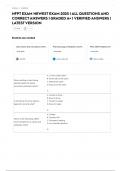
NFPT EXAM NEWEST EXAM 2025 | ALL QUESTIONS AND
CORRECT ANSWERS | GRADED A+ | VERIFIED ANSWERS |
LATEST VERSION
Save
Students also studied
Adex CSCE: Key Concepts in Dent... Pharmacology of Diabetes and Th... WGU C810 Healthcare D
Study guide Study guide Study guide
rlp6329 alicia_walker68 fallmoonight__
A. In front of the client.
B. At the side of the client.
When spotting a client doing
C. Behind the client
barbell squats, the trainer
D. Away from the client.
should be positoined where?
C.
A. Muscle to bone
B. Bone to bone
A soft tissue structure called a C. Muscle to organ
ligament connects what? D. Bone to organ
A.
A. Lunges.
B. Olympic lifts.
Which of the following is BEST
C. Plyometric training
recommended for an obese and
D. Low intensity aerobics
sedentary client?
D.
, A. Ignore the conflict and risk angering the client more.
B. Immediately terminate the relationship and refuse and
reconciliation.
Which of the following would be
C. Call another trainer over and then discuss the conflict openly
the MOST professional way for a
on the gym floor.
trainer to resolve a conflict with
D. Listen to the client's complaint in private and discuss
an angry client?
resolution options.
D.
A. Proper caloric intake for meeting the client's goal.
The Basal Metabolic Rate (BMR) B. Client's body mass.
provides the certified personal C. Adequate repetition range for the client's weight loss.
trainer (CPT) the basis to Client's healthy heart rate.
determine the what?
A.
A. Circulation
B. Retraction
Which of the following is a bio- C. Respiration
mechanical term? D. Adaptation
A.
A. Basal Metabolic Rate.
B. Low Density Lipoproteins
The result of regular resistance
C. Resting heart rate
exercises lends to an increase in
D. Blood pressure
what?
A.
A. Physical
B. Emotional
The external factors in stress
C. Environmental
management upon the body are
D. Psychological
termed by what?
C.
A. Strength
B. Flexibility
The three-minute step test is
C. Muscular endurance
BEST used to assess what fitness
D. Cardiovascular endurance.
component?
D.
A. Contractile strength
B. Flexibility
Faster repetitions with lighter C. Contractile speed
weights typically increase what? D. Hypertrophy
D.
NFPT EXAM NEWEST EXAM 2025 | ALL QUESTIONS AND
CORRECT ANSWERS | GRADED A+ | VERIFIED ANSWERS |
LATEST VERSION
Save
Students also studied
Adex CSCE: Key Concepts in Dent... Pharmacology of Diabetes and Th... WGU C810 Healthcare D
Study guide Study guide Study guide
rlp6329 alicia_walker68 fallmoonight__
A. In front of the client.
B. At the side of the client.
When spotting a client doing
C. Behind the client
barbell squats, the trainer
D. Away from the client.
should be positoined where?
C.
A. Muscle to bone
B. Bone to bone
A soft tissue structure called a C. Muscle to organ
ligament connects what? D. Bone to organ
A.
A. Lunges.
B. Olympic lifts.
Which of the following is BEST
C. Plyometric training
recommended for an obese and
D. Low intensity aerobics
sedentary client?
D.
, A. Ignore the conflict and risk angering the client more.
B. Immediately terminate the relationship and refuse and
reconciliation.
Which of the following would be
C. Call another trainer over and then discuss the conflict openly
the MOST professional way for a
on the gym floor.
trainer to resolve a conflict with
D. Listen to the client's complaint in private and discuss
an angry client?
resolution options.
D.
A. Proper caloric intake for meeting the client's goal.
The Basal Metabolic Rate (BMR) B. Client's body mass.
provides the certified personal C. Adequate repetition range for the client's weight loss.
trainer (CPT) the basis to Client's healthy heart rate.
determine the what?
A.
A. Circulation
B. Retraction
Which of the following is a bio- C. Respiration
mechanical term? D. Adaptation
A.
A. Basal Metabolic Rate.
B. Low Density Lipoproteins
The result of regular resistance
C. Resting heart rate
exercises lends to an increase in
D. Blood pressure
what?
A.
A. Physical
B. Emotional
The external factors in stress
C. Environmental
management upon the body are
D. Psychological
termed by what?
C.
A. Strength
B. Flexibility
The three-minute step test is
C. Muscular endurance
BEST used to assess what fitness
D. Cardiovascular endurance.
component?
D.
A. Contractile strength
B. Flexibility
Faster repetitions with lighter C. Contractile speed
weights typically increase what? D. Hypertrophy
D.