
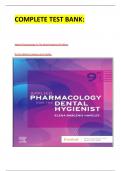
COMPLETE TEST BANK:
Applied Pharmacology For The Dental Hygienist 9th Edition
By Elena Bablenis Haveles Latest Update.
,chapter 01: information sources, regulatory agencies, drug legislation, and prescription writing
haveles: applied pharmacology for the dental hygienist, 9th edition
multiple choice
1. knowledge of pharmacology aids the dental professional in
a. obtaining a patient’s health history.
b. administering drugs in the office.
c. handling emergency situations.
d. selection of a nonprescription medication.
e. all of the above.
answer: e
all of the choices are true. because many of our patients are being treated with drugs, knowledge of
pharmacology helps in understanding and interpreting patients’ responses to health history
questions. knowledge of the therapeutic and adverse effects of medications obviously helps in their
,proper administration in the office. emergency situations may be caused by drugs or treated by
drugs; thus, knowledge of pharmacology is of great help, especially because a rapid response is
sometimes required. a clear understanding of the concepts of drug action, drug handling by the
body, and drug interactions will allow the dental practitioner to make proper judgments and grasp
the concepts relevant to new drug therapies on the market.
dif: application
ref: role of the dental hygienist (medication/health history), role of the dental hygienist (medication
administration), role of the dental hygienist (emergency situations), role of the dental hygienist
(nonprescription medication) | pp. 2-3 obj: 1
top: nbdhe, 6.0. pharmacology
2. which of the following statements is true regarding planning appointments?
a. whether or not patients are taking medication for systemic diseases is of little consequence
in the dental office.
b. asthmatic patients should have dental appointments in the morning.
, c. diabetic patients usually have fewer problems with a morning appointment compared with
afternoon appointments.
d. both b and c are true.
answer: d
asthmatic patients who experience dental anxiety should schedule their appointments when they
are not rushed or under pressure early in the morning. diabetic patients usually have relatively fewer
problems with a morning appointment. patients taking medication for systemic diseases may require
special handling in the dental office.
dif: comprehension
ref: role of the dental hygienist (appointment scheduling) | p. 3 obj: 1 top: nbdhe, 6.0.
pharmacology
Applied Pharmacology For The Dental Hygienist 9th Edition
By Elena Bablenis Haveles Latest Update.
,chapter 01: information sources, regulatory agencies, drug legislation, and prescription writing
haveles: applied pharmacology for the dental hygienist, 9th edition
multiple choice
1. knowledge of pharmacology aids the dental professional in
a. obtaining a patient’s health history.
b. administering drugs in the office.
c. handling emergency situations.
d. selection of a nonprescription medication.
e. all of the above.
answer: e
all of the choices are true. because many of our patients are being treated with drugs, knowledge of
pharmacology helps in understanding and interpreting patients’ responses to health history
questions. knowledge of the therapeutic and adverse effects of medications obviously helps in their
,proper administration in the office. emergency situations may be caused by drugs or treated by
drugs; thus, knowledge of pharmacology is of great help, especially because a rapid response is
sometimes required. a clear understanding of the concepts of drug action, drug handling by the
body, and drug interactions will allow the dental practitioner to make proper judgments and grasp
the concepts relevant to new drug therapies on the market.
dif: application
ref: role of the dental hygienist (medication/health history), role of the dental hygienist (medication
administration), role of the dental hygienist (emergency situations), role of the dental hygienist
(nonprescription medication) | pp. 2-3 obj: 1
top: nbdhe, 6.0. pharmacology
2. which of the following statements is true regarding planning appointments?
a. whether or not patients are taking medication for systemic diseases is of little consequence
in the dental office.
b. asthmatic patients should have dental appointments in the morning.
, c. diabetic patients usually have fewer problems with a morning appointment compared with
afternoon appointments.
d. both b and c are true.
answer: d
asthmatic patients who experience dental anxiety should schedule their appointments when they
are not rushed or under pressure early in the morning. diabetic patients usually have relatively fewer
problems with a morning appointment. patients taking medication for systemic diseases may require
special handling in the dental office.
dif: comprehension
ref: role of the dental hygienist (appointment scheduling) | p. 3 obj: 1 top: nbdhe, 6.0.
pharmacology

