AUTOMATION
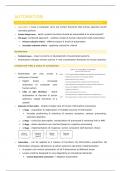
A MODEL FOR TYPES & LEVELS OF HUMAN INTERACTION WITH AUTOMATION (PARASURAMAN)
Automation = have a computer carry out certain functions that human operator would
normally perform
System design issues – which system functions should be automated & to what extend?
This paper: combined approach – outlines model of human interaction with automation
Primary evaluative criteria – different types & levels of automation
Secondary evaluative criteria – applying evaluative criteria
AUTOMATION
Technical issues – major concerns in development of automated systems
Automation changes human activity new coordination demands on human operator
A MODEL FOR TYPES & LEVELS OF AUTOMATION
Automation can vary across a
continuum of levels
Higher levels – increased
autonomy of computer over
human action
Table on right (Sheridan) – about
automation of decision & action
selection, output functions of a
system
Expansion of that model – simple 4-stage view of human information processing
1. Stage – acquisition & registration of multiple sources of information
Includes positioning & orienting of sensory receptors, sensory processing,
selective attention
2. Stage – conscious perception, manipulation of processed & retrieved info in WM
3. Stage – where decisions are reached based on cognitive processing
4. Stage – implementation of response / action consistent with decision choice
Automation – can be applied to 4 classes of functions: (1) Information acquisition, (2)
Information analyses, (3) Decision & action selection, (4) Action implementation
A system can involve automation of all 4 dimensions at different levels
Levels could be designed to vary depending on situational demands
Context-dependent automation = adaptive automation
, Acquisition Sensing & registration of input data
automation Low level – strategies for mechanically moving sensors in order to scan
& observe
Moderate level – organisation of incoming info according so some
criteria
High level – filtering, some items are exclusively selected & brought to
operator’s attention
Analysis Cognitive functions such as WM & inferential processes
automation Low level – algorithms applied to incoming data estimating data over
time / prediction
Moderate level – integration: several input variables combined into a
single value
High level – information managers: provide context-dependent
summaries of data to user
Decision Selection from among decision alternatives
automation Varying levels of expanding / replacing human selection of decision
options with machine decision making
Different levels best described by table above (Sheridan)
Action Actual execution of the action choice
automation Typically replaces the hand / voice of the human
Different levels defined by relative amount of manual vs. automatic
activity in response
A FRAMEWORK FOR AUTOMATION DESIGN
Model provides a framework – how can the framework be used?
Realise that automation is not all-or-nothing but can vary by type
Which level of automation should be applied?
Primary evaluative criteria – associated human performance consequences
Secondary evaluative criteria – automation reliability, cost of decision / action
consequences
Particular levels of automation recommended with upper & lower bound
HUMAN PERFORMANCE CONSEQUENCES
Automation can have positive & negative effects on human performance – 4 areas
Mental + organising information sources, highlighting, integration, data
workload transformation
– automation difficult to initiate & engage, if extensive data entry is
required implementing “clumsy” automation
A MODEL FOR TYPES & LEVELS OF HUMAN INTERACTION WITH AUTOMATION (PARASURAMAN)
Automation = have a computer carry out certain functions that human operator would
normally perform
System design issues – which system functions should be automated & to what extend?
This paper: combined approach – outlines model of human interaction with automation
Primary evaluative criteria – different types & levels of automation
Secondary evaluative criteria – applying evaluative criteria
AUTOMATION
Technical issues – major concerns in development of automated systems
Automation changes human activity new coordination demands on human operator
A MODEL FOR TYPES & LEVELS OF AUTOMATION
Automation can vary across a
continuum of levels
Higher levels – increased
autonomy of computer over
human action
Table on right (Sheridan) – about
automation of decision & action
selection, output functions of a
system
Expansion of that model – simple 4-stage view of human information processing
1. Stage – acquisition & registration of multiple sources of information
Includes positioning & orienting of sensory receptors, sensory processing,
selective attention
2. Stage – conscious perception, manipulation of processed & retrieved info in WM
3. Stage – where decisions are reached based on cognitive processing
4. Stage – implementation of response / action consistent with decision choice
Automation – can be applied to 4 classes of functions: (1) Information acquisition, (2)
Information analyses, (3) Decision & action selection, (4) Action implementation
A system can involve automation of all 4 dimensions at different levels
Levels could be designed to vary depending on situational demands
Context-dependent automation = adaptive automation
, Acquisition Sensing & registration of input data
automation Low level – strategies for mechanically moving sensors in order to scan
& observe
Moderate level – organisation of incoming info according so some
criteria
High level – filtering, some items are exclusively selected & brought to
operator’s attention
Analysis Cognitive functions such as WM & inferential processes
automation Low level – algorithms applied to incoming data estimating data over
time / prediction
Moderate level – integration: several input variables combined into a
single value
High level – information managers: provide context-dependent
summaries of data to user
Decision Selection from among decision alternatives
automation Varying levels of expanding / replacing human selection of decision
options with machine decision making
Different levels best described by table above (Sheridan)
Action Actual execution of the action choice
automation Typically replaces the hand / voice of the human
Different levels defined by relative amount of manual vs. automatic
activity in response
A FRAMEWORK FOR AUTOMATION DESIGN
Model provides a framework – how can the framework be used?
Realise that automation is not all-or-nothing but can vary by type
Which level of automation should be applied?
Primary evaluative criteria – associated human performance consequences
Secondary evaluative criteria – automation reliability, cost of decision / action
consequences
Particular levels of automation recommended with upper & lower bound
HUMAN PERFORMANCE CONSEQUENCES
Automation can have positive & negative effects on human performance – 4 areas
Mental + organising information sources, highlighting, integration, data
workload transformation
– automation difficult to initiate & engage, if extensive data entry is
required implementing “clumsy” automation