Introduction
Quality and safety:
● Importance:
○ Relevant in times of crisis, but also in everyday work
■ How to intervene
■ How we think about this work in general
○ Meanwhile:
■ Patient care may be substandard, unsafe, fragmented, variable, costly
■ Efforts to improve Q&S are marginally on the agenda of healthcare
organizations
■ Existing power structures/hierarchies prevent quality improvement (QI)
■ Instruments for QI are poorly understood
■ Demographic changes, aging population, rise of comorbidities
● Definition of quality:
○ Institute of Medicine (IoM):
■ 6 dimensions (WHO has same criteria):
● Effectiveness
● Efficiency
● Equity
● Patient centeredness
● Safety
● Timeliness
■ Definition: the degree to which health services for individuals and
populations increase the likelihood of desired health outcomes and are
consistent with current professional knowledge
● = relative and dynamic definition of quality
○ Dutch quality, complaints and disputes act (Wkkgz):
■ Same criteria as IoM, but replaces Equity with Transparency
● In practice:
○ What's out there:
■ Instruments available for Q&S: clinical guidelines, accreditation bodies,
performance indicators, (information) technologies, patient participation
tools
■ Q&S are human accomplishments: you need to take into account the
work that people do
○ Problems, explanations for lacking Q&S:
■ Instruments are badly implemented
■ Evidence of how instruments work is lacking
■ Interactions between instruments and context of use are unclear
■ Interaction between instruments is unclear
○ Difficulty to research:
■ Practical limitations:
● A lot we dont know
● Local insights are rarely universally applicable
, ● Research is often focused on ‘simple’ interventions in ‘complex’
environments
■ Contrasting views on whats important:
● Healthcare professionals, managers, policy makers tend to focus
on instruments/tools/structures - but often ignore practices of Q&S
○ Characteristics we discern:
■ Q&S are multi-layered:
● Interactions between macro, meso and micro levels of care
■ Q&S are dynamic:
● Changes at each level have consequences for quality instruments
(eg changing use of guidelines through time)
● Interactions between instruments, organizations, laws and
protocols
■ Q&S are emergent:
● Q&S emerge from care practices; they arent inherent properties of
care
● Consequences of interventions are unpredictable
○ What to do:
■ Reflexive + contextual approaches
■ Less top-down focus on implementing interventions
■ More focus on making healthcare resilient
Organizing for quality framework
Organizing for Quality, framework by Bate et al:
● 6 challenges:
○ Structural (blue):
■ Challenge around structuring, planning and coordinating quality efforts
■ Good structures are essential for organizing quality effort: eg strategies,
information sharing, coordination, dedicated teams
■ Too much focus → bureaucratization, fragmentation, decoupling
○ Cultural (red):
■ Challenge around giving quality a shared, collective meaning, value and
significance within the organization
■ Essential for sustaining change and for processes of sense-making, eg
culture of reflexivity, culture of innovation, culture of openness and
sharing
■ There are also dysfunctional cultures (eg clan culture and bullying)
○ Educational (green):
■ Challenge around creating and nurturing a learning process to support
continual improvement
■ Essential for accumulating/disseminating knowledge, reflecting on
emergent effect + organizational barriers, other forms of learning also
important
■ To much focus: can become pedantic, or lead to navel gazing
,○ Political (yellow):
■ Challenge around addressing the politics and negotiating the buy-in,
conflict, and relationships of change
■ Essential to engage clinical staff and senior leaders, empower patients
and staff, link with stakeholders
■ Too much politics: power play, resisting of change, impossible politics
○ Technological & physical (pink):
■ Challenge around designing physical infrastructures and technological
systems supportive of quality efforts
■ Physical infrastructure is essential to support/govern quality work (eg ICT
systems, patient-friendly designs of physical infrastructure, user-friendly
design of equipment)
■ Too much focus on technology: leads to overly mechanistic approaches,
creates workarounds and exhaustion
○ Emotional (white):
■ Challenge around inspiring, energizing and mobilizing people by linking
QI to inner sentiments and deeper commitments
■ Creates movement for improvement, makes quality something that ‘has to
be done’, eg engaging with patient stories, inspirational leadership,
motivational speakers, champions, activists
■ Too much focus: leads to uncertainty, laissez-faire policies
○ → inner context:
■ Organization performance
■ Organization size
■ Organization structure
○ → outer context:
■ Social & cultural environments
■ Political & regulatory environments
■ Market & resource environments
■ Technological environments
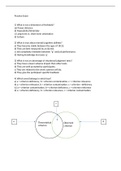
○ Model:
, ■
Structural challenge
Structural challenge:
● Bate et al:
● Too much focus:
○ Bureaucratization
○ Fragmentation
○ Decoupling: gap between policies and implementation
■ 2 forms (Bromley & Powell, 2012):
● Policy-practice decoupling (classical explanation of decoupling):
○ Institutional adoption of rules/policies is largely symbolic
and inconsequential
○ ‘Ceremonial window dressing’
○ Rules are systematically violated and unimplemented
○ Formal policies are disconnected from daily practices!
○ Daily practices may/may not be linked to intended
outcomes
○ Eg, workarounds:
Quality and safety:
● Importance:
○ Relevant in times of crisis, but also in everyday work
■ How to intervene
■ How we think about this work in general
○ Meanwhile:
■ Patient care may be substandard, unsafe, fragmented, variable, costly
■ Efforts to improve Q&S are marginally on the agenda of healthcare
organizations
■ Existing power structures/hierarchies prevent quality improvement (QI)
■ Instruments for QI are poorly understood
■ Demographic changes, aging population, rise of comorbidities
● Definition of quality:
○ Institute of Medicine (IoM):
■ 6 dimensions (WHO has same criteria):
● Effectiveness
● Efficiency
● Equity
● Patient centeredness
● Safety
● Timeliness
■ Definition: the degree to which health services for individuals and
populations increase the likelihood of desired health outcomes and are
consistent with current professional knowledge
● = relative and dynamic definition of quality
○ Dutch quality, complaints and disputes act (Wkkgz):
■ Same criteria as IoM, but replaces Equity with Transparency
● In practice:
○ What's out there:
■ Instruments available for Q&S: clinical guidelines, accreditation bodies,
performance indicators, (information) technologies, patient participation
tools
■ Q&S are human accomplishments: you need to take into account the
work that people do
○ Problems, explanations for lacking Q&S:
■ Instruments are badly implemented
■ Evidence of how instruments work is lacking
■ Interactions between instruments and context of use are unclear
■ Interaction between instruments is unclear
○ Difficulty to research:
■ Practical limitations:
● A lot we dont know
● Local insights are rarely universally applicable
, ● Research is often focused on ‘simple’ interventions in ‘complex’
environments
■ Contrasting views on whats important:
● Healthcare professionals, managers, policy makers tend to focus
on instruments/tools/structures - but often ignore practices of Q&S
○ Characteristics we discern:
■ Q&S are multi-layered:
● Interactions between macro, meso and micro levels of care
■ Q&S are dynamic:
● Changes at each level have consequences for quality instruments
(eg changing use of guidelines through time)
● Interactions between instruments, organizations, laws and
protocols
■ Q&S are emergent:
● Q&S emerge from care practices; they arent inherent properties of
care
● Consequences of interventions are unpredictable
○ What to do:
■ Reflexive + contextual approaches
■ Less top-down focus on implementing interventions
■ More focus on making healthcare resilient
Organizing for quality framework
Organizing for Quality, framework by Bate et al:
● 6 challenges:
○ Structural (blue):
■ Challenge around structuring, planning and coordinating quality efforts
■ Good structures are essential for organizing quality effort: eg strategies,
information sharing, coordination, dedicated teams
■ Too much focus → bureaucratization, fragmentation, decoupling
○ Cultural (red):
■ Challenge around giving quality a shared, collective meaning, value and
significance within the organization
■ Essential for sustaining change and for processes of sense-making, eg
culture of reflexivity, culture of innovation, culture of openness and
sharing
■ There are also dysfunctional cultures (eg clan culture and bullying)
○ Educational (green):
■ Challenge around creating and nurturing a learning process to support
continual improvement
■ Essential for accumulating/disseminating knowledge, reflecting on
emergent effect + organizational barriers, other forms of learning also
important
■ To much focus: can become pedantic, or lead to navel gazing
,○ Political (yellow):
■ Challenge around addressing the politics and negotiating the buy-in,
conflict, and relationships of change
■ Essential to engage clinical staff and senior leaders, empower patients
and staff, link with stakeholders
■ Too much politics: power play, resisting of change, impossible politics
○ Technological & physical (pink):
■ Challenge around designing physical infrastructures and technological
systems supportive of quality efforts
■ Physical infrastructure is essential to support/govern quality work (eg ICT
systems, patient-friendly designs of physical infrastructure, user-friendly
design of equipment)
■ Too much focus on technology: leads to overly mechanistic approaches,
creates workarounds and exhaustion
○ Emotional (white):
■ Challenge around inspiring, energizing and mobilizing people by linking
QI to inner sentiments and deeper commitments
■ Creates movement for improvement, makes quality something that ‘has to
be done’, eg engaging with patient stories, inspirational leadership,
motivational speakers, champions, activists
■ Too much focus: leads to uncertainty, laissez-faire policies
○ → inner context:
■ Organization performance
■ Organization size
■ Organization structure
○ → outer context:
■ Social & cultural environments
■ Political & regulatory environments
■ Market & resource environments
■ Technological environments
○ Model:
, ■
Structural challenge
Structural challenge:
● Bate et al:
● Too much focus:
○ Bureaucratization
○ Fragmentation
○ Decoupling: gap between policies and implementation
■ 2 forms (Bromley & Powell, 2012):
● Policy-practice decoupling (classical explanation of decoupling):
○ Institutional adoption of rules/policies is largely symbolic
and inconsequential
○ ‘Ceremonial window dressing’
○ Rules are systematically violated and unimplemented
○ Formal policies are disconnected from daily practices!
○ Daily practices may/may not be linked to intended
outcomes
○ Eg, workarounds: