Grammar reference
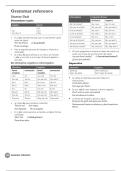
Starter Unit interrogativa respuestas breves
Pronombres sujeto afirmativa negativa
singular plural Am I at school? Yes, I am. No, I’m not.
I we Are you at school? Yes, you are. No, you aren’t.
you you Is he at school? Yes, he is. No, he isn’t.
he / she / it they Is she at school? Yes, she is. No, she isn’t.
• En inglés siempre hay que usar un pronombre sujeto Is it at school? Yes, it is. No, it isn’t.
antes del verbo. Are we at school? Yes, we are. No, we aren’t.
He’s my friend. (x Is my friend) Are you at school? Yes, you are. No, you aren’t.
Él es mi amigo. Are they at school? Yes, they are. No, they aren’t.
• Para la segunda persona del singular y el plural se
utiliza you. • Al hacer preguntas se invierte el orden del sujeto y el
• Se utiliza he para referirse a un niño o un hombre verbo, por lo que be se sitúa antes del sujeto.
y she a una niña o una mujer; it denota objetos o Are you from London? (x You are from London?)
animales. ¿Eres de Londres?
be: afirmativa, negativa e interrogativa Imperativo
afirmativa negativa afirmativa negativa
forma contracción forma contracción Stand up. Don’t stand up.
completa completa Open the book. Don’t open the book.
I am I’m I am not I’m not
• Se utiliza el imperativo para dar órdenes o
You are You’re You are not You aren’t
instrucciones.
He is He’s He is not He isn’t Come here, please.
She is She’s She is not She isn’t Ven aquí, por favor.
It is It’s It is not It isn’t • Se usa ‘don’t’ para expresar la forma negativa.
We are We’re We are not We aren’t Don’t write in your coursebook.
You are You’re You are not You aren’t No escribas en tu libro.
They are They’re They are not They aren’t • La forma del singular y plural es igual.
Everyone be quiet and open your books.
• Se utiliza be para nombrar o describir.
Permaneced todos en silencio y abrid vuestros
They’re red. Son rojos. libros.
He’s Spanish. Él es español.
• En inglés conversacional, se tiende a emplear formas
contraídas.
She’s ten. (x She’s got ten.)
Tiene diez años.
100 Grammar reference
,Grammar practice S
be: affirmative, negative and 4 Complete the sentences with the correct form
questions of the verb be. (affirmative or negative)
1 The mouse is in the box. (✓)
1 Circle the correct words. 2 The ruler on the desk. (✗)
1 We is / are from Australia. 3 The pencils next to the pencil
2 I am / are in year 10 at school. sharpener. (✗)
3 They am / are in my English class. 4 We in the classroom. (✓)
4 Marta is / are from Andalucia. 5 The mouse behind the box. (✗)
5 Alex is / am a Barçelona fan. 6 I eighteen years old. (✗)
6 My hamster are / is brown and white. 7 You my friend. (✓)
8 He from Spain. (✗)
2 Write the sentences with contractions of the 9 She English. (✓)
verb be. 10 They on the bus. (✗)
1 I am from Seville
I’m from Seville. 5 Write questions for the sentences in
2 It is midnight. Exercise 4. Answer them with short answers.
1 Is the mouse in the box? Yes, it is.
3 They are friends. 2 ?
4 You are at school. 3 ?
5 We are happy. 4 ?
6 He is fourteen. 5 ?
7 She is Spanish. 6 ?
7 ?
3 Write the sentences in the negative.
1 It‘s seven o’clock. 8 ?
It isn’t seven o’clock.
2 The teacher is behind the desk. 9 ?
3 They’re brothers. 10 ?
4 I’m English.
Imperatives
5 They’re in my class. 6 Circle the correct words.
1 Don’t write / Write in pen in the book. It’s
6 She’s sixteen. expensive.
2 Don’t close / Close the comic. The teacher’s here.
7 He’s in the taxi. 3 Don’t read / Read this book. It’s interesting.
4 Don’t sit down / Sit down there. It’s a desk, it
8 The book is on the bookshelf. isn’t a chair!
5 Don’t stand up / Stand up during class!
Grammar practice 1
, Grammar reference
Unit 1 Partículas interrogativas
Adjetivos posesivos • Se utiliza where para formular preguntas sobre
lugares.
singular plural A: Where are the headphones?
my our B: In my bedroom.
your your A: ¿Dónde están los auriculares?
his / her / its their B: En mi habitación.
• Se utilizan los adjetivos posesivos para hablar de • Se utiliza what para pedir información sobre
pertenencia. personas y lugares.
This is my computer. Este es mi ordenador. A: What is your favourite colour?
• Para referirnos a niños y hombres se utiliza his, B: It’s blue.
mientras que her se utiliza para niñas y mujeres. A: ¿Cuál es tu color favorito?
His name is Tom. Se llama Tom. B: El azul.
Her name is Amanda. Se llama Amanda. • Se utiliza how old para preguntar sobre la edad.
• En el caso de animales y objetos, se utiliza its. How old is your dad?
My dog is black but its feet are white. ¿Cuántos años tiene tu padre?
Mi perro es negro, pero tiene los pies blancos. • Se utiliza who para hablar de las personas.
El genitivo sajón (’s) Who’s your best friend?
• Para expresar posesión se utiliza apóstrofe (‘) + s. ¿Quién es tu mejor amigo/a?
• Se añade ’s tras un nombre propio o sustantivo en • Se utiliza when para preguntar sobre aspectos
singular, y un apóstrofe (‘) tras un nombre propio temporales (como fechas y horas).
plural o los sustantivos en plural. When’s your birthday?
Carla’s phone ¿Cuándo es tu cumpleaños?
El teléfono de Carla
The students’ books (x The books of the students)
Los libros de los alumnos
• Si son dos personas las propietarias de algo, se utiliza
‘s tras la segunda.
Mum and Dad’s computer
El ordenador de mamá y papá
102 Grammar reference
Starter Unit interrogativa respuestas breves
Pronombres sujeto afirmativa negativa
singular plural Am I at school? Yes, I am. No, I’m not.
I we Are you at school? Yes, you are. No, you aren’t.
you you Is he at school? Yes, he is. No, he isn’t.
he / she / it they Is she at school? Yes, she is. No, she isn’t.
• En inglés siempre hay que usar un pronombre sujeto Is it at school? Yes, it is. No, it isn’t.
antes del verbo. Are we at school? Yes, we are. No, we aren’t.
He’s my friend. (x Is my friend) Are you at school? Yes, you are. No, you aren’t.
Él es mi amigo. Are they at school? Yes, they are. No, they aren’t.
• Para la segunda persona del singular y el plural se
utiliza you. • Al hacer preguntas se invierte el orden del sujeto y el
• Se utiliza he para referirse a un niño o un hombre verbo, por lo que be se sitúa antes del sujeto.
y she a una niña o una mujer; it denota objetos o Are you from London? (x You are from London?)
animales. ¿Eres de Londres?
be: afirmativa, negativa e interrogativa Imperativo
afirmativa negativa afirmativa negativa
forma contracción forma contracción Stand up. Don’t stand up.
completa completa Open the book. Don’t open the book.
I am I’m I am not I’m not
• Se utiliza el imperativo para dar órdenes o
You are You’re You are not You aren’t
instrucciones.
He is He’s He is not He isn’t Come here, please.
She is She’s She is not She isn’t Ven aquí, por favor.
It is It’s It is not It isn’t • Se usa ‘don’t’ para expresar la forma negativa.
We are We’re We are not We aren’t Don’t write in your coursebook.
You are You’re You are not You aren’t No escribas en tu libro.
They are They’re They are not They aren’t • La forma del singular y plural es igual.
Everyone be quiet and open your books.
• Se utiliza be para nombrar o describir.
Permaneced todos en silencio y abrid vuestros
They’re red. Son rojos. libros.
He’s Spanish. Él es español.
• En inglés conversacional, se tiende a emplear formas
contraídas.
She’s ten. (x She’s got ten.)
Tiene diez años.
100 Grammar reference
,Grammar practice S
be: affirmative, negative and 4 Complete the sentences with the correct form
questions of the verb be. (affirmative or negative)
1 The mouse is in the box. (✓)
1 Circle the correct words. 2 The ruler on the desk. (✗)
1 We is / are from Australia. 3 The pencils next to the pencil
2 I am / are in year 10 at school. sharpener. (✗)
3 They am / are in my English class. 4 We in the classroom. (✓)
4 Marta is / are from Andalucia. 5 The mouse behind the box. (✗)
5 Alex is / am a Barçelona fan. 6 I eighteen years old. (✗)
6 My hamster are / is brown and white. 7 You my friend. (✓)
8 He from Spain. (✗)
2 Write the sentences with contractions of the 9 She English. (✓)
verb be. 10 They on the bus. (✗)
1 I am from Seville
I’m from Seville. 5 Write questions for the sentences in
2 It is midnight. Exercise 4. Answer them with short answers.
1 Is the mouse in the box? Yes, it is.
3 They are friends. 2 ?
4 You are at school. 3 ?
5 We are happy. 4 ?
6 He is fourteen. 5 ?
7 She is Spanish. 6 ?
7 ?
3 Write the sentences in the negative.
1 It‘s seven o’clock. 8 ?
It isn’t seven o’clock.
2 The teacher is behind the desk. 9 ?
3 They’re brothers. 10 ?
4 I’m English.
Imperatives
5 They’re in my class. 6 Circle the correct words.
1 Don’t write / Write in pen in the book. It’s
6 She’s sixteen. expensive.
2 Don’t close / Close the comic. The teacher’s here.
7 He’s in the taxi. 3 Don’t read / Read this book. It’s interesting.
4 Don’t sit down / Sit down there. It’s a desk, it
8 The book is on the bookshelf. isn’t a chair!
5 Don’t stand up / Stand up during class!
Grammar practice 1
, Grammar reference
Unit 1 Partículas interrogativas
Adjetivos posesivos • Se utiliza where para formular preguntas sobre
lugares.
singular plural A: Where are the headphones?
my our B: In my bedroom.
your your A: ¿Dónde están los auriculares?
his / her / its their B: En mi habitación.
• Se utilizan los adjetivos posesivos para hablar de • Se utiliza what para pedir información sobre
pertenencia. personas y lugares.
This is my computer. Este es mi ordenador. A: What is your favourite colour?
• Para referirnos a niños y hombres se utiliza his, B: It’s blue.
mientras que her se utiliza para niñas y mujeres. A: ¿Cuál es tu color favorito?
His name is Tom. Se llama Tom. B: El azul.
Her name is Amanda. Se llama Amanda. • Se utiliza how old para preguntar sobre la edad.
• En el caso de animales y objetos, se utiliza its. How old is your dad?
My dog is black but its feet are white. ¿Cuántos años tiene tu padre?
Mi perro es negro, pero tiene los pies blancos. • Se utiliza who para hablar de las personas.
El genitivo sajón (’s) Who’s your best friend?
• Para expresar posesión se utiliza apóstrofe (‘) + s. ¿Quién es tu mejor amigo/a?
• Se añade ’s tras un nombre propio o sustantivo en • Se utiliza when para preguntar sobre aspectos
singular, y un apóstrofe (‘) tras un nombre propio temporales (como fechas y horas).
plural o los sustantivos en plural. When’s your birthday?
Carla’s phone ¿Cuándo es tu cumpleaños?
El teléfono de Carla
The students’ books (x The books of the students)
Los libros de los alumnos
• Si son dos personas las propietarias de algo, se utiliza
‘s tras la segunda.
Mum and Dad’s computer
El ordenador de mamá y papá
102 Grammar reference