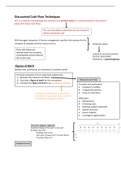
Fixed costs remain the same (constant) as output increases or decreases
Variable costs vary directly with output
AFC only affects AC
AVC affects AC & MC
External economies of scale = benefits to a firm when industry as a whole grows (profits act
as a signal to entry)
- knowledge sharing lowers information gaps
- skilled labour
- impoverished local infrastructure/improvements in geographical location
Shut down point:
in the short run, if AR>AVC = firm continues to operate as each additional unit sold
contributes to reducing the size of losses
if firm cannot cover AVC (operating costs) = shut downnn
in the long run all costs are variable
revenue maximisation profit maximisation
gain market share = greater influence on increased dividends to shareholders
market increased wages to workers
increased brand loyalty increased investment
increased economies of scale increased innovation + R&D
long term profitability increased savings = protection from future
recession
Factors affecting profit
1. Growing international competition from abroad
- if other countries can produce and thus sell good at cheaper price = reduces
demand for country’s exports
- = reduces market share and power of country’s domestic firms
- = reduced revenue and profit
- BUT, if decrease in demand for good globally: shift of consumer
spending towards more eco-friendly goods (ie petrol to electric cars) =
consumption falls = reduced revenue + profit
2. Country's domestic industrial action: decreased supply of labour due to strikes
- = directly reduces output/productivity = reduced revenue and profit
- AND can cause higher production costs if wages end up rising =
further impact on profits
- BUT, if there is not a large proportion of labour is on strike = little
impact on output = insignificant impact on profit especially if firm has a
large market share initially
Economies of scale
- bulk buying
Diseconomies of scale
- managerial
Variable costs vary directly with output
AFC only affects AC
AVC affects AC & MC
External economies of scale = benefits to a firm when industry as a whole grows (profits act
as a signal to entry)
- knowledge sharing lowers information gaps
- skilled labour
- impoverished local infrastructure/improvements in geographical location
Shut down point:
in the short run, if AR>AVC = firm continues to operate as each additional unit sold
contributes to reducing the size of losses
if firm cannot cover AVC (operating costs) = shut downnn
in the long run all costs are variable
revenue maximisation profit maximisation
gain market share = greater influence on increased dividends to shareholders
market increased wages to workers
increased brand loyalty increased investment
increased economies of scale increased innovation + R&D
long term profitability increased savings = protection from future
recession
Factors affecting profit
1. Growing international competition from abroad
- if other countries can produce and thus sell good at cheaper price = reduces
demand for country’s exports
- = reduces market share and power of country’s domestic firms
- = reduced revenue and profit
- BUT, if decrease in demand for good globally: shift of consumer
spending towards more eco-friendly goods (ie petrol to electric cars) =
consumption falls = reduced revenue + profit
2. Country's domestic industrial action: decreased supply of labour due to strikes
- = directly reduces output/productivity = reduced revenue and profit
- AND can cause higher production costs if wages end up rising =
further impact on profits
- BUT, if there is not a large proportion of labour is on strike = little
impact on output = insignificant impact on profit especially if firm has a
large market share initially
Economies of scale
- bulk buying
Diseconomies of scale
- managerial