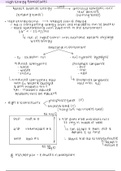
HighEnergy biomolecules
Releasechemical Energy used s controlled exergonic rims
that drive life
breakingbands formingbonds
HighEnergy biomoi mediate flowof Energy
s
Aid in transporting energy from one metabolic run to another
Reactspontaneously with substance in the environment
DG L 25 KJ1m01
ran of highEbiomol mthoubotance releares verylarge
FreeEnergy
substance in environment
e s
02 oxidation ran H2Ohydrolite Hydrolysis
reduced coenzymes phosphate compounds
NADH PEP
NADPH ATP
FADH2 ADP
reduced coenzymes react phosphatecompounds
with Ozbecomeoxidized react with HD
EldriveAnaboliorthV
bee reactantsreduced
Anaboliorths are reductive
phorphatebond P
High E biomolecules
thioesterbond s
AcetylCoA hasthioesterbond
Ba very0
PEP most E A ATP drivesmostmetabolicrims
80 Why in middleof table
ATP intermediate E can accept E from PED El
donate E to AMP
AMP least E allows ATP Act as Energy
Muttley
u
acceptE
release E
DGfftry 0
ATAADPpair Emuttle inmetabolism
, properties of HighEnergy biomolecules
not longtermEnergystorageNbstances
only there to transferenergy
Transient form ofstoredEnergy temporarystorage
not unstable
high energy compound not mean high energy state
carrylarge potentialenergy not kinetic energy
reaction coordinate diagram
aujirationenergybarrier
200 0400Kj1m01
reAatfant
tenner
30,5Kj1M gyrueared
Aap Ipi t
products
Energy barrier of ATPhydroly tiv Energyreleated
SSS E difference
When ATP ADP t Pi
upontaneous run BUT not easyachieve ran
Hightransition state An proceedslowly
Mortcares an enzyme required
ATP stable
Releasechemical Energy used s controlled exergonic rims
that drive life
breakingbands formingbonds
HighEnergy biomoi mediate flowof Energy
s
Aid in transporting energy from one metabolic run to another
Reactspontaneously with substance in the environment
DG L 25 KJ1m01
ran of highEbiomol mthoubotance releares verylarge
FreeEnergy
substance in environment
e s
02 oxidation ran H2Ohydrolite Hydrolysis
reduced coenzymes phosphate compounds
NADH PEP
NADPH ATP
FADH2 ADP
reduced coenzymes react phosphatecompounds
with Ozbecomeoxidized react with HD
EldriveAnaboliorthV
bee reactantsreduced
Anaboliorths are reductive
phorphatebond P
High E biomolecules
thioesterbond s
AcetylCoA hasthioesterbond
Ba very0
PEP most E A ATP drivesmostmetabolicrims
80 Why in middleof table
ATP intermediate E can accept E from PED El
donate E to AMP
AMP least E allows ATP Act as Energy
Muttley
u
acceptE
release E
DGfftry 0
ATAADPpair Emuttle inmetabolism
, properties of HighEnergy biomolecules
not longtermEnergystorageNbstances
only there to transferenergy
Transient form ofstoredEnergy temporarystorage
not unstable
high energy compound not mean high energy state
carrylarge potentialenergy not kinetic energy
reaction coordinate diagram
aujirationenergybarrier
200 0400Kj1m01
reAatfant
tenner
30,5Kj1M gyrueared
Aap Ipi t
products
Energy barrier of ATPhydroly tiv Energyreleated
SSS E difference
When ATP ADP t Pi
upontaneous run BUT not easyachieve ran
Hightransition state An proceedslowly
Mortcares an enzyme required
ATP stable