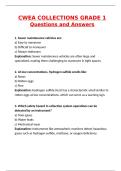
CWEA COLLECTIONS GRADE 1
Questions and Answers
1. Sewer maintenance vehicles are:
a) Easy to maneuver
b) Difficult to maneuver ✅
c) Always stationary
Explanation: Sewer maintenance vehicles are often large and
specialized, making them challenging to maneuver in tight spaces.
2. At low concentrations, hydrogen sulfide smells like:
a) Roses
b) Rotten eggs ✅
c) Pine
Explanation: Hydrogen sulfide (H₂S) has a characteristic smell similar to
rotten eggs at low concentrations, which can serve as a warning sign.
3. Which safety hazard in collection system operations can be
detected by an instrument?
a) Toxic gases ✅
b) Water leaks
c) Mechanical wear
Explanation: Instruments like atmospheric monitors detect hazardous
gases such as hydrogen sulfide, methane, or oxygen deficiency.
, 4. What must be checked first before entering a manhole?
a) Proper barricades or warning devices around the manhole ✅
b) Water level in the sewer
c) The color of the manhole cover
Explanation: Safety protocols require checking that proper barricades
and warning devices are in place to prevent accidents before entering.
5. When should field crews use signs and cones?
a) When over half the street is blocked ✅
b) Only during nighttime operations
c) When working in a backyard
Explanation: Signs and cones are used to warn and divert traffic when a
significant portion of the street is obstructed.
6. The different zones of traffic control include:
a) Buffer zone ✅
b) Danger zone
c) Safe zone
Explanation: Buffer zones are part of traffic control setups to maintain a
safe distance between workers and moving vehicles.
7. Elements of defensive driving include:
a) Driving faster to clear traffic
b) Having your vehicle under control ✅
c) Ignoring traffic signs
Explanation: Defensive driving emphasizes maintaining control and
anticipating hazards to prevent accidents.
Questions and Answers
1. Sewer maintenance vehicles are:
a) Easy to maneuver
b) Difficult to maneuver ✅
c) Always stationary
Explanation: Sewer maintenance vehicles are often large and
specialized, making them challenging to maneuver in tight spaces.
2. At low concentrations, hydrogen sulfide smells like:
a) Roses
b) Rotten eggs ✅
c) Pine
Explanation: Hydrogen sulfide (H₂S) has a characteristic smell similar to
rotten eggs at low concentrations, which can serve as a warning sign.
3. Which safety hazard in collection system operations can be
detected by an instrument?
a) Toxic gases ✅
b) Water leaks
c) Mechanical wear
Explanation: Instruments like atmospheric monitors detect hazardous
gases such as hydrogen sulfide, methane, or oxygen deficiency.
, 4. What must be checked first before entering a manhole?
a) Proper barricades or warning devices around the manhole ✅
b) Water level in the sewer
c) The color of the manhole cover
Explanation: Safety protocols require checking that proper barricades
and warning devices are in place to prevent accidents before entering.
5. When should field crews use signs and cones?
a) When over half the street is blocked ✅
b) Only during nighttime operations
c) When working in a backyard
Explanation: Signs and cones are used to warn and divert traffic when a
significant portion of the street is obstructed.
6. The different zones of traffic control include:
a) Buffer zone ✅
b) Danger zone
c) Safe zone
Explanation: Buffer zones are part of traffic control setups to maintain a
safe distance between workers and moving vehicles.
7. Elements of defensive driving include:
a) Driving faster to clear traffic
b) Having your vehicle under control ✅
c) Ignoring traffic signs
Explanation: Defensive driving emphasizes maintaining control and
anticipating hazards to prevent accidents.