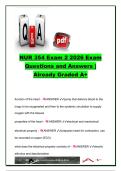
Aclient diagnosed with
a large pul monary embolism is started
Saturation has not significantly on oxygen but oxvgen
im;)r()ved.)Wh;n !()53[‘)‘(1::!1‘, 1;;1(:\:-)
r\wL(l)r/f’ilx)‘('ir‘\r‘r]v‘rjv‘n‘j/lyr/'iylrf""
understanding of gas (“XCWI’U’,(‘,:!H(iHi”/)ff'u;m(
m\"\I'H'?‘;‘H(I;H‘H‘rll'/ T TR
A “[’,rt‘,;m]wm:;u(,1;;\(][\/r:nmlw'vfiuW\lhn/\/
;{fu'mhrm . ‘
B: “Maybe the client has respiratory distress
syndrome.”
(C. “The blood clot interferes with perfusion
in the lungs.”
. nu[rjs-e is“lf;l:islgii;l:fr;euidcs“;:;:i(ii?:: intubation and mechanical ventilatio
AR
n.”
; L
B
ravenous heparin therapy. Which laboratory value
possibly indicates that a serious side effect has occurred
?
A. Hemoglobin: 14.2 g/dL (142 g/L)
(B} Platelet count: 82,000/L (82 x10%/L) -
C. Red blood cell count: 4.8/mm? (4.8 x 10'?/L)
D. White blood cell count: 8700/mm? (8.7 x 10%/L)
SRR
An intubated COVID-19 client’s oxygen saturation has dropped to 88%.
(s
What action by the
nurse takes priority?
A. Determine if the tube is kinked. «
B. Ensure that all connections are patent.
C! Listen to the client’s lung sounds.
D. Suction the endotracheal tube.
Anurse caring for a client on mechanical ventilation has double-checked the ventilator
settings with the respiratory therapist. What adjustment is critical for the client’s safety?
A. The clientis able to initiate spontaneous breaths.
B. The inspired oxygen has adequate humidification.
C. The upper peak airway pressure limit alarm is off.«
\RQ}: The upper peak airway pressure limit alarm is on.
What safety related action is the priority when a nurse is preparingto admit a client on
mechanical ventilation for acute respiratory failure from the emergency department?
A. Assessing that the ventilator settings are correct
@. Ensuring that there is a bag-valve-mask in the room ¢
C. Obtaining personal protective equipment
D. Planningto suction the client upon arrival to the room
The partner of a client on mechanical ventilation asks why famotidine is needed since the
client “only has lung problems.” What response by the nurse best addresses the question?
A. “Itwillincrease the motility of the gastrointestinal tract.”
B. “Itwill keep the gastrointestintract
al functioning normally.”
C. “Itwill prepare the gastrointestinal tract for enteral feedings.”
(D, “Itwill prevent ulcers from the stress of mechanical ventilation” ¢
A nurse assessing a client diagnosed with both COVID-19 and acute respiratory distress
syndrome (ARDS) finds that the client appears dyspneic although oxygen saturation is 88%
on 6 L/min of oxygen and the client’s lungs are clear. What explanation does the nurse
provide when discussing the assessment findings with the client’s assigned student nurse?
A. “The client is too dehydrated for moist-sounding lungs.”
B. “The client hasn’t started having any bronchospasm yet.”
[C. “Lungedema s in the interstitial tissues, not the airways.” «
D. “Clients with ARDS usually have clear lung sounds.”
Aclient is brought to the emergency department after sustaining injuries in a severe car
crash. The client’s chest wall does not appear to be moving normally with respirations,
oxygen saturation is 82%, and the client is cyanotic. What action does the nurse take first?
A. Administer oxygen and reassess.*”
B. Auscultate the client’s lung sounds.
/C) Facilitate a portable chest x-ray.
D Prepare to assist with intubation.
, teact edregardi
s needed reg nINg safe (\(} A\\.\.@
27
(
D. Suctioning for o
10. A nurse assesses a client who is recovering |fro m I tl
a ‘ subtotal
i i
the development of stridor. What is the priority action fo : rse to take?
A. Apply oxygen via nasal cannula at 2 L/min.
B. Document the finding and assess (he c{|ent hour(;yA
C. Place the client in high-Fowler position in the be Pyt
i
D. Contact the Rapid Response Team and prepare for i
11. The nurse i admitting a patient for whom a diagnosis of pulmonary emgpluss[(j;g()”;f; ust be ruled out.
gge patient's history and assessment reveal all of
these findings. Which finding
Bt
?
. The patient Was recen
tly in a motor vehicle
2. The patient participated in an aero crash.
3. The patient gave birth to her youn bic exercise program for 6 months.
4" The patient Was on bed gest child 1 year ago.
rest for 6 hours after a diag
nostic procedure.
4. Call a code for respi
ratory arrest -
13. The nurse is the
preceptor for an RN who
is providing care for a patie is undergoing orientatio
nt with acute respiratory n to the intensive care
Preparation for mecha distress syndrome who has unit. The RN
nical ventilation. The
preceptor observes the just been intubated in
For which action must the prece RN performing all of
ptor intervene immediately? these actions.
1. Assesses for bilateral
breath sounds and symme
2. Uses an end-tidal carbo trical chest movement
n
dioxide detector to confirm
3. Marks the tube 1 ¢m from endotracheal tube (ET) posit
where it touches the incisor ion
4. Orders chest radiography tooth or nares .
to verify that tube placement
is correct
14. The high-pressure alarm
on a patient's ventilator
the goes off. When the nurse
enters the room to asse
patient, who has acute respi ss
ratory distress syndrome,
patient is struggling to sit up. Which the oXygen saturation monit
action should the nurse take first? or reads 87% and the
1. Reassure the patient that the
ventilator will do the work of breathi
5 2, Manually ventilate the patient ng for him.»
while assessing possiple reasons
3. Increase the ventilator's for the high-pressure alarm.
inspired oxygen (Fio2) fraction
suctioning. to 100% in Preparation for endotr
) g acheg|
4. Insert an oral airway to prevent the
patient from biting on the endotracheal
tube
15. When assessing a 22-year-old
patient who required emergency
da)./s ago, the nurse finds that the surgery and multiple transfusions
patient looks anxious and has labored 3
breaths/rr'lin. The oxygen saturat respirations at a ratg of 38
ion is 90% with the oxygen deliver
action is most appropriate? y at 6 L/min vig nasal canny|a.
Which
=
a large pul monary embolism is started
Saturation has not significantly on oxygen but oxvgen
im;)r()ved.)Wh;n !()53[‘)‘(1::!1‘, 1;;1(:\:-)
r\wL(l)r/f’ilx)‘('ir‘\r‘r]v‘rjv‘n‘j/lyr/'iylrf""
understanding of gas (“XCWI’U’,(‘,:!H(iHi”/)ff'u;m(
m\"\I'H'?‘;‘H(I;H‘H‘rll'/ T TR
A “[’,rt‘,;m]wm:;u(,1;;\(][\/r:nmlw'vfiuW\lhn/\/
;{fu'mhrm . ‘
B: “Maybe the client has respiratory distress
syndrome.”
(C. “The blood clot interferes with perfusion
in the lungs.”
. nu[rjs-e is“lf;l:islgii;l:fr;euidcs“;:;:i(ii?:: intubation and mechanical ventilatio
AR
n.”
; L
B
ravenous heparin therapy. Which laboratory value
possibly indicates that a serious side effect has occurred
?
A. Hemoglobin: 14.2 g/dL (142 g/L)
(B} Platelet count: 82,000/L (82 x10%/L) -
C. Red blood cell count: 4.8/mm? (4.8 x 10'?/L)
D. White blood cell count: 8700/mm? (8.7 x 10%/L)
SRR
An intubated COVID-19 client’s oxygen saturation has dropped to 88%.
(s
What action by the
nurse takes priority?
A. Determine if the tube is kinked. «
B. Ensure that all connections are patent.
C! Listen to the client’s lung sounds.
D. Suction the endotracheal tube.
Anurse caring for a client on mechanical ventilation has double-checked the ventilator
settings with the respiratory therapist. What adjustment is critical for the client’s safety?
A. The clientis able to initiate spontaneous breaths.
B. The inspired oxygen has adequate humidification.
C. The upper peak airway pressure limit alarm is off.«
\RQ}: The upper peak airway pressure limit alarm is on.
What safety related action is the priority when a nurse is preparingto admit a client on
mechanical ventilation for acute respiratory failure from the emergency department?
A. Assessing that the ventilator settings are correct
@. Ensuring that there is a bag-valve-mask in the room ¢
C. Obtaining personal protective equipment
D. Planningto suction the client upon arrival to the room
The partner of a client on mechanical ventilation asks why famotidine is needed since the
client “only has lung problems.” What response by the nurse best addresses the question?
A. “Itwillincrease the motility of the gastrointestinal tract.”
B. “Itwill keep the gastrointestintract
al functioning normally.”
C. “Itwill prepare the gastrointestinal tract for enteral feedings.”
(D, “Itwill prevent ulcers from the stress of mechanical ventilation” ¢
A nurse assessing a client diagnosed with both COVID-19 and acute respiratory distress
syndrome (ARDS) finds that the client appears dyspneic although oxygen saturation is 88%
on 6 L/min of oxygen and the client’s lungs are clear. What explanation does the nurse
provide when discussing the assessment findings with the client’s assigned student nurse?
A. “The client is too dehydrated for moist-sounding lungs.”
B. “The client hasn’t started having any bronchospasm yet.”
[C. “Lungedema s in the interstitial tissues, not the airways.” «
D. “Clients with ARDS usually have clear lung sounds.”
Aclient is brought to the emergency department after sustaining injuries in a severe car
crash. The client’s chest wall does not appear to be moving normally with respirations,
oxygen saturation is 82%, and the client is cyanotic. What action does the nurse take first?
A. Administer oxygen and reassess.*”
B. Auscultate the client’s lung sounds.
/C) Facilitate a portable chest x-ray.
D Prepare to assist with intubation.
, teact edregardi
s needed reg nINg safe (\(} A\\.\.@
27
(
D. Suctioning for o
10. A nurse assesses a client who is recovering |fro m I tl
a ‘ subtotal
i i
the development of stridor. What is the priority action fo : rse to take?
A. Apply oxygen via nasal cannula at 2 L/min.
B. Document the finding and assess (he c{|ent hour(;yA
C. Place the client in high-Fowler position in the be Pyt
i
D. Contact the Rapid Response Team and prepare for i
11. The nurse i admitting a patient for whom a diagnosis of pulmonary emgpluss[(j;g()”;f; ust be ruled out.
gge patient's history and assessment reveal all of
these findings. Which finding
Bt
?
. The patient Was recen
tly in a motor vehicle
2. The patient participated in an aero crash.
3. The patient gave birth to her youn bic exercise program for 6 months.
4" The patient Was on bed gest child 1 year ago.
rest for 6 hours after a diag
nostic procedure.
4. Call a code for respi
ratory arrest -
13. The nurse is the
preceptor for an RN who
is providing care for a patie is undergoing orientatio
nt with acute respiratory n to the intensive care
Preparation for mecha distress syndrome who has unit. The RN
nical ventilation. The
preceptor observes the just been intubated in
For which action must the prece RN performing all of
ptor intervene immediately? these actions.
1. Assesses for bilateral
breath sounds and symme
2. Uses an end-tidal carbo trical chest movement
n
dioxide detector to confirm
3. Marks the tube 1 ¢m from endotracheal tube (ET) posit
where it touches the incisor ion
4. Orders chest radiography tooth or nares .
to verify that tube placement
is correct
14. The high-pressure alarm
on a patient's ventilator
the goes off. When the nurse
enters the room to asse
patient, who has acute respi ss
ratory distress syndrome,
patient is struggling to sit up. Which the oXygen saturation monit
action should the nurse take first? or reads 87% and the
1. Reassure the patient that the
ventilator will do the work of breathi
5 2, Manually ventilate the patient ng for him.»
while assessing possiple reasons
3. Increase the ventilator's for the high-pressure alarm.
inspired oxygen (Fio2) fraction
suctioning. to 100% in Preparation for endotr
) g acheg|
4. Insert an oral airway to prevent the
patient from biting on the endotracheal
tube
15. When assessing a 22-year-old
patient who required emergency
da)./s ago, the nurse finds that the surgery and multiple transfusions
patient looks anxious and has labored 3
breaths/rr'lin. The oxygen saturat respirations at a ratg of 38
ion is 90% with the oxygen deliver
action is most appropriate? y at 6 L/min vig nasal canny|a.
Which
=