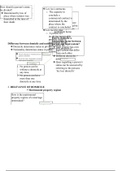
1. WHAT IS DOMICILE?
How❖ Determines
shoulda aperson’s
person's estate
status in private law
(whether person has capacity to marry, conclude
be divided?
contract)
❖ Lex loci contractus
❖ Determined
❖ by law of to reside for o The capacity to
The place where a person is deemed
Case the definition
the purpose of exercising his/her rights & duties.
place where testator was conclude a
❖ A person's 'legal home'. derived from?
domiciled at the time of commercial contract is
❖ Mason v Mason,
their death. determined by the
❖ Domicile is the place
place where the
which is considered by
contract is concluded
law to be a person's
❖ Lex loci rei sitae
permanent home
o A juristic act
involving immovable
How is domicile a
property status is
connecting factor between
Difference between domicile and nationality? determined by the
person and legal system?
❖ Domicile determines status in private place
law where the
❖ Each country has own
❖ Nationality determines status in public immovable
law property is
legal system that differ
situated
❖ The law of the place in which the person in Definition: from each other.
question is domiciled ❖ Different domiciles =
❖ where
Private law status is determined by the place
a person is domiciled
different laws
2 exceptions:
❖ Ques regarding a person’s
2 Golden
status can be answered by
1. No person rules: can be
referring to the persons
without a domicile at
‘lex loci dimicilii’
any time.
2. No person can have
more than one
domicile at any time
2. RELEVANCE OF DOMICILE
• Matrimonial property regime
How is the matrimonial
property regime of a marriage
determined? Case this derived from:
, ❖ Is determined by the legal system of the place ❖ Frankel's estate v The
where the man is domiciled at the time of the
marriage.
Master
❖ Unchanged rule, with the result that it is not ❖ Court of Appeal held that
affected by any future change of domicile by the
man
this rule must apply even
if the parties had already
agreedProblems:
at the time of the
marriage to settle
• Role in determining a child’s elsewhere.
status
❖ Question of whether a child qualifies as a child born of
married parents
▪ Determined on the basis of the child’s domicile of
origin.
▪ Minority and majority are determined by relevant
domicile
▪ Whether the child of unmarried parents will be
regarded as a child with married parents after their
subsequent marriage is determined by the fathers lex
loci domicilii (relevant to the domicile of the father
at the time of marriage)
❖ Adoption as a factor affecting a child’s status
▪ The lex loci domicilii of the child must be taken into
account when considering the validity and
consequences of adoption.
▪ Suggested that the lex adoptionis should serve as a
connecting factor in this regard. Case this was discussed:
The law of
the place ❖ Board of Executors v
where the Vitt
child was ❖ Both the lex loci
adopted domicilii and the lex
adoptionis should be
considered. (both
How❖ Determines
shoulda aperson’s
person's estate
status in private law
(whether person has capacity to marry, conclude
be divided?
contract)
❖ Lex loci contractus
❖ Determined
❖ by law of to reside for o The capacity to
The place where a person is deemed
Case the definition
the purpose of exercising his/her rights & duties.
place where testator was conclude a
❖ A person's 'legal home'. derived from?
domiciled at the time of commercial contract is
❖ Mason v Mason,
their death. determined by the
❖ Domicile is the place
place where the
which is considered by
contract is concluded
law to be a person's
❖ Lex loci rei sitae
permanent home
o A juristic act
involving immovable
How is domicile a
property status is
connecting factor between
Difference between domicile and nationality? determined by the
person and legal system?
❖ Domicile determines status in private place
law where the
❖ Each country has own
❖ Nationality determines status in public immovable
law property is
legal system that differ
situated
❖ The law of the place in which the person in Definition: from each other.
question is domiciled ❖ Different domiciles =
❖ where
Private law status is determined by the place
a person is domiciled
different laws
2 exceptions:
❖ Ques regarding a person’s
2 Golden
status can be answered by
1. No person rules: can be
referring to the persons
without a domicile at
‘lex loci dimicilii’
any time.
2. No person can have
more than one
domicile at any time
2. RELEVANCE OF DOMICILE
• Matrimonial property regime
How is the matrimonial
property regime of a marriage
determined? Case this derived from:
, ❖ Is determined by the legal system of the place ❖ Frankel's estate v The
where the man is domiciled at the time of the
marriage.
Master
❖ Unchanged rule, with the result that it is not ❖ Court of Appeal held that
affected by any future change of domicile by the
man
this rule must apply even
if the parties had already
agreedProblems:
at the time of the
marriage to settle
• Role in determining a child’s elsewhere.
status
❖ Question of whether a child qualifies as a child born of
married parents
▪ Determined on the basis of the child’s domicile of
origin.
▪ Minority and majority are determined by relevant
domicile
▪ Whether the child of unmarried parents will be
regarded as a child with married parents after their
subsequent marriage is determined by the fathers lex
loci domicilii (relevant to the domicile of the father
at the time of marriage)
❖ Adoption as a factor affecting a child’s status
▪ The lex loci domicilii of the child must be taken into
account when considering the validity and
consequences of adoption.
▪ Suggested that the lex adoptionis should serve as a
connecting factor in this regard. Case this was discussed:
The law of
the place ❖ Board of Executors v
where the Vitt
child was ❖ Both the lex loci
adopted domicilii and the lex
adoptionis should be
considered. (both