Exam 1: NUR2063 / NUR 2063 V1 (Latest
Update) Essentials of Pathophysiology | Questions and
Verified Answers | 100% Correct Solutions | Grade A
– Rasmussen
Question:
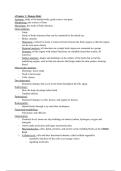
What is Pathophysiology
Answer:
is the study of what happens when the normal anatomy and physiology go wrong,
causing disorder and disease process of the human body.
Question:
What 4 things does pathophysiology include?
Answer:
Etiology, Pathogenesis, Clinical Manifestations, and Treatment Implications
Question:
What is etiology
Answer:
study of causes or reasons for phenomena. Includes Idiopathic conditions that have
an unknown origin or cause.
,Question:
What is pathogenesis?
Answer:
development or evolution of disease from initial stimulus to the expression of
manifestations as time occurs.
Question:
What are clinical manifestations?
Answer:
Signs and symptoms of disorder.
Question:
What are treatment implications?
Answer:
Which combine the etology, pathogenesis, and clinical manifestations to determine
the best treatment of condition per individual.
Question:
What are signs?
Answer:
Objective or observed manifestations of disease.
, Question:
What are symptoms?
Answer:
Subjective feelings of abnormality in the body.
Question:
What is objective data
Answer:
What you observe and can measure.
Question:
What are examples of objective data?
Answer:
rash, low blood pressure, bleeding
Question:
What is subjective data?
Answer:
What the patient may report to you
Update) Essentials of Pathophysiology | Questions and
Verified Answers | 100% Correct Solutions | Grade A
– Rasmussen
Question:
What is Pathophysiology
Answer:
is the study of what happens when the normal anatomy and physiology go wrong,
causing disorder and disease process of the human body.
Question:
What 4 things does pathophysiology include?
Answer:
Etiology, Pathogenesis, Clinical Manifestations, and Treatment Implications
Question:
What is etiology
Answer:
study of causes or reasons for phenomena. Includes Idiopathic conditions that have
an unknown origin or cause.
,Question:
What is pathogenesis?
Answer:
development or evolution of disease from initial stimulus to the expression of
manifestations as time occurs.
Question:
What are clinical manifestations?
Answer:
Signs and symptoms of disorder.
Question:
What are treatment implications?
Answer:
Which combine the etology, pathogenesis, and clinical manifestations to determine
the best treatment of condition per individual.
Question:
What are signs?
Answer:
Objective or observed manifestations of disease.
, Question:
What are symptoms?
Answer:
Subjective feelings of abnormality in the body.
Question:
What is objective data
Answer:
What you observe and can measure.
Question:
What are examples of objective data?
Answer:
rash, low blood pressure, bleeding
Question:
What is subjective data?
Answer:
What the patient may report to you