RE11
Leasehold Covenants
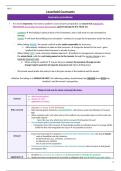
Insurance provisions
It is clearly important, from both a landlord’s and a tenant’s perspective, to ensure that ADEQUATE
PROVISIONS are in place to insure the property against damage by fire, flood, etc.
Landlord the building is physical basis of his investment, and so will want it to be reinstated for
damage
Tenant will want the building to be reinstated = continue to occupy the let premises under the lease.
When letting WHOLE, the tenant could be made solely responsible for insurance.
Alternatively, landlord can take out the insurance charge the tenant for the cost = gives
landlord the comfort that insurance is actually in place.
When letting PART, most commonly adopted approach landlord or management company to insure
the whole block, with the cost being passed on to the tenants through the service charge or as a
separate insurance rent.
o When acting for Landlord ensure they can recover the premium through service
charge/require payment of separate insurance rent when drafting lease
The tenant would prefer the policy to be in the joint names of the landlord and the tenant
Whether the letting is of WHOLE OR PART, the following matters should always be CHECKED from BOTH the
landlord’s and the tenant’s perspective:
Things to look out for when reviewing the lease…
risks insured against
General amount of cover
application of monies
Obligation ‘to insure’ is NOT SUFFICIENT
Risks covered Risks insured against should be stated EXPRESSLY, will often be under the definition of ‘Insured
Risk’
Often concludes with ‘such other risks as the Landlord may reasonably require or the tenant may
reasonably request’
New risks may arise which may not be recovered if exhaustive list used
Should inspect policy and ascertain what risks are covered
- If important risk is NOT covered theoretically possible for individual tenant to arrange EXTRA
COVER for that risk/renegotiate the clause not possible in practice
Ensure that the property is properly insured to its FULL reinstatement value, this should include:
Amount
costs of demolition and site clearance
professional fees (e.g., architects, surveyors etc.)
an allowance for inflation
rent in case of rent suspension
Professional valuation of reinstatement value should be obtained when insurance is first placed
and regularly after
Should be a covenant by the landlord to use the proceeds to reinstate the premises
Application of Ideally the tenant would want this to include an obligation that any shortfall in proceeds will be
1
, RE11
paid out of landlord pocket
policy moneys if reinstatement is possible then check what is done with the proceeds
Ideally would be shared if the tenants have been paying a premium shared proportionate
to values of respective interests
The tenant would prefer the policy to be in the joint names of the landlord and the tenant
If NO EXPRESS term to the contrary, rent is payable even if the property is rendered unusable
Rent suspension e.g., because of a fire
Tenant should ensure lease provides that the payment of rent will be suspended during any
period that the premises cannot be occupied following damage by an insured risk
Landlord normally happy to allow such rent suspension
Landlord can insure against the loss of rent
Usually insurance is for a set risk period
typically for 3-5 years
therefore, landlord may attempt to limit rent suspensions accordingly
UNLESS lease states otherwise, if the building is totally destroyed then frustration and
Termination termination will only apply in exceptional circumstances
Lease will often give Landlord the right to terminate the lease if reinstatement is impossible
Tenant should seek to ensure that he has this right too
If right to suspend rent payment is LIMITED tenant should ensure that if premises have NOT
been reinstated by end of rent suspension, they CAN TERMINATE lease
Permitted user
- At common law, a tenant can use premises for WHATEVER purposes they wish subject to planning laws and any
covenants on the superior title.
o But this MAY NOT be acceptable to the landlord will want to be able to exercise some control as to how
the premises are
- If acting for tenant: consider the user provisions carefully, to ensure they are not going to cause your client any
problems in their occupation of the unit, or if they should wish to assign the lease.
If leasing flat, Landlord will usually want to ensure that block is used SOLELY for residential
Flats purposes preserves value of reversion
If one or more flat is used for commercial purposes, may make other flats in the block LESS
desirable residences = more difficult to dispose of
Possibility of non-residential use may influence potential tenants to decline taking the leases
when block is first developed
Covenant limiting use to RESIDENTIAL ONLY acceptable to BOTH Landlord AND TENANT
Use is MUCH MORE of a problem in commercial leases
Commercial leases o In lettings of shops Landlord may need to prevent competition with other premises
belonging to them/ensure a good mix of retail units to make the development attractive
to the shopping public.
This may cause problems for a Tenant who cannot change from an unprofitable
shop use to one more profitable.
o In letting of an office block BOTH landlord and tenants will again have a common interest
in ensuring that it is all used just for office purposes
E.g., Use for a manufacturing purpose would NOT be acceptable to other
tenants due to noise and other forms of pollution which would adversely affect
the other tenants
Tenants would leave, offices could not be re-let, and the landlord would thus
suffer financially.
2
Leasehold Covenants
Insurance provisions
It is clearly important, from both a landlord’s and a tenant’s perspective, to ensure that ADEQUATE
PROVISIONS are in place to insure the property against damage by fire, flood, etc.
Landlord the building is physical basis of his investment, and so will want it to be reinstated for
damage
Tenant will want the building to be reinstated = continue to occupy the let premises under the lease.
When letting WHOLE, the tenant could be made solely responsible for insurance.
Alternatively, landlord can take out the insurance charge the tenant for the cost = gives
landlord the comfort that insurance is actually in place.
When letting PART, most commonly adopted approach landlord or management company to insure
the whole block, with the cost being passed on to the tenants through the service charge or as a
separate insurance rent.
o When acting for Landlord ensure they can recover the premium through service
charge/require payment of separate insurance rent when drafting lease
The tenant would prefer the policy to be in the joint names of the landlord and the tenant
Whether the letting is of WHOLE OR PART, the following matters should always be CHECKED from BOTH the
landlord’s and the tenant’s perspective:
Things to look out for when reviewing the lease…
risks insured against
General amount of cover
application of monies
Obligation ‘to insure’ is NOT SUFFICIENT
Risks covered Risks insured against should be stated EXPRESSLY, will often be under the definition of ‘Insured
Risk’
Often concludes with ‘such other risks as the Landlord may reasonably require or the tenant may
reasonably request’
New risks may arise which may not be recovered if exhaustive list used
Should inspect policy and ascertain what risks are covered
- If important risk is NOT covered theoretically possible for individual tenant to arrange EXTRA
COVER for that risk/renegotiate the clause not possible in practice
Ensure that the property is properly insured to its FULL reinstatement value, this should include:
Amount
costs of demolition and site clearance
professional fees (e.g., architects, surveyors etc.)
an allowance for inflation
rent in case of rent suspension
Professional valuation of reinstatement value should be obtained when insurance is first placed
and regularly after
Should be a covenant by the landlord to use the proceeds to reinstate the premises
Application of Ideally the tenant would want this to include an obligation that any shortfall in proceeds will be
1
, RE11
paid out of landlord pocket
policy moneys if reinstatement is possible then check what is done with the proceeds
Ideally would be shared if the tenants have been paying a premium shared proportionate
to values of respective interests
The tenant would prefer the policy to be in the joint names of the landlord and the tenant
If NO EXPRESS term to the contrary, rent is payable even if the property is rendered unusable
Rent suspension e.g., because of a fire
Tenant should ensure lease provides that the payment of rent will be suspended during any
period that the premises cannot be occupied following damage by an insured risk
Landlord normally happy to allow such rent suspension
Landlord can insure against the loss of rent
Usually insurance is for a set risk period
typically for 3-5 years
therefore, landlord may attempt to limit rent suspensions accordingly
UNLESS lease states otherwise, if the building is totally destroyed then frustration and
Termination termination will only apply in exceptional circumstances
Lease will often give Landlord the right to terminate the lease if reinstatement is impossible
Tenant should seek to ensure that he has this right too
If right to suspend rent payment is LIMITED tenant should ensure that if premises have NOT
been reinstated by end of rent suspension, they CAN TERMINATE lease
Permitted user
- At common law, a tenant can use premises for WHATEVER purposes they wish subject to planning laws and any
covenants on the superior title.
o But this MAY NOT be acceptable to the landlord will want to be able to exercise some control as to how
the premises are
- If acting for tenant: consider the user provisions carefully, to ensure they are not going to cause your client any
problems in their occupation of the unit, or if they should wish to assign the lease.
If leasing flat, Landlord will usually want to ensure that block is used SOLELY for residential
Flats purposes preserves value of reversion
If one or more flat is used for commercial purposes, may make other flats in the block LESS
desirable residences = more difficult to dispose of
Possibility of non-residential use may influence potential tenants to decline taking the leases
when block is first developed
Covenant limiting use to RESIDENTIAL ONLY acceptable to BOTH Landlord AND TENANT
Use is MUCH MORE of a problem in commercial leases
Commercial leases o In lettings of shops Landlord may need to prevent competition with other premises
belonging to them/ensure a good mix of retail units to make the development attractive
to the shopping public.
This may cause problems for a Tenant who cannot change from an unprofitable
shop use to one more profitable.
o In letting of an office block BOTH landlord and tenants will again have a common interest
in ensuring that it is all used just for office purposes
E.g., Use for a manufacturing purpose would NOT be acceptable to other
tenants due to noise and other forms of pollution which would adversely affect
the other tenants
Tenants would leave, offices could not be re-let, and the landlord would thus
suffer financially.
2