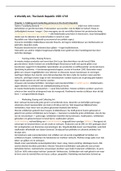
Human decision-Making lectures
Lecture 1 general decision making..................................................................1
Steps in decision making process.................................................................1
Phases of decision making............................................................................2
Lecture 2 Framing and reference effects.........................................................2
Lecture 3 Intertemporal decision making........................................................2
Lecture 4 Environmental decision making.......................................................4
Lecture 5 overconfidence................................................................................5
Lecture 6 heuristics and biases.......................................................................5
Lecture 7 Bounded awareness and emotional influences................................6
Lecture 8 Improving decision making..............................................................7
Lecture 9 Interdependent decision making.....................................................7
Lecture 10 Group decision making..................................................................8
Lecture 11 Ethical decision making.................................................................9
Recap Lecture................................................................................................10
Lecture 1 general decision making
What is a decision
- A choice from a range of options
- The moment of cutting the knot
Decision making: the entire process
Judgment: preparation for deciding
Problem solving: focus on decision as a solution
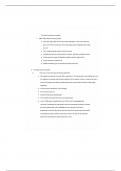
Steps in decision making process
- Define the problem
- Identify the criteria
- Weigh the criteria
- Generate alternatives
- Rate alternatives on criteria
- Compute the optimal decision
, Phases of decision making
- Judgment and evaluation
- Action
- Implementation
- Evaluation
Maximizing = trying to find maximum happiness
Satisficing = being satisfied with the best possible options available
Improving decision making through
- Unfreeze --> change --> refreeze
Lecture 2 Framing and reference effects
Expected values: selecting the alternative with highest expected value --> on average best
outcome
Expected utility: when values aren't clear, is subjective
Prospect theory shows how people make decisions under uncertainty and that they are not
always rational
Characteristics of prospect theory
- Reference point
- Reflection effect
- Loss aversion
Endowment effect
- Tendency to attach more value to something you own
Different strategies for deciding
- Maxmax
- Maxmin
- Minmin
- Minmax
Acquisition utility is the value you place on a commodity
Transactional utility is the perceived quality of the deal
Lecture 3 Intertemporal decision making
Time inconsistency means that people might know what is good for them and want them at
one point in time, but when the time to choose that good comes, they make a different
decision. Mostly being found in people choosing immediate rewards instead of long-term
rewards.
Lecture 1 general decision making..................................................................1
Steps in decision making process.................................................................1
Phases of decision making............................................................................2
Lecture 2 Framing and reference effects.........................................................2
Lecture 3 Intertemporal decision making........................................................2
Lecture 4 Environmental decision making.......................................................4
Lecture 5 overconfidence................................................................................5
Lecture 6 heuristics and biases.......................................................................5
Lecture 7 Bounded awareness and emotional influences................................6
Lecture 8 Improving decision making..............................................................7
Lecture 9 Interdependent decision making.....................................................7
Lecture 10 Group decision making..................................................................8
Lecture 11 Ethical decision making.................................................................9
Recap Lecture................................................................................................10
Lecture 1 general decision making
What is a decision
- A choice from a range of options
- The moment of cutting the knot
Decision making: the entire process
Judgment: preparation for deciding
Problem solving: focus on decision as a solution
Steps in decision making process
- Define the problem
- Identify the criteria
- Weigh the criteria
- Generate alternatives
- Rate alternatives on criteria
- Compute the optimal decision
, Phases of decision making
- Judgment and evaluation
- Action
- Implementation
- Evaluation
Maximizing = trying to find maximum happiness
Satisficing = being satisfied with the best possible options available
Improving decision making through
- Unfreeze --> change --> refreeze
Lecture 2 Framing and reference effects
Expected values: selecting the alternative with highest expected value --> on average best
outcome
Expected utility: when values aren't clear, is subjective
Prospect theory shows how people make decisions under uncertainty and that they are not
always rational
Characteristics of prospect theory
- Reference point
- Reflection effect
- Loss aversion
Endowment effect
- Tendency to attach more value to something you own
Different strategies for deciding
- Maxmax
- Maxmin
- Minmin
- Minmax
Acquisition utility is the value you place on a commodity
Transactional utility is the perceived quality of the deal
Lecture 3 Intertemporal decision making
Time inconsistency means that people might know what is good for them and want them at
one point in time, but when the time to choose that good comes, they make a different
decision. Mostly being found in people choosing immediate rewards instead of long-term
rewards.