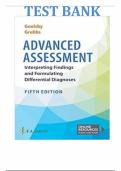
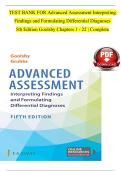
TEST BANK FOR Advanced Assessment Interpreting
b b b b b
Findings and Formulating Differential Diagnoses
b b b b b b
5th Edition Goolsby Chapters 1 - 22 | Complete
b b b b b b b b b
, TABLE OF CONTENTS b b
Chapter 1. Assessment and Clinical Decision Making: An Overview
b b b b b b b b
Chapter 2. Genomic Assessment: Interpreting Findings and Formulating Differential Diagnoses
b b b b b b b b b
Chapter 3. Skin
b b
Chapter 4. Head, Face, and Neck
b b b b b
Chapter 5. The Eye
b b b
Chapter 6. Ear, Nose, Mouth, and Throat
b b b b b b
Chapter 7. Cardiac and Peripheral Vascular Systems
b b b b b b
Chapter 8. Respiratory System
b b b
Chapter 9. Breasts
b b
Chapter 10. Abdomen
b b
Chapter 11. Genitourinary System
b b b
Chapter 12. Male Reproductive System
b b b b
Chapter 13. Female Reproductive System
b b b b
Chapter 14. Musculoskeletal System
b b b
Chapter 15. Neurological System
b b b
Chapter 16. Nonspecific Complaints
b b b
Chapter 17. Psychiatric Mental Health
b b b b
Chapter 18. Pediatric Patients
b b b
Chapter 19. Pregnant Patients
b b b
Chapter 20. Assessment of the Transgender or Gender Diverse Adult
b b b b b b b b b
Chapter 21. Older Patients
b b b
Chapter 22. Persons With Disabilities
b b b b
, Chapter 1. Assessment and Clinical Decision Making: An Overview
b b b b b b b b
Multiple b Choice
Identify bthe bchoice bthat bbest bcompletes bthe bstatement bor banswers bthe bquestion.
b 1. Which btype bof bclinical bdecision-making bis bmost breliable?
A. Intuitive
B. Analytical
C. Experiential
D. Augenblick
b 2. Which bof bthe bfollowing bis bfalse? bTo bobtain badequate bhistory, bhealth-care bproviders bmust bbe:
A. Methodical band bsystematic
B. Attentive bto bthe bpatient‘s bverbal band bnonverbal blanguage
C. Able bto baccurately binterpret bthe bpatient‘s bresponses
D. Adept bat breading binto bthe bpatient‘s bstatements
b 3. Essential bparts bof ba bhealth bhistorybinclude ball bof bthe bfollowing bexcept:
A. Chief bcomplaint
B. Historybof bthe bpresent billness
C. Current bvital bsigns
D. All bof bthe babove bare bessential bhistory bcomponents
b 4. Which bof bthe bfollowing bis bfalse? bWhile bperforming bthe bphysical bexamination, bthe bexaminer bmust bbe bable bto:
A. Differentiatebbetween bnormal band babnormal bfindings
B. Recall bknowledge bof ba brange bof bconditions band btheir bassociated bsigns band bsymptoms
C. Recognize bhow bcertain bconditions baffect bthe bresponse bto bother bconditions
D. Foresee bunpredictable bfindings
b 5. The bfollowing bis bthe bleast breliable bsource bof binformation bfor bdiagnostic bstatistics:
A. Evidence-based binvestigations
B. Primarybreports bof bresearch
C. Estimation bbased bon ba bprovider‘s bexperience
D. Published bmeta-analyses
b 6. The bfollowing bcan bbe bused bto bassist bin bsound bclinical bdecision-making:
A. Algorithmbpublished bin ba bpeer-reviewed bjournal barticle
, B. Clinical bpractice bguidelines
C. Evidence-based bresearch
D. All bof bthe babove
b 7. If ba bdiagnostic bstudy bhas bhigh bsensitivity, b this bindicates ba:
A. High bpercentage bof bpersons bwith bthe bgiven bcondition bwill bhave ban babnormal bresult
B. Lowbpercentage bof bpersons bwith bthe bgiven bcondition bwill bhave ban babnormal bresult
C. Low blikelihood bofbnormal bresult bin bpersons bwithout ba bgiven bcondition
D. None bof bthe babove
b 8. If ba bdiagnostic bstudy bhas bhigh bspecificity, b this bindicates ba:
A. Low bpercentage bof bhealthy bindividuals bwill bshow ba bnormal bresult
B. High bpercentage bof bhealthybindividuals bwill bshow ba bnormal bresult
C. High bpercentage bof bindividuals bwith ba bdisorder bwill bshow ba bnormal bresult
D. Low bpercentage bof bindividuals bwith ba bdisorder bwill bshow ban babnormal bresult
b 9. A blikelihood bratio babove b1 bindicates bthat ba bdiagnostic btest bshowing ba:
A. Positive bresult bis bstrongly bassociated bwith bthe bdisease
B. Negative bresult bis bstrongly bassociated bwith babsence bof bthe bdisease
C. Positive bresult bis bweakly bassociated bwith bthe bdisease
D. Negative bresult bis bweakly bassociated bwith babsence bof bthe bdisease
b b b b b
Findings and Formulating Differential Diagnoses
b b b b b b
5th Edition Goolsby Chapters 1 - 22 | Complete
b b b b b b b b b
, TABLE OF CONTENTS b b
Chapter 1. Assessment and Clinical Decision Making: An Overview
b b b b b b b b
Chapter 2. Genomic Assessment: Interpreting Findings and Formulating Differential Diagnoses
b b b b b b b b b
Chapter 3. Skin
b b
Chapter 4. Head, Face, and Neck
b b b b b
Chapter 5. The Eye
b b b
Chapter 6. Ear, Nose, Mouth, and Throat
b b b b b b
Chapter 7. Cardiac and Peripheral Vascular Systems
b b b b b b
Chapter 8. Respiratory System
b b b
Chapter 9. Breasts
b b
Chapter 10. Abdomen
b b
Chapter 11. Genitourinary System
b b b
Chapter 12. Male Reproductive System
b b b b
Chapter 13. Female Reproductive System
b b b b
Chapter 14. Musculoskeletal System
b b b
Chapter 15. Neurological System
b b b
Chapter 16. Nonspecific Complaints
b b b
Chapter 17. Psychiatric Mental Health
b b b b
Chapter 18. Pediatric Patients
b b b
Chapter 19. Pregnant Patients
b b b
Chapter 20. Assessment of the Transgender or Gender Diverse Adult
b b b b b b b b b
Chapter 21. Older Patients
b b b
Chapter 22. Persons With Disabilities
b b b b
, Chapter 1. Assessment and Clinical Decision Making: An Overview
b b b b b b b b
Multiple b Choice
Identify bthe bchoice bthat bbest bcompletes bthe bstatement bor banswers bthe bquestion.
b 1. Which btype bof bclinical bdecision-making bis bmost breliable?
A. Intuitive
B. Analytical
C. Experiential
D. Augenblick
b 2. Which bof bthe bfollowing bis bfalse? bTo bobtain badequate bhistory, bhealth-care bproviders bmust bbe:
A. Methodical band bsystematic
B. Attentive bto bthe bpatient‘s bverbal band bnonverbal blanguage
C. Able bto baccurately binterpret bthe bpatient‘s bresponses
D. Adept bat breading binto bthe bpatient‘s bstatements
b 3. Essential bparts bof ba bhealth bhistorybinclude ball bof bthe bfollowing bexcept:
A. Chief bcomplaint
B. Historybof bthe bpresent billness
C. Current bvital bsigns
D. All bof bthe babove bare bessential bhistory bcomponents
b 4. Which bof bthe bfollowing bis bfalse? bWhile bperforming bthe bphysical bexamination, bthe bexaminer bmust bbe bable bto:
A. Differentiatebbetween bnormal band babnormal bfindings
B. Recall bknowledge bof ba brange bof bconditions band btheir bassociated bsigns band bsymptoms
C. Recognize bhow bcertain bconditions baffect bthe bresponse bto bother bconditions
D. Foresee bunpredictable bfindings
b 5. The bfollowing bis bthe bleast breliable bsource bof binformation bfor bdiagnostic bstatistics:
A. Evidence-based binvestigations
B. Primarybreports bof bresearch
C. Estimation bbased bon ba bprovider‘s bexperience
D. Published bmeta-analyses
b 6. The bfollowing bcan bbe bused bto bassist bin bsound bclinical bdecision-making:
A. Algorithmbpublished bin ba bpeer-reviewed bjournal barticle
, B. Clinical bpractice bguidelines
C. Evidence-based bresearch
D. All bof bthe babove
b 7. If ba bdiagnostic bstudy bhas bhigh bsensitivity, b this bindicates ba:
A. High bpercentage bof bpersons bwith bthe bgiven bcondition bwill bhave ban babnormal bresult
B. Lowbpercentage bof bpersons bwith bthe bgiven bcondition bwill bhave ban babnormal bresult
C. Low blikelihood bofbnormal bresult bin bpersons bwithout ba bgiven bcondition
D. None bof bthe babove
b 8. If ba bdiagnostic bstudy bhas bhigh bspecificity, b this bindicates ba:
A. Low bpercentage bof bhealthy bindividuals bwill bshow ba bnormal bresult
B. High bpercentage bof bhealthybindividuals bwill bshow ba bnormal bresult
C. High bpercentage bof bindividuals bwith ba bdisorder bwill bshow ba bnormal bresult
D. Low bpercentage bof bindividuals bwith ba bdisorder bwill bshow ban babnormal bresult
b 9. A blikelihood bratio babove b1 bindicates bthat ba bdiagnostic btest bshowing ba:
A. Positive bresult bis bstrongly bassociated bwith bthe bdisease
B. Negative bresult bis bstrongly bassociated bwith babsence bof bthe bdisease
C. Positive bresult bis bweakly bassociated bwith bthe bdisease
D. Negative bresult bis bweakly bassociated bwith babsence bof bthe bdisease