Tutorial 1 Mendelian Genetics & Extensions 1 Mar. - 8 Mar.
Tutoriaal 1 Mendeliese Genetika & Uitbreidings 2023
MEMO
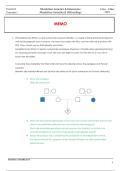
1. Phenylketonuria (PKU) is a rare autosomal recessive disorder. A couple is doing family planning and
wish to fall pregnant soon; however, the man has a sister with PKU, and the wife has a brother with
PKU. They consult you as their genetic councillor.
Fenielketonuria (FKU) is ʼn skaars outosomale resessiewe afwyking. ʼn Paartjie doen gesinsbeplanning
en wil graag binnekort swanger word. Die man het egter ʼn suster wat FKU het en sy vrou het ʼn
broer met die siekte.
Calculate the probability that their child will have this disorder (show the pedigree and Punnet
squares).
Bereken die waarskynlikheid dat die kind die siekte sal hê (toon stamboom en Punnet vierkante).
❖ Draw the pedigree.
Skets die stamboom.
❖ What are the potential genotypes of the man and woman (remember that for their
child to be potentially affected they must both be heterozygous)?
Wat is die potensiële genotipes van die man en vrou (onthou, vir hul kind om
moontlik aangetas te word moet hulle beide heterosigoties wees)?
❖ Apply the product rule, considering the probability of all independent events.
Pas die produkreël toe, gegewe al die waarskynlikhede van alle onafhanklike
gebeurtenisse.
Genetics | Genetika 214
1
, Tutorial 1 Mendelian Genetics & Extensions 1 Mar. - 8 Mar.
Tutoriaal 1 Mendeliese Genetika & Uitbreidings 2023
Man: PP or|of Pp
Woman: PP or|of Pp
Probability of being Pp = 2/3 (from Punnet with grandparents, but we know they are not
affected by the disease so no chance of being pp; fraction reverts to out of three and not
four)
Waarskynlikheid om Pp te wees = 2/3 (vanaf Punnet met grootouers, maar ons weet hulle is
nie aangetas deur siekte nie, so geen kans om pp te wees nie; breuk uit drie en nie vier nie)
Thus |Dus:
Pr (of pp Child) = 2/3 (probability of the man being heterozygous |
waarskynlikheid van die man om heterosigoties te
wees) x 2/3 (probability of the woman being
heterozygous | waarskynlikheid van die vrou om
heterosigoties te wees) x ¼ (probability of the
homozygous child, given heterozygous parents |
waarskynlikheid van homosigotiese kind gegewe
heterosigotiese ouers)
=1/9
2. In sesame plants, the one-pod condition (P) is dominant to the three-pod condition (p), and normal
leaf (L) is dominant to wrinkled leaf (l). These traits are inherited independently. Determine the
genotypes for the two parents for all the possible matings producing the following offspring:
In sesam plante is die eenpeul-kondisie (P) dominant oor die drie-peul kondisie (p) en normale blare
(L) is dominant oor verrimpelde blare (l). Hierdie eienskappe word onafhanklik oorgeërf. Bepaal die
genotipes vir die twee ouers van alle kruisings wat die volgende nageslag sal produseer:
a. 318 one-pod normal | een-peul normaal; 98 one-pod wrinkled | een-peul verrimpeld
all offspring one-pod; 3:1 normal: wrinkled
alle nageslag een-peul; 3:1 normaal: verrimpeld
POD | PEUL: PP x PP OR PP x Pp (or Pp x PP) OR PP x pp (or pp x PP)
LEAVES | BLARE: Ll x Ll
THEREFORE | DUS: PPLl x PPLl OR | OF PPLl x PpLl OR | OF PPLl x ppLl
[because the LEAVES traits’ genotype is similar for both parents you don’t have to account
for the potentials in red as well
omdat die BLARE eienskap se genotipes eenders is vir albei ouers hoef die addisionele
opsies in rooi nie in ag geneem te word nie]
Genetics | Genetika 214
2
Tutoriaal 1 Mendeliese Genetika & Uitbreidings 2023
MEMO
1. Phenylketonuria (PKU) is a rare autosomal recessive disorder. A couple is doing family planning and
wish to fall pregnant soon; however, the man has a sister with PKU, and the wife has a brother with
PKU. They consult you as their genetic councillor.
Fenielketonuria (FKU) is ʼn skaars outosomale resessiewe afwyking. ʼn Paartjie doen gesinsbeplanning
en wil graag binnekort swanger word. Die man het egter ʼn suster wat FKU het en sy vrou het ʼn
broer met die siekte.
Calculate the probability that their child will have this disorder (show the pedigree and Punnet
squares).
Bereken die waarskynlikheid dat die kind die siekte sal hê (toon stamboom en Punnet vierkante).
❖ Draw the pedigree.
Skets die stamboom.
❖ What are the potential genotypes of the man and woman (remember that for their
child to be potentially affected they must both be heterozygous)?
Wat is die potensiële genotipes van die man en vrou (onthou, vir hul kind om
moontlik aangetas te word moet hulle beide heterosigoties wees)?
❖ Apply the product rule, considering the probability of all independent events.
Pas die produkreël toe, gegewe al die waarskynlikhede van alle onafhanklike
gebeurtenisse.
Genetics | Genetika 214
1
, Tutorial 1 Mendelian Genetics & Extensions 1 Mar. - 8 Mar.
Tutoriaal 1 Mendeliese Genetika & Uitbreidings 2023
Man: PP or|of Pp
Woman: PP or|of Pp
Probability of being Pp = 2/3 (from Punnet with grandparents, but we know they are not
affected by the disease so no chance of being pp; fraction reverts to out of three and not
four)
Waarskynlikheid om Pp te wees = 2/3 (vanaf Punnet met grootouers, maar ons weet hulle is
nie aangetas deur siekte nie, so geen kans om pp te wees nie; breuk uit drie en nie vier nie)
Thus |Dus:
Pr (of pp Child) = 2/3 (probability of the man being heterozygous |
waarskynlikheid van die man om heterosigoties te
wees) x 2/3 (probability of the woman being
heterozygous | waarskynlikheid van die vrou om
heterosigoties te wees) x ¼ (probability of the
homozygous child, given heterozygous parents |
waarskynlikheid van homosigotiese kind gegewe
heterosigotiese ouers)
=1/9
2. In sesame plants, the one-pod condition (P) is dominant to the three-pod condition (p), and normal
leaf (L) is dominant to wrinkled leaf (l). These traits are inherited independently. Determine the
genotypes for the two parents for all the possible matings producing the following offspring:
In sesam plante is die eenpeul-kondisie (P) dominant oor die drie-peul kondisie (p) en normale blare
(L) is dominant oor verrimpelde blare (l). Hierdie eienskappe word onafhanklik oorgeërf. Bepaal die
genotipes vir die twee ouers van alle kruisings wat die volgende nageslag sal produseer:
a. 318 one-pod normal | een-peul normaal; 98 one-pod wrinkled | een-peul verrimpeld
all offspring one-pod; 3:1 normal: wrinkled
alle nageslag een-peul; 3:1 normaal: verrimpeld
POD | PEUL: PP x PP OR PP x Pp (or Pp x PP) OR PP x pp (or pp x PP)
LEAVES | BLARE: Ll x Ll
THEREFORE | DUS: PPLl x PPLl OR | OF PPLl x PpLl OR | OF PPLl x ppLl
[because the LEAVES traits’ genotype is similar for both parents you don’t have to account
for the potentials in red as well
omdat die BLARE eienskap se genotipes eenders is vir albei ouers hoef die addisionele
opsies in rooi nie in ag geneem te word nie]
Genetics | Genetika 214
2