Lecture
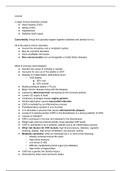
4 major chronic disorders include
● Heart disease (CVD)
● Stroke (CVD)
● Hypertension
● Diabetes (both types)
Comorbidity: things that typically happen together (diabetes and obesity for ex.)
All of the above chronic disorders:
● Involve the circulatory and or metabolic system
● May be comorbid disorders
● Have modifiable risk factors
● Non-communicable (non exchangeable w bodily fluids) diseases
What is coronary heart disease?
● Number two cause of mortality in canada
● Accounts for one out of five deaths in 2007
● Disease of modernization (diet/activity level)
○ CHD deaths:
■ 20% men
■ 22% women
● Mostly premature deaths (<75 y/o)
● Major chronic disease (living with the disease)
● Caused by atherosclerosis (narroseing for the coronary arteries
● Lowers O2 supply to heart
● Temporary shortages causes angina pectoris
● Severe deprivation causes myocardial infarction
● CHD is mediated by an inflammatory process
● Proinflammatory cytokine IL-6 is involved
● IL-6 stimulates a process that causes atherosclerotic plaques
● Levels of C-reactive protein (CRP) in the bloodstream is a strong predictor of CDH
● Causes or indicator?
● CRP is produced in the liver and released in the bloodstream
● Weight gain and low physical activity cause elevated CRP levels
● CHD is considered to be a systemic disease due to an inflammatory process
● Other risk factors for CHD include: high blood pressure, diabetes, cigarette
smoking, obesity, high serum cholesterol, low physics. Activity
● Metabolic syndrome: when an individual has 3 or more of the following:
○ Obesity centered around the waist
○ High blood pressure
○ Low levels of HDL
○ Difficulty metabolizing blood sugar (pre-diabetes)
○ High levels of triglycerides
● CHD has a genetic link (family history)
● Worsened by lower socio-economic status
, ● Certain risk factors still remain unidentified
Stress and CHD
● Cardiovascular reactivity contributes to CHD by:
○ Damaging endothelial cells
○ This facilitates the deposit of lipids
○ Increases inflammation
○ Development of atherosclerosis lesions
● Acute stress can cause angina/heart attack:
○ Emotional stress
○ Anger
○ Extreme excitement
○ Negative emotions
○ Sudden bursts of activity
● Reactivity or coping to stress with hostility increases risk factors (ex: increasing
cholesterol levels)
● Daily life stressors, work related stress, modernization and low levels of control
contribute to CHD
Prime candidate
● CHD is more common with: socio-economic status, males
● Linked with:
○ Higher rates of physical inactivity
○ Smoking
○ Elevated cholesterol
○ Being overweight
Why do we eat too much?
● Personal food consumption has increased:
○ Serving size
○ Food access
○ Social context
○ Stress
Women and CHD
● CHD is a leading cause of morality in women
● Less is known about CHD in women
● Occurs later in life
● For women but recovery rates are lower
● Fewer women are referred to cardiologist
● Fewer women return to work after a heart attack
● Younger women are protected via higher levels of HDL
● Estrogen diminiges sympathetic NS arousal
● After menopause CHD increases because of:
○ Weight gain
○ Increased blood pressure
○ Increased cholesterol triglycerides
● HRT does not reverse effects?
4 major chronic disorders include
● Heart disease (CVD)
● Stroke (CVD)
● Hypertension
● Diabetes (both types)
Comorbidity: things that typically happen together (diabetes and obesity for ex.)
All of the above chronic disorders:
● Involve the circulatory and or metabolic system
● May be comorbid disorders
● Have modifiable risk factors
● Non-communicable (non exchangeable w bodily fluids) diseases
What is coronary heart disease?
● Number two cause of mortality in canada
● Accounts for one out of five deaths in 2007
● Disease of modernization (diet/activity level)
○ CHD deaths:
■ 20% men
■ 22% women
● Mostly premature deaths (<75 y/o)
● Major chronic disease (living with the disease)
● Caused by atherosclerosis (narroseing for the coronary arteries
● Lowers O2 supply to heart
● Temporary shortages causes angina pectoris
● Severe deprivation causes myocardial infarction
● CHD is mediated by an inflammatory process
● Proinflammatory cytokine IL-6 is involved
● IL-6 stimulates a process that causes atherosclerotic plaques
● Levels of C-reactive protein (CRP) in the bloodstream is a strong predictor of CDH
● Causes or indicator?
● CRP is produced in the liver and released in the bloodstream
● Weight gain and low physical activity cause elevated CRP levels
● CHD is considered to be a systemic disease due to an inflammatory process
● Other risk factors for CHD include: high blood pressure, diabetes, cigarette
smoking, obesity, high serum cholesterol, low physics. Activity
● Metabolic syndrome: when an individual has 3 or more of the following:
○ Obesity centered around the waist
○ High blood pressure
○ Low levels of HDL
○ Difficulty metabolizing blood sugar (pre-diabetes)
○ High levels of triglycerides
● CHD has a genetic link (family history)
● Worsened by lower socio-economic status
, ● Certain risk factors still remain unidentified
Stress and CHD
● Cardiovascular reactivity contributes to CHD by:
○ Damaging endothelial cells
○ This facilitates the deposit of lipids
○ Increases inflammation
○ Development of atherosclerosis lesions
● Acute stress can cause angina/heart attack:
○ Emotional stress
○ Anger
○ Extreme excitement
○ Negative emotions
○ Sudden bursts of activity
● Reactivity or coping to stress with hostility increases risk factors (ex: increasing
cholesterol levels)
● Daily life stressors, work related stress, modernization and low levels of control
contribute to CHD
Prime candidate
● CHD is more common with: socio-economic status, males
● Linked with:
○ Higher rates of physical inactivity
○ Smoking
○ Elevated cholesterol
○ Being overweight
Why do we eat too much?
● Personal food consumption has increased:
○ Serving size
○ Food access
○ Social context
○ Stress
Women and CHD
● CHD is a leading cause of morality in women
● Less is known about CHD in women
● Occurs later in life
● For women but recovery rates are lower
● Fewer women are referred to cardiologist
● Fewer women return to work after a heart attack
● Younger women are protected via higher levels of HDL
● Estrogen diminiges sympathetic NS arousal
● After menopause CHD increases because of:
○ Weight gain
○ Increased blood pressure
○ Increased cholesterol triglycerides
● HRT does not reverse effects?