NURS 3410 Exam 3 Study Guide (2020 Updated) – University of Arizona | NURS3410 Exam 3 Study Guide (2020 Updated)
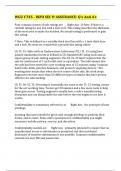
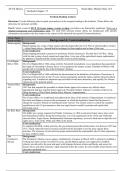
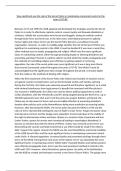
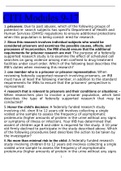
NURS 3410 Exam 3 Study Guide (2020 Updated) – University of Arizona Clinical Pharmacology 50 questions: Multiple Choice (36 questions) & Multiple response (4 questions) Chap 38 & 39 Antibiotics- 11 questions Considerations before starting antibiotic therapy (allergies, Culture & Sensitivity, static vs cidal agents) • Before beginning antibiotic therapy, suspected areas of infection should be cultured to identify the causative organism and potential antibiotic susceptibilities o It can take a while for the culture to come back w/ results • Antiseptics- inhibits growth but does not necessarily kill them. Can be applied to living tissues “static” o Bacteriostatic- inhibits growth ▪ Take a little bit long but uses own immune system • Disinfectants- used on nonliving objects to kill organisms. “cidal” o Bactericidal- kills ▪ Bleach wipes for the table • Allergic reaction (penicillin & sulfonamides) o Rash, itching, hives, fever, chills, joint pain, difficulty breathing or wheezingo N/V/D and does not necessitate drug discontinuation and anaphylactic shock Extended spectrum penicillin p. 609. Bactericidal • Active against numerous organisms (g ram +/-, anaerobic). Overuse contributes to resistance • Extended Spectrum Penicillin: typically, combo drugs with betalactamase inhibitors. o Piperacillin w/ Tazobactam Brand name: ZOSYN o Additives to make antibiotic stronger against bacteria that make beta-lactamase • Zosyn good agonist intestinal infections and pseudomonas which is a common health care-associated infection. (usually are not given unless need for a broad spectrum, or doesn’t respond to antibiotics) • Empiric therapy ( +/-/anaerobic) serious infections • Zosyn only available in IV use • *Cross sensitivity between penicillin and cephalosporins (another beta-lactamase) * o Decision to tx someone w/ other beta-lactam in presence of pcn allergy is dependent on factors such as severity of allergic rxn, nature of infections, drug susceptibility, other possible therapies Vancomycin side effects p. 633 • Due to the narrow therapeutic index: oto/nephron toxic • Ototoxicity: toxicity to the ears; degrees of hearing loss that is likely to b permanent• Nephrotoxicity: toxicity to the kidneys; degree of renal functions usually reversible with D/C of drug • Red man syndrome: flushing/itching of head, face neck and upper trunk (typically when infused too quickly). • Bothersome but not usually harmful • Rapid infusions can also cause hypotension • Additive neuromuscular blocking effects Antibiotics for c. diff p. 632 METRONIDAZOLE (Flagyl) • - - - - - - - - - - - - - - - - - - - - - - - - - - - - - - - Contraindicated in allergy, MI, CAD o Adverse Effects: Interacts with ETOH and Erectile Dysfunction drugs Tamsulosin (Flomax)o BPH, works on prostate and bladder to restore urinary flow o Contraindicated with ED drugs o Adv. Effects: HA, abnormal ejaculation, rhinitis o Interacts with other alpha blockers, CCB, erectile dysfunctions drugs Education Alpha blockers: • change position slowly • Avoid any activities leading to vasodilation • Hot tubs, sauna, alcohol, excessive exercise • Avoid caffeine or other CNS stimulants Chap 20 Cholinergic: 3 questions Effects of cholinergic • Direct acting • Topically for IOP (glaucoma & surgery)- causes pupil contraction- decrease fluid buildup in the eye • Poorly absorbed so typically a topical/eye application (except bethanechol) • Indirect acting: • Increasing acetylcholine concentrations in synaptic spaces • Cause skeletal muscle contraction • Myasthenia gravis, Reversal of anticholinergic poisoning or neuromuscular blocking drugs, Alzheimer's Pt education for cholinergic with MG • MG meds give 30 min before meals to help with swallowing• Meds can be metabolizing before meals to help prevent aspiration • Help strengthen muscle for chewing and eating • Monitor for cholinergic crisis- SLUDGE (Salivation, Lacrimation, Urination, Defecation, Gastric upset, Emesis) • S/S of improvements is decrease in or absence of ptosis (eye dropping) and diplopia (double vision), decrease muscle weekends, decrease difficulty in swallowing and chewing S/S of cholinergic crisis SLUDGE (Salivation, Lacrimation, Urinary incontinence, Diarrhea, Gastric upset, Emesis) Chap 21 Cholinergic blocker: 2 questions Examples of cholinergic blockers BELLADONNA ALKALOIDS (Atropine) • Other belladonna includes scopolamine, hyoscyamine • More potent in action on heart, bronchi and intestines • Used for bradycardia • Antidote for cholinergic drug poisoning & pre-op for oral secretions • Injectable, oral and ophthalmic formulas DICYCLOMINE (Bentyl) • Used for IBS, antispasmodic primarily used for GI tract ▪ Excessive cramping in the gut CLYCOPRROLATE (ROBINUL)• used for pre-op secretions SCOPLAMINE • used for motion sickness OXYBUTYNIN (Ditropan) • Used for overactive bladder • Neurogenic bladder associated with SCI & congenital disorders (spinal bifida) • Oral or patch TOLTERODINE (Detrol) • Overactive bladder • Lower dosing in liver issues or other drugs in the P 450 enzyme system • Assess pt. hx for angle closure glaucoma Anticholinergic side effects • Adv. Effects: higher risk in infants, children with Down Syndrome, spastic paralysis, or brain damage and older adults (more likely to cause delirium) • OD tx with symptom & support therapy • EKG monitoring and activated charcoal • Fluids • Physostigmine (extreme cases)- can cause seizures and asystole so its reserved for severe delirium or agitation Chap 12 CNS Depressant & Muscle Relaxants: 3 questions Barbiturate interactions & OD care pg. 195• Interactions: liver enzyme inducers, shortening duration of other drugs using p-450 enzymes. o Additive CNS depression with other depressants (ETOH!) o MAOIs, TCA, anticoagulants, glucocorticoids, oral contraceptives • Toxicity: causes death; tx: supportive & symptomatic to keep pt. alive • No antidotes: why it is not used anymore “-barbital” Benzos: names, side effects pg. 193 Adverse Effects all Benzos: Headache Drowsiness Paradoxical excitement or nervousness Dizziness or vertigo Cognitive impairment Lethargy “hangover” feeling Rebound insomnia upon abrupt discontinuatio DIAZEPAM (Valium) • First drug, widely used with indications across the spectrum o Can be used for treatment of anxiety, procedural sedation anesthesia adjunct, anticonvulsant therapy and skeletal muscle relaxation • EMERGANCY: A first line treatment for status epilepticus (seizures that last more than 5 mins or multiple) – IV route Completely suppresses the brain activity MIDAZOLAM (Versed)• Pre-op and moderate conscious sedation (colonoscopy, ICU, CATH lab, short-term procedures, mech ventilation etc.) • Causes amnesia & also anxiolysis • Injectable and oral form for children If toxicity, resp. depression can be treated using an oxygen mask or a bag TEMAZEPAM (Restoril) • Intermediate acting for sleep/ hypnotic • Induces sleep with 20-40 min-take, 1 hour before going to bed • If a patient is in toxicity. flumazenil will have to be multi dosed since it is a longer acting drug LORAZEPAM (Ativan) • Used for anxiety, agitation, conscious sedation Non- Benzo sedative-Hypnotic ESZOPICLONE (Lunesta) • Short-intermediate acting for full 8 hours sleep- educate pt. to have a full 8 hrs. available to sleep don’t take when not having 8 hrs.; will cause daytime drowsiness RAMELTEON (Rozerem) • Can be used when hx of CNS depressant abuse ZALEPLON( Sonata) • may take dose in middle of night upon awakening ZOLPIDEM (Ambien) • Can be used for long term use • Short acting with short duration • Lower incidence of daytime sleepiness vs benzos • FDA has max doses, gender based to minimize risk • Has a CR form to induce sleep and maintain sleep• Concern re: somnambulating (sleep walking) • Take on empty stomach and not too late • Risk for cross allergies with ASA allergies Names & indications of muscle relaxers pg. 196-7 • Indication= Used to treat pain with skeletal muscle spasms and work predominately in the CNS BACLOFEN (Lioresal) • can be used for hiccups • Oral or implantable pump (chronic spasticity i.e. Spinal cord injury) CYCLOBENAZPRINE (Flexeril) • Closest chemical structure to TCA • Marked sedation common effect - - - - - - - -
Written for
- Institution
- The University Of Arizona
- Course
- Nursing (NURS3410)
Document information
- Uploaded on
- January 9, 2021
- Number of pages
- 26
- Written in
- 2020/2021
- Type
- Exam (elaborations)
- Contains
- Questions & answers
Subjects
-
nurs 3410 exam 3 study guide 2020 updated – university of arizona
-
nurs 3410 exam 3 study guide
-
nurs 3410 study guide 2020 updated – university of arizona
-
nurs 3410 study guide – university of ari

Document also available in package deal