Psychology AO1 AO3 Essay Plan (eval)
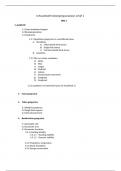
Multi Store Model - Atkinson and Shiffrin 1968 1. Supporting evidence
The multi store model describes how information is processed The fact that they are encoded differently (use examples
and stored into different categories in memory. It consists of 3 duration, encoding and capacity is all ok)
stores, the sensory register, the short term memory and the long 1. Compete - baddeley used artificial tasks therefore
term memory. lacks mundane realism
The sensory register 2. More than one type of STM
All stimuli that pass through the receptors go into the sensory Shallice and Warrington studied KF, and got into a
register. This has 5 stores, one for each sense, for example echoic motorcycle accident. Short term memory was very poor
and iconic for hearing and seeing. The duration is half a second, with auditory lists but visual lists were regular, this
high capacity due to the cells in the eye but only information suggests that there are further stores in the sensory
that we pay attention to is passed onto the short term memory. register, short term memory as well.
The short term memory
Temporary store before the long term memory. Miller 1956 said 3. Application to revision
that the capacity of the STM should be 7+-2, meaning 5-9 items. Chunking ideas together can increase the capacity of the
Peterson and Peterson used trigrams of numbers and tracking long term memory and the short term memory. Using
dotted points across the screen, found that the duration of the different coloured pens to associate items of information
STM was around 18-30 seconds. Baddeley 1966a found that we together can allow a full recall together of more
tend to mix up acoustically similar words in the STM therefore information.
the STM encoded acoustically.
The long term memory
Information from the short term memory passes on to the long
term memory with repeated maintenance rehearsal of the
information. Baddeley 1966b found that the long term memory
encoded semantically. Bahrick et al suggests that the duration of
the LTM is maybe infinity, as he tested people on their
graduation yearbook photos and could recognise them 50 years
on. Brady 2008, 80-90% accuracy when recalling 2500 items in
5.5 hours. Capacity also seems infinite.
Working Memory Model - Baddeley and Hitch 1974 1. Introducing all the stores, PL and VSS
Suggests that the short term memory in the multi store model is Baddeley 1975, found that when participants (dual task
flawed, the short term memory is split into further sections that performance) performed a visual and acoustic task
acknowledge visual, audio etc. There is one central control together, they performed better in comparison when they
system with 3 slave subsystems that are all qualitatively different, did two similar tasks simultaneously. This is due to the
in capacity and encoding. fact that when performing different tasks, each task takes
up one of the stores PL and VSS. but two similar tasks use
1. The central executive the same store, therefore there is competition.
The major attentional process that all information passes
through, it focuses, divides and switches our attention span. Any - One task was to use a pointer to track a point of
information relevant is sorted to the relevant slave subsystems. It light moving around a screen, and the other task
does not store information. was to imagine a capital ‘F’ and mentally move
2. Phonological loop round the edge of the letter classifying the angles
It deals with auditory information. The articulatory process as either belonging to its top or bottom. → lack
allows the auditory information to be repeated, maintenance mundane realism
Multi Store Model - Atkinson and Shiffrin 1968 1. Supporting evidence
The multi store model describes how information is processed The fact that they are encoded differently (use examples
and stored into different categories in memory. It consists of 3 duration, encoding and capacity is all ok)
stores, the sensory register, the short term memory and the long 1. Compete - baddeley used artificial tasks therefore
term memory. lacks mundane realism
The sensory register 2. More than one type of STM
All stimuli that pass through the receptors go into the sensory Shallice and Warrington studied KF, and got into a
register. This has 5 stores, one for each sense, for example echoic motorcycle accident. Short term memory was very poor
and iconic for hearing and seeing. The duration is half a second, with auditory lists but visual lists were regular, this
high capacity due to the cells in the eye but only information suggests that there are further stores in the sensory
that we pay attention to is passed onto the short term memory. register, short term memory as well.
The short term memory
Temporary store before the long term memory. Miller 1956 said 3. Application to revision
that the capacity of the STM should be 7+-2, meaning 5-9 items. Chunking ideas together can increase the capacity of the
Peterson and Peterson used trigrams of numbers and tracking long term memory and the short term memory. Using
dotted points across the screen, found that the duration of the different coloured pens to associate items of information
STM was around 18-30 seconds. Baddeley 1966a found that we together can allow a full recall together of more
tend to mix up acoustically similar words in the STM therefore information.
the STM encoded acoustically.
The long term memory
Information from the short term memory passes on to the long
term memory with repeated maintenance rehearsal of the
information. Baddeley 1966b found that the long term memory
encoded semantically. Bahrick et al suggests that the duration of
the LTM is maybe infinity, as he tested people on their
graduation yearbook photos and could recognise them 50 years
on. Brady 2008, 80-90% accuracy when recalling 2500 items in
5.5 hours. Capacity also seems infinite.
Working Memory Model - Baddeley and Hitch 1974 1. Introducing all the stores, PL and VSS
Suggests that the short term memory in the multi store model is Baddeley 1975, found that when participants (dual task
flawed, the short term memory is split into further sections that performance) performed a visual and acoustic task
acknowledge visual, audio etc. There is one central control together, they performed better in comparison when they
system with 3 slave subsystems that are all qualitatively different, did two similar tasks simultaneously. This is due to the
in capacity and encoding. fact that when performing different tasks, each task takes
up one of the stores PL and VSS. but two similar tasks use
1. The central executive the same store, therefore there is competition.
The major attentional process that all information passes
through, it focuses, divides and switches our attention span. Any - One task was to use a pointer to track a point of
information relevant is sorted to the relevant slave subsystems. It light moving around a screen, and the other task
does not store information. was to imagine a capital ‘F’ and mentally move
2. Phonological loop round the edge of the letter classifying the angles
It deals with auditory information. The articulatory process as either belonging to its top or bottom. → lack
allows the auditory information to be repeated, maintenance mundane realism