LCP4801
EXAM PACK
,LCP4801
Assignment 2 (Semester 2, 2025)
Due: 2025
Question 1
1.1 What does the acronym TWAIL stand for?
TWAIL refers to Third World Approaches to International Law. It is a critical scholarly
perspective that evaluates the creation, structure, and role of international law from the
standpoint of nations historically categorized as belonging to the Third World. This
perspective critiques how international law and its institutions have often favored the
interests of dominant Western states while systematically marginalizing the voices,
experiences, and concerns of developing nations—especially those still grappling with
the legacies of colonialism and imperial exploitation.
1.2 What inspired the rise of the TWAIL movement?
The origins of TWAIL are rooted in both the historical and persistent effects of
colonialism and imperialism on countries of the Global South, particularly in Africa, Asia,
Latin America, and the Caribbean. During colonial times, doctrines such as terra nullius
and the “standard of civilization” were used by European empires to rationalize
conquest, occupation, and the extraction of resources from non-European societies.
Even after formal independence, many postcolonial states recognized that the global
legal system continued to reproduce structural inequalities and colonial-era biases.
Institutions like the United Nations, International Monetary Fund (IMF), and the World
Bank often remained under the heavy influence of former colonial powers, while
,international law frequently failed to address the socio-economic and political
challenges of the Global South.
In response, TWAIL scholars and practitioners began challenging the Eurocentric
foundations of international law. They called for a rethinking of global legal systems so
they would genuinely reflect the histories, needs, and aspirations of formerly colonized
and marginalized nations. This intellectual movement demands an inclusive legal order
that seeks to repair historical injustices. By doing so, TWAIL provides a powerful critique
of the relationship between law, power, history, and global inequality.
1.3 What are the main goals and objectives of TWAIL?
TWAIL pursues a wide range of interrelated goals, all grounded in the principles of
justice, fairness, and the transformation of international law. Its main objectives include:
Revealing the Colonial Foundations of International Law: Demonstrating how
international law was historically used to justify colonization and uphold
domination.
Challenging Structural Inequalities in Present-Day Legal Systems: Critiquing
how the Global South continues to be sidelined in global governance and law.
Reforming International Law: Restructuring global legal systems so that they
serve the priorities and interests of developing and postcolonial states.
Amplifying Southern Voices: Promoting the active involvement of scholars,
policymakers, and practitioners from Third World countries in shaping
international law.
Advocating for Socio-Economic Justice: Addressing concerns such as
underdevelopment, poverty, trade inequality, and debt dependency, while
promoting fair and sustainable growth.
Promoting Human Rights from a Global South Perspective: Criticizing the
selective enforcement of human rights standards and aligning them with cultural,
political, and social realities of Third World contexts.
, Encouraging Global Solidarity and Resistance: Building collective efforts
across the Global South to work toward a more just and inclusive international
legal order.
References
Anghie, A. (2006). The evolution of international law: colonial and postcolonial
realities. Third World Quarterly, 27(5), 739–753.
Mutua, M. (2000). What is TWAIL? American Society of International Law
Proceedings, 94, 31–40.
Gathii, J. T. (2011). TWAIL: A brief history of its origins, its decentralized
network, and a tentative bibliography. Trade, Law and Development, 3(1), 26–64.
Question 2
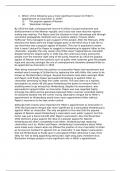
2.1 Which theory of statehood does the non-recognition of Sufjan correspond to,
and why?
The refusal to recognize Sufjan corresponds to the Declaratory Theory of Statehood.
This theory, based on the Montevideo Convention (1933), maintains that statehood
depends on meeting objective criteria: a permanent population, a defined territory, a
functioning government, and the capacity to engage in international relations. Under this
theory, recognition by other states is not a requirement. Therefore, even if Sufjan meets
these conditions, its lack of recognition does not negate its status as a state (Shaw,
2017).
2.2 Compare the theory above with another theory of statehood.
The Constitutive Theory of Statehood contrasts sharply with the declaratory
approach. This theory asserts that an entity only becomes a state if it is formally
EXAM PACK
,LCP4801
Assignment 2 (Semester 2, 2025)
Due: 2025
Question 1
1.1 What does the acronym TWAIL stand for?
TWAIL refers to Third World Approaches to International Law. It is a critical scholarly
perspective that evaluates the creation, structure, and role of international law from the
standpoint of nations historically categorized as belonging to the Third World. This
perspective critiques how international law and its institutions have often favored the
interests of dominant Western states while systematically marginalizing the voices,
experiences, and concerns of developing nations—especially those still grappling with
the legacies of colonialism and imperial exploitation.
1.2 What inspired the rise of the TWAIL movement?
The origins of TWAIL are rooted in both the historical and persistent effects of
colonialism and imperialism on countries of the Global South, particularly in Africa, Asia,
Latin America, and the Caribbean. During colonial times, doctrines such as terra nullius
and the “standard of civilization” were used by European empires to rationalize
conquest, occupation, and the extraction of resources from non-European societies.
Even after formal independence, many postcolonial states recognized that the global
legal system continued to reproduce structural inequalities and colonial-era biases.
Institutions like the United Nations, International Monetary Fund (IMF), and the World
Bank often remained under the heavy influence of former colonial powers, while
,international law frequently failed to address the socio-economic and political
challenges of the Global South.
In response, TWAIL scholars and practitioners began challenging the Eurocentric
foundations of international law. They called for a rethinking of global legal systems so
they would genuinely reflect the histories, needs, and aspirations of formerly colonized
and marginalized nations. This intellectual movement demands an inclusive legal order
that seeks to repair historical injustices. By doing so, TWAIL provides a powerful critique
of the relationship between law, power, history, and global inequality.
1.3 What are the main goals and objectives of TWAIL?
TWAIL pursues a wide range of interrelated goals, all grounded in the principles of
justice, fairness, and the transformation of international law. Its main objectives include:
Revealing the Colonial Foundations of International Law: Demonstrating how
international law was historically used to justify colonization and uphold
domination.
Challenging Structural Inequalities in Present-Day Legal Systems: Critiquing
how the Global South continues to be sidelined in global governance and law.
Reforming International Law: Restructuring global legal systems so that they
serve the priorities and interests of developing and postcolonial states.
Amplifying Southern Voices: Promoting the active involvement of scholars,
policymakers, and practitioners from Third World countries in shaping
international law.
Advocating for Socio-Economic Justice: Addressing concerns such as
underdevelopment, poverty, trade inequality, and debt dependency, while
promoting fair and sustainable growth.
Promoting Human Rights from a Global South Perspective: Criticizing the
selective enforcement of human rights standards and aligning them with cultural,
political, and social realities of Third World contexts.
, Encouraging Global Solidarity and Resistance: Building collective efforts
across the Global South to work toward a more just and inclusive international
legal order.
References
Anghie, A. (2006). The evolution of international law: colonial and postcolonial
realities. Third World Quarterly, 27(5), 739–753.
Mutua, M. (2000). What is TWAIL? American Society of International Law
Proceedings, 94, 31–40.
Gathii, J. T. (2011). TWAIL: A brief history of its origins, its decentralized
network, and a tentative bibliography. Trade, Law and Development, 3(1), 26–64.
Question 2
2.1 Which theory of statehood does the non-recognition of Sufjan correspond to,
and why?
The refusal to recognize Sufjan corresponds to the Declaratory Theory of Statehood.
This theory, based on the Montevideo Convention (1933), maintains that statehood
depends on meeting objective criteria: a permanent population, a defined territory, a
functioning government, and the capacity to engage in international relations. Under this
theory, recognition by other states is not a requirement. Therefore, even if Sufjan meets
these conditions, its lack of recognition does not negate its status as a state (Shaw,
2017).
2.2 Compare the theory above with another theory of statehood.
The Constitutive Theory of Statehood contrasts sharply with the declaratory
approach. This theory asserts that an entity only becomes a state if it is formally