Service design theorie
- Birgit Mager.
Een lamp is een mooi product, zolang je de dingen er omheen organiseert zoals stroom etc.
Paradigma: (service-)wetenschap is gebaseerd op paradigma’s: een samenhangend stelsel van
modellen, theorieën en aannames.
- Focust op dataverzameling;
- Beïnvloedt keuze van onderzoeksmethodes;
- Leidt tot managementinzichten;
- Helpt bij identificeren van verbeterpunten.
Probleem servicelandschap is heel divers.
Wat is service: bijv. een dienstverlenend ziekenhuis. Alle diensten.
Persoonlijke aandacht maakt zorg uniek, afval ophaaldienst is uniek omdat je eigenlijk niet merkt dat
ze er zijn geweest. Auto’s produceren is uniek omdat het duurzaam kan, niks vergeten en veilig.
Age of the customer: wat wilt de consument?
Paradigma shift (Traditional I/O Model)
- Services als vorm van operations management (I/O model);
- Focus op wat dienstverleners aan hun klanten geven;
- Er wordt gesproken van service delivery/ service products.
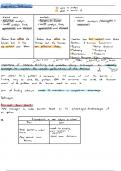
Product vs service
Product focus: wat moet de dienstverlener aan de klant geven.
1. Doel economische activiteit: dingen maken en verkopen;
2. Om verkocht te kunnen worden: dingen hebben nut en waarde;
3. Bedrijf doet er alles aan om winst uit verkoop te maximaliseren;
4. Dingen: gestandaardiseerd t.b.v. productie-control en efficiency;
5. Dingen kunnen worden opgeslagen tot er vraag naar is.
Goed product-design is niet meer het enige ingrediënt voor succes.
Naar customer-supplier service paradigma: klant wordt voorin het productieproces betrokken.
(1) klant-zelf aanwezigheid body en/of mind (2) tastbare bezittingen (3) door klant verstrekte informatie.
Klant: (1) koper v.d. dienst – customer (2) gebruikt v.d. dienst – customer of eindgebruiker (3)
beslisser over aankoop v.d. dienst – client.
Holistische service-beleving is nieuwe standaard. Waar kun je het verschil maken? Alles eromheen.
Service focus
1. Ontwikkel kerncompetenties (met concurrentievoordeel);
2. Herken wie hiervan voordeel kan hebben;
3. Ontwikkel relaties met de klanten;
, 4. Organiseer markt-feedback om het aanbod voor de klant te verbeteren (en je
concurrentievoordeel te vergroten).
Service= je gebruikt competenties in processen, wat je doet, voor het voordeel van een ander. Je doet
iets voor iets of iemand om iets te veranderen of te behouden.
Producten Services
Betekenis voor service design:
- Interdisciplinaire teams;
- Frame & Reframe;
- Zoom in & Zoom out;
- Denk in processen;
- Deep dive;
- Co-create;
- Conceptualiseer;
- Visualiseer;
- Prototype.
Week 2 Bij complexe situaties werkt service design goed.
Perspective= design creates functionality and form from a user or stakeholder perspective.
Functionaliteit door de ogen van een gebruiker en stakeholders. Alleen blij als het totaalplaatje klopt.
Service-dominant logic of markets: niet alleen lekker broodje, ook de service eromheen.
- Customers do not buy goods or services. They buy offerings which render services, which
create value… activities render services, things render services. Evert Gummesson 1995.
- The focus is not on products, but on the consumers’ value-creating processes, where value
emerges for consumers, and is perceived by them...the focus of marketing is value co-
creation rather than value distribution. Christian Gronroos 2000.
Service design & Service-dominant logic: perfecte match.
Innovation by design: innoveren door goed te ontwerpen.
The focus is shifting away from tangibles and toward intangibles, such as skills, information, and
knowledge, and toward interactivity and connectivity and ongoing relationships. The orientation has
shifted from the producer to the consumer. Customers are co-creators and co-producers of value.
- Boormachine, het gaat niet om de boormachine, maar om de dienst. De dingen ophangen.
- Birgit Mager.
Een lamp is een mooi product, zolang je de dingen er omheen organiseert zoals stroom etc.
Paradigma: (service-)wetenschap is gebaseerd op paradigma’s: een samenhangend stelsel van
modellen, theorieën en aannames.
- Focust op dataverzameling;
- Beïnvloedt keuze van onderzoeksmethodes;
- Leidt tot managementinzichten;
- Helpt bij identificeren van verbeterpunten.
Probleem servicelandschap is heel divers.
Wat is service: bijv. een dienstverlenend ziekenhuis. Alle diensten.
Persoonlijke aandacht maakt zorg uniek, afval ophaaldienst is uniek omdat je eigenlijk niet merkt dat
ze er zijn geweest. Auto’s produceren is uniek omdat het duurzaam kan, niks vergeten en veilig.
Age of the customer: wat wilt de consument?
Paradigma shift (Traditional I/O Model)
- Services als vorm van operations management (I/O model);
- Focus op wat dienstverleners aan hun klanten geven;
- Er wordt gesproken van service delivery/ service products.
Product vs service
Product focus: wat moet de dienstverlener aan de klant geven.
1. Doel economische activiteit: dingen maken en verkopen;
2. Om verkocht te kunnen worden: dingen hebben nut en waarde;
3. Bedrijf doet er alles aan om winst uit verkoop te maximaliseren;
4. Dingen: gestandaardiseerd t.b.v. productie-control en efficiency;
5. Dingen kunnen worden opgeslagen tot er vraag naar is.
Goed product-design is niet meer het enige ingrediënt voor succes.
Naar customer-supplier service paradigma: klant wordt voorin het productieproces betrokken.
(1) klant-zelf aanwezigheid body en/of mind (2) tastbare bezittingen (3) door klant verstrekte informatie.
Klant: (1) koper v.d. dienst – customer (2) gebruikt v.d. dienst – customer of eindgebruiker (3)
beslisser over aankoop v.d. dienst – client.
Holistische service-beleving is nieuwe standaard. Waar kun je het verschil maken? Alles eromheen.
Service focus
1. Ontwikkel kerncompetenties (met concurrentievoordeel);
2. Herken wie hiervan voordeel kan hebben;
3. Ontwikkel relaties met de klanten;
, 4. Organiseer markt-feedback om het aanbod voor de klant te verbeteren (en je
concurrentievoordeel te vergroten).
Service= je gebruikt competenties in processen, wat je doet, voor het voordeel van een ander. Je doet
iets voor iets of iemand om iets te veranderen of te behouden.
Producten Services
Betekenis voor service design:
- Interdisciplinaire teams;
- Frame & Reframe;
- Zoom in & Zoom out;
- Denk in processen;
- Deep dive;
- Co-create;
- Conceptualiseer;
- Visualiseer;
- Prototype.
Week 2 Bij complexe situaties werkt service design goed.
Perspective= design creates functionality and form from a user or stakeholder perspective.
Functionaliteit door de ogen van een gebruiker en stakeholders. Alleen blij als het totaalplaatje klopt.
Service-dominant logic of markets: niet alleen lekker broodje, ook de service eromheen.
- Customers do not buy goods or services. They buy offerings which render services, which
create value… activities render services, things render services. Evert Gummesson 1995.
- The focus is not on products, but on the consumers’ value-creating processes, where value
emerges for consumers, and is perceived by them...the focus of marketing is value co-
creation rather than value distribution. Christian Gronroos 2000.
Service design & Service-dominant logic: perfecte match.
Innovation by design: innoveren door goed te ontwerpen.
The focus is shifting away from tangibles and toward intangibles, such as skills, information, and
knowledge, and toward interactivity and connectivity and ongoing relationships. The orientation has
shifted from the producer to the consumer. Customers are co-creators and co-producers of value.
- Boormachine, het gaat niet om de boormachine, maar om de dienst. De dingen ophangen.