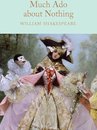
In Much Ado About Nothing, Shakespeare- a playwright who recognized the permeating presence of honour in the
Elizabethan society- explores how honour links to fidelity, propriety and how it affects statuary and power dynamics to
perhaps bring attention to the ramifications of an over-obsession with such conventions through the near-tragic deceptions
that the theme allows within this comedic genre.
At the start of Act One Scene One, the notion of honour is first introduced when the messenger- bearing news of triumph
from the war- claims Benedick is “A lord to a lord, a man to a man, stuffed with all honourable virtues.” Shakespeare
immediately establishes Benedick as a virtuous character that is well-respected in society- perhaps therefore foreshadowing his
wariness of cuckoldry is partially due to the anxiety of losing this respect in society. Additionally, the phrase “a man to a man”
could also connote the significance of masculinity that is linked to the spirit of camaraderie within the play, to imply that
loyalty to friends is also a vital part of honour, thus foreshadowing the strong emphasis placed on friendship further into the
play (as exemplified by “give not this rotten orange to my friend”). Finally, the noun of “a lord” and its associations to virtues
also reflects how under an Elizabethan society, power and status was close links to displays of honour, given that they justified
the nobility’s right to rule as power was earned through reputation.
Shakespeare continues to explore implications of honour within Act Two when Don John plots against Hero to deceive Don
Pedro through saying “He hath wrong’d his honour in marrying the renowned Claudio …to a contaminated stale” This
implies that both Claudio and Don Pedro’s reputation are now jeopardy as Hero has been “disloyal”- being accused of
prostitution. Not only does the adjective “contaminated” allude to the omni-present anxiety of female infidelity as the wary
tone instilled suggests that impropriety spreads, but also, it connotes how dishonour is intertwined into society: Due to
Hero’s alleged shame, Claudio, whom Hero is subordinate to, and Don Pedro, by employing Claudio and match-making the
two, are now at risk of losing face and facing contempt. This fear is easily manipulated by the perceptive antagonist Don
John whose identity as a bastard also validates the persistent paranoia of dishonour from cuckoldry. Through this portrayal,
Shakespeare builds tension as the Elizabethan audience would recognize the calamitous implications of his accusation, whilst
perhaps even begin to question the validity of this obsession with appearance that individual’s reputation and lives are
precariously balanced upon.
Shakespeare further explores the manipulation of fashion used to maintain a facade of honour through Borachio’s seemingly
nonsensical, yet insightful critique against fashion in Act 3 Scene 3, after Don John dishonours Hero to Claudio and Don
Pedro. Borrachio declares “what a deformed thief this fashion is… sometimes like the shaven Hercules in the smirched worn-
eaten tapestry” Clearly, the adjective “deformed” implies Borrachio’s perception of fashion as warping the truth, also
intensified by his mockery of historical and mythological references, all of whom were supposedly-honourable victims of
Elizabethan society- explores how honour links to fidelity, propriety and how it affects statuary and power dynamics to
perhaps bring attention to the ramifications of an over-obsession with such conventions through the near-tragic deceptions
that the theme allows within this comedic genre.
At the start of Act One Scene One, the notion of honour is first introduced when the messenger- bearing news of triumph
from the war- claims Benedick is “A lord to a lord, a man to a man, stuffed with all honourable virtues.” Shakespeare
immediately establishes Benedick as a virtuous character that is well-respected in society- perhaps therefore foreshadowing his
wariness of cuckoldry is partially due to the anxiety of losing this respect in society. Additionally, the phrase “a man to a man”
could also connote the significance of masculinity that is linked to the spirit of camaraderie within the play, to imply that
loyalty to friends is also a vital part of honour, thus foreshadowing the strong emphasis placed on friendship further into the
play (as exemplified by “give not this rotten orange to my friend”). Finally, the noun of “a lord” and its associations to virtues
also reflects how under an Elizabethan society, power and status was close links to displays of honour, given that they justified
the nobility’s right to rule as power was earned through reputation.
Shakespeare continues to explore implications of honour within Act Two when Don John plots against Hero to deceive Don
Pedro through saying “He hath wrong’d his honour in marrying the renowned Claudio …to a contaminated stale” This
implies that both Claudio and Don Pedro’s reputation are now jeopardy as Hero has been “disloyal”- being accused of
prostitution. Not only does the adjective “contaminated” allude to the omni-present anxiety of female infidelity as the wary
tone instilled suggests that impropriety spreads, but also, it connotes how dishonour is intertwined into society: Due to
Hero’s alleged shame, Claudio, whom Hero is subordinate to, and Don Pedro, by employing Claudio and match-making the
two, are now at risk of losing face and facing contempt. This fear is easily manipulated by the perceptive antagonist Don
John whose identity as a bastard also validates the persistent paranoia of dishonour from cuckoldry. Through this portrayal,
Shakespeare builds tension as the Elizabethan audience would recognize the calamitous implications of his accusation, whilst
perhaps even begin to question the validity of this obsession with appearance that individual’s reputation and lives are
precariously balanced upon.
Shakespeare further explores the manipulation of fashion used to maintain a facade of honour through Borachio’s seemingly
nonsensical, yet insightful critique against fashion in Act 3 Scene 3, after Don John dishonours Hero to Claudio and Don
Pedro. Borrachio declares “what a deformed thief this fashion is… sometimes like the shaven Hercules in the smirched worn-
eaten tapestry” Clearly, the adjective “deformed” implies Borrachio’s perception of fashion as warping the truth, also
intensified by his mockery of historical and mythological references, all of whom were supposedly-honourable victims of