, PLEASE USE THIS DOCUMENT AS A GUIDE TO ANSWER YOUR ASSIGNMENT
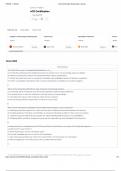
a) Volatility Dynamics in South African Equity Markets
(i) Compute the conditional variance for today.
al = 0.000015 + 0.01(0.045)2 + o.91(0.0012) = o.00124s15_
(ii) Compute the conditional standard deviation for today.
o 1 = ✓0.00124875 ::::: 0.03534 (::::: 3.53% daily) .
(iii) What will happen to the variance if the current return is in line with expectation?
o} = 1 + f3uf 1 = 0.000015 + 0.91(0.0012) = 0.001107,
so the variance falls from 0.0012 to 0.001107 (std ≈ 3.33%), i.e., it mean-reverts when there’s no
shock.
b) Multi manager strategy - University of Muchapatema
(i) Which optimization approach would better address the CIO's concern? Justify your response
with three reasons.
Mean-CVaR optimization is more appropriate than constrained mean-variance optimization.
Justification:
A) Tail-risk focus
Mean-variance optimization (MVO) assumes returns are normally distributed and only
considers mean and variance.
In reality, hedge fund and multi-manager strategies often have non-normal returns (skewness,
fat tails).
Mean-CVaR explicitly minimizes extreme downside losses by focusing on the conditional tail
expectation (beyond the VaR).
B) Better handling of non-normal distributions
MVO is sensitive to non-normal distributions and can underestimate risk if returns are skewed
or leptokurtic.
Mean-CVaR does not rely on normality; it works directly with the empirical distribution of
returns, making it more robust.
C) Alignment with CIO’s concern
The CIO asked specifically about "more normally distributed returns" — the real concern is
managing the risk of non-normality.
a) Volatility Dynamics in South African Equity Markets
(i) Compute the conditional variance for today.
al = 0.000015 + 0.01(0.045)2 + o.91(0.0012) = o.00124s15_
(ii) Compute the conditional standard deviation for today.
o 1 = ✓0.00124875 ::::: 0.03534 (::::: 3.53% daily) .
(iii) What will happen to the variance if the current return is in line with expectation?
o} = 1 + f3uf 1 = 0.000015 + 0.91(0.0012) = 0.001107,
so the variance falls from 0.0012 to 0.001107 (std ≈ 3.33%), i.e., it mean-reverts when there’s no
shock.
b) Multi manager strategy - University of Muchapatema
(i) Which optimization approach would better address the CIO's concern? Justify your response
with three reasons.
Mean-CVaR optimization is more appropriate than constrained mean-variance optimization.
Justification:
A) Tail-risk focus
Mean-variance optimization (MVO) assumes returns are normally distributed and only
considers mean and variance.
In reality, hedge fund and multi-manager strategies often have non-normal returns (skewness,
fat tails).
Mean-CVaR explicitly minimizes extreme downside losses by focusing on the conditional tail
expectation (beyond the VaR).
B) Better handling of non-normal distributions
MVO is sensitive to non-normal distributions and can underestimate risk if returns are skewed
or leptokurtic.
Mean-CVaR does not rely on normality; it works directly with the empirical distribution of
returns, making it more robust.
C) Alignment with CIO’s concern
The CIO asked specifically about "more normally distributed returns" — the real concern is
managing the risk of non-normality.