Content Page
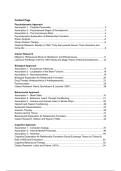
Psychodynamic Approach
Assumption 1 - Tripartite Personality…………………………………………………….…...…….3
Assumption 2 - Psychosexual Stages of Development……………………………………..……3
Assumption 3 - The Unconscious Mind……………………………………………………….……4
Psychodynamic Explanation of Relationship Formation……………………………….…………5
Dream Analysis…………………………………………………………………………………….…6
Group Analysis Therapy…………………………………………………………………………..…6
Classical Research: Bowlby’s (1994) “Forty-four juvenile thieves: Their characters and
home-life.’……………………………………………………………………………………………...8
Classic Research
Milgram’s “Behavioural Study of Obedience” and Ethical Issues………………………….……9
Lawrence Kohlberg’s (1972 to 1987) Study and Stage Theory of Moral Development…..…12
Biological Approach
Assumption 1 - Evolutionary Influences……………………………………………………..……17
Assumption 2 - Localisation of the Brain Function…………………………………….…...……18
Assumption 3 - Neurotransmitters…………………………………………………………………19
Biological Explanation for Relationship Formation………………………………………………20
Drug Therapy (Antipsychotics & Antidepressants)………………………………………………21
Psychosurgery……………………………………………………………………………….………25
Classic Research: Raine, Buchsbaum & Lacasse (1997)………………………………………28
Behaviourist Approach
Assumption 1 - Blank State………………………………………………………………...………31
Assumption 2 - Behaviour Learnt Through Conditioning……………………………….………31
Assumption 3 - Humans and Animals Learn in Similar Ways……………………………….…35
Operant and Classic Conditioning…………………………………………………………………36
Systematic Desensitisation…………………………………………………………………...……37
Aversion Therapy……………………………………………………………………………………39
Social Learning Theory……………………..………………………………………………………41
Behaviourist Explanation for Relationship Formation……………………………...……………43
Classic Research: Watson and Rayner (1920)…………………..………………………………44
Cognitive Approach
Assumption 1 - Computer Analogy……………………………………..…………………………47
Assumption 2 - Internal Mental Processes………………………………….……………………48
Assumption 3 - Schemas……………………………………………………………..……………49
Cognitive Explanation for Relationship Formation (Social Exchange Theory by Thibaut &
Kelly (1959) and Evaluation)………………………………………………………………………50
Cognitive Behavioural Therapy……………………………………………………………………52
Classic Research: Loftus and Palmer (1974)……………………………………………………54
,Positive Approach
Assumption 1 - Acknowledgement of Free Will…………………………………………………58
Assumption 2 - Authenticity of Goodness and Excellence…………………………….………58
Assumption 3 - Focus on ‘the Good Life’………………………………………………..………59
Positive Explanation for Relationship Formation and Evaluation…………………….………59
Classic Research: Myers and Diener (Who is happy?)…………………………………..……63
The Happiness Institute’s Guide to Utilising Your Strengths (Adapted from “A Primer in
Positive Psychology” by Christopher Peterson)……………………………………………...…66
,Psychodynamic Approach
Psychodynamics - the relationship with the conscious and unconscious mind,
mental and emotional forces that determine personality and motivation
Assumption 1 - Tripartite personality
Id: Controls the impulsive and unconscious part of the personality that exists from
birth. It demands immediate satisfaction and gratification.
Ego: Controls the conscious and rational part of the mind, developed around 2 years
old. It works on expressing id’s wants in a socially acceptable way
Superego: Morality principle that as a right and wrong and developed around the
age of 4. Its aims are to civilise behaviour so that it’s socially acceptable.
Conflict between these might result in psychological disorders.
● If the id is dominant, this could lead to a psychopathic personality type.
● If the ego is dominant, this could lead to a narcissist personality type.
● If the superego is dominant, this could lead to a neurotic personality type.
Tripartite personality example
The assumption of the tripartite personality can be used to explain criminal
behaviour. According to Freud, criminals focus on their id and their superego is
suppressed. Criminals, particularly those who commit violent offences, normally lack
a sense of morality and remorse, and seek immediate pleasure and gratification
regardless of the costs. This is particularly true in the case of psychopaths. Eysenck
further supports the role of personality on criminal behaviour, recognising that
individuals who score highly in extraversion, neuroticism and psychoticism are more
likely to develop criminality.
Assumption 2 - Psychosexual stages of development
Age (0-2) Oral stage: where actions are focused on the mouth (sucking, swallowing,
biting and chewing)
● Overindulgence can cause them to be positive, gullible or needy in
relationships. It might lead to a smoking addiction, eating disorders,
overeating or nail biting.
● Frustration can cause them to be pessimistic, envious or sarcastic.
Age (2-3) Anal stage: where actions are focused on controlling and expelling waste,
which helps with demand for control
● Overindulgence can cause to be stubborn, possessive, overly tidy and
controlling or mental disorders such as OCD
● Frustration can cause them to be messy, disorganised or reckless
Age (3-6) Phallic stage: when they start to recognize their genitals and their gender
, ● Overindulgence could cause them to overindulge or under indulge in sex or
difficulties in maintaining and building romantic relationships
● Frustration could cause a confusion in their sexual identity
Age (6-11) Latency stage: the libido is hidden and there is little sexual motivation
Puberty Genital stage: focused on the genitals and develop feelings for the opposite
sex
Oedipus complex - when young boys develop sexual feelings for their mother and
view their father as a rival. Eventually, the boy would recognize that his father and
himself are the same and identify himself as a male.
Electra complex - when young girls develop penis envy from or sexual feelings for
their father
Assumption 3 - The unconscious mind
The unconscious mind has unresolved conflicts which influence our behaviour.
Conflict between the id, ego and superego create anxiety. To protect the ego (the
self), we have ego defence mechanisms. These occur when there is conflict between
the id, ego and superego.
Examples of defence mechanisms: regression, repression, displacement,
projection and denial
The unconscious mind example
Gothelf et al. (1995) found that regression, denial, projection and repression were
common to psychiatric patients suffering from severe adolescent anorexia nervosa.
These patterns distinguished them from adolescents without any psychiatric
disorder. It was found that anorectic adolescents relied on more mature defence
mechanisms than other adolescents.
Another example could be if a child has experienced a traumatic event, such as
death of a parent, or abuse. The ego may not have been developed enough to deal
with it at the time. This could lead to the child repressing the memory and it
resurfacing in early adolescence or adulthood in the form of depression or an anxiety
disorder.
Psychodynamic Approach
Assumption 1 - Tripartite Personality…………………………………………………….…...…….3
Assumption 2 - Psychosexual Stages of Development……………………………………..……3
Assumption 3 - The Unconscious Mind……………………………………………………….……4
Psychodynamic Explanation of Relationship Formation……………………………….…………5
Dream Analysis…………………………………………………………………………………….…6
Group Analysis Therapy…………………………………………………………………………..…6
Classical Research: Bowlby’s (1994) “Forty-four juvenile thieves: Their characters and
home-life.’……………………………………………………………………………………………...8
Classic Research
Milgram’s “Behavioural Study of Obedience” and Ethical Issues………………………….……9
Lawrence Kohlberg’s (1972 to 1987) Study and Stage Theory of Moral Development…..…12
Biological Approach
Assumption 1 - Evolutionary Influences……………………………………………………..……17
Assumption 2 - Localisation of the Brain Function…………………………………….…...……18
Assumption 3 - Neurotransmitters…………………………………………………………………19
Biological Explanation for Relationship Formation………………………………………………20
Drug Therapy (Antipsychotics & Antidepressants)………………………………………………21
Psychosurgery……………………………………………………………………………….………25
Classic Research: Raine, Buchsbaum & Lacasse (1997)………………………………………28
Behaviourist Approach
Assumption 1 - Blank State………………………………………………………………...………31
Assumption 2 - Behaviour Learnt Through Conditioning……………………………….………31
Assumption 3 - Humans and Animals Learn in Similar Ways……………………………….…35
Operant and Classic Conditioning…………………………………………………………………36
Systematic Desensitisation…………………………………………………………………...……37
Aversion Therapy……………………………………………………………………………………39
Social Learning Theory……………………..………………………………………………………41
Behaviourist Explanation for Relationship Formation……………………………...……………43
Classic Research: Watson and Rayner (1920)…………………..………………………………44
Cognitive Approach
Assumption 1 - Computer Analogy……………………………………..…………………………47
Assumption 2 - Internal Mental Processes………………………………….……………………48
Assumption 3 - Schemas……………………………………………………………..……………49
Cognitive Explanation for Relationship Formation (Social Exchange Theory by Thibaut &
Kelly (1959) and Evaluation)………………………………………………………………………50
Cognitive Behavioural Therapy……………………………………………………………………52
Classic Research: Loftus and Palmer (1974)……………………………………………………54
,Positive Approach
Assumption 1 - Acknowledgement of Free Will…………………………………………………58
Assumption 2 - Authenticity of Goodness and Excellence…………………………….………58
Assumption 3 - Focus on ‘the Good Life’………………………………………………..………59
Positive Explanation for Relationship Formation and Evaluation…………………….………59
Classic Research: Myers and Diener (Who is happy?)…………………………………..……63
The Happiness Institute’s Guide to Utilising Your Strengths (Adapted from “A Primer in
Positive Psychology” by Christopher Peterson)……………………………………………...…66
,Psychodynamic Approach
Psychodynamics - the relationship with the conscious and unconscious mind,
mental and emotional forces that determine personality and motivation
Assumption 1 - Tripartite personality
Id: Controls the impulsive and unconscious part of the personality that exists from
birth. It demands immediate satisfaction and gratification.
Ego: Controls the conscious and rational part of the mind, developed around 2 years
old. It works on expressing id’s wants in a socially acceptable way
Superego: Morality principle that as a right and wrong and developed around the
age of 4. Its aims are to civilise behaviour so that it’s socially acceptable.
Conflict between these might result in psychological disorders.
● If the id is dominant, this could lead to a psychopathic personality type.
● If the ego is dominant, this could lead to a narcissist personality type.
● If the superego is dominant, this could lead to a neurotic personality type.
Tripartite personality example
The assumption of the tripartite personality can be used to explain criminal
behaviour. According to Freud, criminals focus on their id and their superego is
suppressed. Criminals, particularly those who commit violent offences, normally lack
a sense of morality and remorse, and seek immediate pleasure and gratification
regardless of the costs. This is particularly true in the case of psychopaths. Eysenck
further supports the role of personality on criminal behaviour, recognising that
individuals who score highly in extraversion, neuroticism and psychoticism are more
likely to develop criminality.
Assumption 2 - Psychosexual stages of development
Age (0-2) Oral stage: where actions are focused on the mouth (sucking, swallowing,
biting and chewing)
● Overindulgence can cause them to be positive, gullible or needy in
relationships. It might lead to a smoking addiction, eating disorders,
overeating or nail biting.
● Frustration can cause them to be pessimistic, envious or sarcastic.
Age (2-3) Anal stage: where actions are focused on controlling and expelling waste,
which helps with demand for control
● Overindulgence can cause to be stubborn, possessive, overly tidy and
controlling or mental disorders such as OCD
● Frustration can cause them to be messy, disorganised or reckless
Age (3-6) Phallic stage: when they start to recognize their genitals and their gender
, ● Overindulgence could cause them to overindulge or under indulge in sex or
difficulties in maintaining and building romantic relationships
● Frustration could cause a confusion in their sexual identity
Age (6-11) Latency stage: the libido is hidden and there is little sexual motivation
Puberty Genital stage: focused on the genitals and develop feelings for the opposite
sex
Oedipus complex - when young boys develop sexual feelings for their mother and
view their father as a rival. Eventually, the boy would recognize that his father and
himself are the same and identify himself as a male.
Electra complex - when young girls develop penis envy from or sexual feelings for
their father
Assumption 3 - The unconscious mind
The unconscious mind has unresolved conflicts which influence our behaviour.
Conflict between the id, ego and superego create anxiety. To protect the ego (the
self), we have ego defence mechanisms. These occur when there is conflict between
the id, ego and superego.
Examples of defence mechanisms: regression, repression, displacement,
projection and denial
The unconscious mind example
Gothelf et al. (1995) found that regression, denial, projection and repression were
common to psychiatric patients suffering from severe adolescent anorexia nervosa.
These patterns distinguished them from adolescents without any psychiatric
disorder. It was found that anorectic adolescents relied on more mature defence
mechanisms than other adolescents.
Another example could be if a child has experienced a traumatic event, such as
death of a parent, or abuse. The ego may not have been developed enough to deal
with it at the time. This could lead to the child repressing the memory and it
resurfacing in early adolescence or adulthood in the form of depression or an anxiety
disorder.