Saturday 15th February 2025
Pearson BTEC Level 3 National Extended Diploma in
Applied Science
Shaafee uddin
Student id: 20527763
Unit 11: Genetics & Genetic Engineering
Learning Aim (C): Explore the principles of inheritance and their
application in predicting genetic traits.
Human inheritance and predicting genetic traits
Scenario
As a trainee lab technician working for a medical research company, I must be able to
predict patterns of inheritance and analyse correlations between expected and observed
results. My company offer work placements for sixth form students. I have been asked to
help the sixth form students. I have been tasked to help the sixth form students
understand how an expected ratio of inheritance can be different to an observed ratio
and how statistical can determine if this difference is significant, caused by something or
if it is just due to chance.
Introduction
Principle of classical genetics
The principle of classical genetics is rooted in the study of how traits are inherited
from parent to offspring in each generation. Within any population, there is always
variation. Just as you can easily recognize a group of people as humans while also
noticing their individual differences, the same applies to any group of animals or plants.
Some of these differences come from genetic factors, some are influenced by the
environment, and others result from a combination of both. Genetics explores the
principles of inheritance and helps us understand the genetic basis of traits in living
organisms. It has provided crucial insights into the workings of biological systems and
has been instrumental in advancing our understanding of human health and medicine.
At the heart of genetics is the concept of genotype and phenotype. The genotype
represents the genetic information an organism carries, while the phenotype is the
visible trait or characteristic that results from the interaction of an organism’s genotype
with its environment. Recognizing how genotype influences phenotype is essential to
understanding the principles of heredity and inheritance.
Discontinuous & continuous variation
,Discontinuous variation
Discontinuous variation occurs when there are distinct phenotypes with no intermediates.
Examples of this include pea plant height (See figure 1.01) and human earlobe shape,
(see figure 1.02). Usually, a single gene (with different alleles) controls these traits.
Figure 1.01-Genetic Crossover in
Pea Plants Demonstrating
Discontinuous Variation
, Figure 1.02- Examples of
Discontinuous Variation in
Earlobe Attachment
Continuous variation
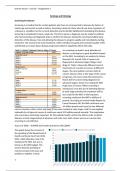
Continuous variation refers to traits that show a range of phenotypes rather than
distinct categories. Examples in humans include height, (see figure 1.03) foot size, skin
colour, and intelligence. These traits are influenced by multiple genes, and
environmental factors have a greater impact on continuous variation compared to
discontinuous variation
figure 1.03- Distribution of
Human Heights – One Example
of Continuous Variation
Mendel’s Law of Genetics
In 1866, Gregor Mendel published his findings
on crossbreeding pea plants. Despite not knowing
about chromosomes or meiosis, he demonstrated
that units of inheritance existed and predicted
their behaviour during gamete formation—ova
(egg cells inside ovules) and sperm (male
gametes inside pollen).
He studied seven traits in pea plants: stem height,
, Mendel’s 1st Law of segregation
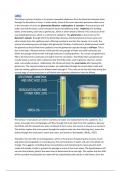
Mendel’s 1st Law- Law of segregation states that “The characteristics of an organism are
determines by factors (alleles) which occur in pairs.
Only one allele for each characteristic is present in a single gamete.” This means that genes
are passed from one generation to the next as distinct units. Each organism carries two
alleles for each trait- one from each parent; and these alleles separate (segregate) during
gamete formation (meiosis), so the sex cell carries only one allele, (See figure 1.04). During
gamete fertilisation, offspring inherit one allele from each parent, restoring the pair
Figure 1.04- Segregation of alleles
demonstrating Mendel's 1st Law
Mendel’s 2nd Law of Independent Assortment
Pearson BTEC Level 3 National Extended Diploma in
Applied Science
Shaafee uddin
Student id: 20527763
Unit 11: Genetics & Genetic Engineering
Learning Aim (C): Explore the principles of inheritance and their
application in predicting genetic traits.
Human inheritance and predicting genetic traits
Scenario
As a trainee lab technician working for a medical research company, I must be able to
predict patterns of inheritance and analyse correlations between expected and observed
results. My company offer work placements for sixth form students. I have been asked to
help the sixth form students. I have been tasked to help the sixth form students
understand how an expected ratio of inheritance can be different to an observed ratio
and how statistical can determine if this difference is significant, caused by something or
if it is just due to chance.
Introduction
Principle of classical genetics
The principle of classical genetics is rooted in the study of how traits are inherited
from parent to offspring in each generation. Within any population, there is always
variation. Just as you can easily recognize a group of people as humans while also
noticing their individual differences, the same applies to any group of animals or plants.
Some of these differences come from genetic factors, some are influenced by the
environment, and others result from a combination of both. Genetics explores the
principles of inheritance and helps us understand the genetic basis of traits in living
organisms. It has provided crucial insights into the workings of biological systems and
has been instrumental in advancing our understanding of human health and medicine.
At the heart of genetics is the concept of genotype and phenotype. The genotype
represents the genetic information an organism carries, while the phenotype is the
visible trait or characteristic that results from the interaction of an organism’s genotype
with its environment. Recognizing how genotype influences phenotype is essential to
understanding the principles of heredity and inheritance.
Discontinuous & continuous variation
,Discontinuous variation
Discontinuous variation occurs when there are distinct phenotypes with no intermediates.
Examples of this include pea plant height (See figure 1.01) and human earlobe shape,
(see figure 1.02). Usually, a single gene (with different alleles) controls these traits.
Figure 1.01-Genetic Crossover in
Pea Plants Demonstrating
Discontinuous Variation
, Figure 1.02- Examples of
Discontinuous Variation in
Earlobe Attachment
Continuous variation
Continuous variation refers to traits that show a range of phenotypes rather than
distinct categories. Examples in humans include height, (see figure 1.03) foot size, skin
colour, and intelligence. These traits are influenced by multiple genes, and
environmental factors have a greater impact on continuous variation compared to
discontinuous variation
figure 1.03- Distribution of
Human Heights – One Example
of Continuous Variation
Mendel’s Law of Genetics
In 1866, Gregor Mendel published his findings
on crossbreeding pea plants. Despite not knowing
about chromosomes or meiosis, he demonstrated
that units of inheritance existed and predicted
their behaviour during gamete formation—ova
(egg cells inside ovules) and sperm (male
gametes inside pollen).
He studied seven traits in pea plants: stem height,
, Mendel’s 1st Law of segregation
Mendel’s 1st Law- Law of segregation states that “The characteristics of an organism are
determines by factors (alleles) which occur in pairs.
Only one allele for each characteristic is present in a single gamete.” This means that genes
are passed from one generation to the next as distinct units. Each organism carries two
alleles for each trait- one from each parent; and these alleles separate (segregate) during
gamete formation (meiosis), so the sex cell carries only one allele, (See figure 1.04). During
gamete fertilisation, offspring inherit one allele from each parent, restoring the pair
Figure 1.04- Segregation of alleles
demonstrating Mendel's 1st Law
Mendel’s 2nd Law of Independent Assortment