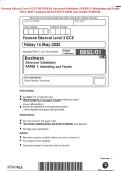
Please check the examination details below before entering your candidate information
Candidate surname Other names
Centre Number Candidate Number
Pearson Edexcel Level 3 GCE
Friday 21 June 2024
Morning (Time: 2 hours 30 minutes) Paper
reference 9CH0/03
Chemistry
Advanced
PAPER 3: General and Practical Principles in Chemistry
You must have: Total Marks
Scientific calculator, Data Booklet, ruler
Instructions
• Use black ink or ball-point pen.
• IfFillpencil is used for diagrams/sketches/graphs it must be dark (HB or B).
• centre number
in the boxes at the top of this page with your name,
and candidate number.
• Answer all questions.
• Answer the questions in the spaces provided
– there may be more space than you need.
Information
• The total mark for this paper is 120.
• The marks for each question are shown in brackets
– use this as a guide as to how much time to spend on each question.
• toForstructure
the question marked with an asterisk (*), marks will be awarded for your ability
your answer logically, showing the points that you make are related or
follow on from each other where appropriate.
• A Periodic Table is printed on the back cover of this paper.
Advice
• Read each question carefully before you start to answer it.
• Show all your working in calculations and include units where appropriate.
• your answers if you have time at the end.
Check
Turn over
P74455A
©2024 Pearson Education Ltd.
F:1/1/1/1/1/
*P74455A0132*
, Answer ALL questions.
Write your answers in the spaces provided.
1 Relative isotopic mass is an important concept in chemistry.
(a) Define relative isotopic mass.
(2)
. . . . . . . . . . . .. .. .. .. .. .. .. .. .. .. . . . . . . . . . . . . . . . . . . . . . . . . . . . . . . . . . . . . . . . . . . . . . . . . . . . . . . . . . . . . . . . . . . . . . ............................................................................................................................................ ................ . . . . . . . . . . . . . . . . . . . .
. . . . . . . . . . . .. .. .. .. .. .. .. .. .. .. . . . . . . . . . . . . . . . . . . . . . . . . . . . . . . . . . . . . . . . . . . . . . . . . . . . . . . . . . . . . . . . . . . . . . ............................................................................................................................................ ................ . . . . . . . . . . . . . . . . . . . .
. . . . . . . . . . . .. .. .. .. .. .. .. .. .. .. . . . . . . . . . . . . . . . . . . . . . . . . . . . . . . . . . . . . . . . . . . . . . . . . . . . . . . . . . . . . . . . . . . . . . ............................................................................................................................................ ................ . . . . . . . . . . . . . . . . . . . .
. . . . . . . . . . . .. .. .. .. .. .. .. .. .. .. . . . . . . . . . . . . . . . . . . . . . . . . . . . . . . . . . . . . . . . . . . . . . . . . . . . . . . . . . . . . . . . . . . . . . ............................................................................................................................................ ................ . . . . . . . . . . . . . . . . . . . .
. . . . . . . . . . . .. .. .. .. .. .. .. .. .. .. . . . . . . . . . . . . . . . . . . . . . . . . . . . . . . . . . . . . . . . . . . . . . . . . . . . . . . . . . . . . . . . . . . . . . ............................................................................................................................................ ................ . . . . . . . . . . . . . . . . . . . .
(b) A sample of hydrogen gas is formed from atoms of three isotopes, 1H, 2H and 3H.
Deduce the number of peaks due to molecular ions, H2+, in the mass spectrum of
this sample.
(1)
. . . . . . . . . . . .. .. .. .. .. .. .. .. .. .. . . . . . . . . . . . . . . . . . . . . . . . . . . . . . . . . . . . . . . . . . . . . . . . . . . . . . . . . . . . . . . . . . . . . . ............................................................................................................................................ ................ . . . . . . . . . . . . . . . . . . . .
(Total for Question 1 = 3 marks)
2
*P74455A0232*
,2 This question is about the intermolecular forces in organic compounds.
The structures of four isomeric alkanes are shown.
compound A compound B compound C compound D
The only significant intermolecular forces between molecules of these compounds
are London forces.
(a) Explain how London forces arise.
(3)
. . . . . . . . . . . .. .. .. .. .. .. .. .. .. .. . . . . . . . . . . . . . . . . . . . . . . . . . . . . . . . . . . . . . . . . . . . . . . . . . . . . . . . . . . . . . . . . . . . . . ............................................................................................................................................ ................ . . . . . . . . . . . . . . . . . . . .
. . . . . . . . . . . .. .. .. .. .. .. .. .. .. .. . . . . . . . . . . . . . . . . . . . . . . . . . . . . . . . . . . . . . . . . . . . . . . . . . . . . . . . . . . . . . . . . . . . . . ............................................................................................................................................ ................ . . . . . . . . . . . . . . . . . . . .
. . . . . . . . . . . .. .. .. .. .. .. .. .. .. .. . . . . . . . . . . . . . . . . . . . . . . . . . . . . . . . . . . . . . . . . . . . . . . . . . . . . . . . . . . . . . . . . . . . . . ............................................................................................................................................ ................ . . . . . . . . . . . . . . . . . . . .
. . . . . . . . . . . .. .. .. .. .. .. .. .. .. .. . . . . . . . . . . . . . . . . . . . . . . . . . . . . . . . . . . . . . . . . . . . . . . . . . . . . . . . . . . . . . . . . . . . . . ............................................................................................................................................ ................ . . . . . . . . . . . . . . . . . . . .
. . . . . . . . . . . .. .. .. .. .. .. .. .. .. .. . . . . . . . . . . . . . . . . . . . . . . . . . . . . . . . . . . . . . . . . . . . . . . . . . . . . . . . . . . . . . . . . . . . . . ............................................................................................................................................ ................ . . . . . . . . . . . . . . . . . . . .
. . . . . . . . . . . .. .. .. .. .. .. .. .. .. .. . . . . . . . . . . . . . . . . . . . . . . . . . . . . . . . . . . . . . . . . . . . . . . . . . . . . . . . . . . . . . . . . . . . . . ............................................................................................................................................ ................ . . . . . . . . . . . . . . . . . . . .
. . . . . . . . . . . .. .. .. .. .. .. .. .. .. .. . . . . . . . . . . . . . . . . . . . . . . . . . . . . . . . . . . . . . . . . . . . . . . . . . . . . . . . . . . . . . . . . . . . . . ............................................................................................................................................ ................ . . . . . . . . . . . . . . . . . . . .
. . . . . . . . . . . .. .. .. .. .. .. .. .. .. .. . . . . . . . . . . . . . . . . . . . . . . . . . . . . . . . . . . . . . . . . . . . . . . . . . . . . . . . . . . . . . . . . . . . . . ............................................................................................................................................ ................ . . . . . . . . . . . . . . . . . . . .
(b) Explain which of the compounds A–D will have the highest boiling temperature.
(2)
. . . . . . . . . . . .. .. .. .. .. .. .. .. .. .. . . . . . . . . . . . . . . . . . . . . . . . . . . . . . . . . . . . . . . . . . . . . . . . . . . . . . . . . . . . . . . . . . . . . . ............................................................................................................................................ ................ . . . . . . . . . . . . . . . . . . . .
. . . . . . . . . . . .. .. .. .. .. .. .. .. .. .. . . . . . . . . . . . . . . . . . . . . . . . . . . . . . . . . . . . . . . . . . . . . . . . . . . . . . . . . . . . . . . . . . . . . . ............................................................................................................................................ ................ . . . . . . . . . . . . . . . . . . . .
. . . . . . . . . . . .. .. .. .. .. .. .. .. .. .. . . . . . . . . . . . . . . . . . . . . . . . . . . . . . . . . . . . . . . . . . . . . . . . . . . . . . . . . . . . . . . . . . . . . . ............................................................................................................................................ ................ . . . . . . . . . . . . . . . . . . . .
. . . . . . . . . . . .. .. .. .. .. .. .. .. .. .. . . . . . . . . . . . . . . . . . . . . . . . . . . . . . . . . . . . . . . . . . . . . . . . . . . . . . . . . . . . . . . . . . . . . . ............................................................................................................................................ ................ . . . . . . . . . . . . . . . . . . . .
. . . . . . . . . . . .. .. .. .. .. .. .. .. .. .. . . . . . . . . . . . . . . . . . . . . . . . . . . . . . . . . . . . . . . . . . . . . . . . . . . . . . . . . . . . . . . . . . . . . . ............................................................................................................................................ ................ . . . . . . . . . . . . . . . . . . . .
. . . . . . . . . . . .. .. .. .. .. .. .. .. .. .. . . . . . . . . . . . . . . . . . . . . . . . . . . . . . . . . . . . . . . . . . . . . . . . . . . . . . . . . . . . . . . . . . . . . . ............................................................................................................................................ ................ . . . . . . . . . . . . . . . . . . . .
3
*P74455A0332* Turn over
, (c) The apparatus shown may be used in an experiment to compare how far, if at all,
a charged rod deflects different liquids.
burette
stream of liquid charged rod
+++++++
beaker
The structures of three liquids are shown.
H H H
Cl H H H H
H C C C
C C C C C H
Cl Cl Cl Cl H H H
Cl Cl H H H
CCl4 CHCl3 C6H14
Explain whether or not each of these liquids will be deflected in this experiment.
(3)
. . . . . . . . . . . .. .. .. .. .. .. .. .. .. .. . . . . . . . . . . . . . . . . . . . . . . . . . . . . . . . . . . . . . . . . . . . . . . . . . . . . . . . . . . . . . . . . . . . . . . ........................................................................................................................................... ................ . . . . . . . . . . . . . . . . . . . .
. . . . . . . . . . . .. .. .. .. .. .. .. .. .. .. . . . . . . . . . . . . . . . . . . . . . . . . . . . . . . . . . . . . . . . . . . . . . . . . . . . . . . . . . . . . . . . . . . . . . . ........................................................................................................................................... ................ . . . . . . . . . . . . . . . . . . . .
. . . . . . . . . . . .. .. .. .. .. .. .. .. .. .. . . . . . . . . . . . . . . . . . . . . . . . . . . . . . . . . . . . . . . . . . . . . . . . . . . . . . . . . . . . . . . . . . . . . . . ........................................................................................................................................... ................ . . . . . . . . . . . . . . . . . . . .
. . . . . . . . . . . .. .. .. .. .. .. .. .. .. .. . . . . . . . . . . . . . . . . . . . . . . . . . . . . . . . . . . . . . . . . . . . . . . . . . . . . . . . . . . . . . . . . . . . . . . ........................................................................................................................................... ................ . . . . . . . . . . . . . . . . . . . .
. . . . . . . . . . . .. .. .. .. .. .. .. .. .. .. . . . . . . . . . . . . . . . . . . . . . . . . . . . . . . . . . . . . . . . . . . . . . . . . . . . . . . . . . . . . . . . . . . . . . . ........................................................................................................................................... ................ . . . . . . . . . . . . . . . . . . . .
. . . . . . . . . . . .. .. .. .. .. .. .. .. .. .. . . . . . . . . . . . . . . . . . . . . . . . . . . . . . . . . . . . . . . . . . . . . . . . . . . . . . . . . . . . . . . . . . . . . . . ........................................................................................................................................... ................ . . . . . . . . . . . . . . . . . . . .
. . . . . . . . . . . .. .. .. .. .. .. .. .. .. .. . . . . . . . . . . . . . . . . . . . . . . . . . . . . . . . . . . . . . . . . . . . . . . . . . . . . . . . . . . . . . . . . . . . . . . ........................................................................................................................................... ................ . . . . . . . . . . . . . . . . . . . .
(Total for Question 2 = 8 marks)
4
*P74455A0432*
Candidate surname Other names
Centre Number Candidate Number
Pearson Edexcel Level 3 GCE
Friday 21 June 2024
Morning (Time: 2 hours 30 minutes) Paper
reference 9CH0/03
Chemistry
Advanced
PAPER 3: General and Practical Principles in Chemistry
You must have: Total Marks
Scientific calculator, Data Booklet, ruler
Instructions
• Use black ink or ball-point pen.
• IfFillpencil is used for diagrams/sketches/graphs it must be dark (HB or B).
• centre number
in the boxes at the top of this page with your name,
and candidate number.
• Answer all questions.
• Answer the questions in the spaces provided
– there may be more space than you need.
Information
• The total mark for this paper is 120.
• The marks for each question are shown in brackets
– use this as a guide as to how much time to spend on each question.
• toForstructure
the question marked with an asterisk (*), marks will be awarded for your ability
your answer logically, showing the points that you make are related or
follow on from each other where appropriate.
• A Periodic Table is printed on the back cover of this paper.
Advice
• Read each question carefully before you start to answer it.
• Show all your working in calculations and include units where appropriate.
• your answers if you have time at the end.
Check
Turn over
P74455A
©2024 Pearson Education Ltd.
F:1/1/1/1/1/
*P74455A0132*
, Answer ALL questions.
Write your answers in the spaces provided.
1 Relative isotopic mass is an important concept in chemistry.
(a) Define relative isotopic mass.
(2)
. . . . . . . . . . . .. .. .. .. .. .. .. .. .. .. . . . . . . . . . . . . . . . . . . . . . . . . . . . . . . . . . . . . . . . . . . . . . . . . . . . . . . . . . . . . . . . . . . . . . ............................................................................................................................................ ................ . . . . . . . . . . . . . . . . . . . .
. . . . . . . . . . . .. .. .. .. .. .. .. .. .. .. . . . . . . . . . . . . . . . . . . . . . . . . . . . . . . . . . . . . . . . . . . . . . . . . . . . . . . . . . . . . . . . . . . . . . ............................................................................................................................................ ................ . . . . . . . . . . . . . . . . . . . .
. . . . . . . . . . . .. .. .. .. .. .. .. .. .. .. . . . . . . . . . . . . . . . . . . . . . . . . . . . . . . . . . . . . . . . . . . . . . . . . . . . . . . . . . . . . . . . . . . . . . ............................................................................................................................................ ................ . . . . . . . . . . . . . . . . . . . .
. . . . . . . . . . . .. .. .. .. .. .. .. .. .. .. . . . . . . . . . . . . . . . . . . . . . . . . . . . . . . . . . . . . . . . . . . . . . . . . . . . . . . . . . . . . . . . . . . . . . ............................................................................................................................................ ................ . . . . . . . . . . . . . . . . . . . .
. . . . . . . . . . . .. .. .. .. .. .. .. .. .. .. . . . . . . . . . . . . . . . . . . . . . . . . . . . . . . . . . . . . . . . . . . . . . . . . . . . . . . . . . . . . . . . . . . . . . ............................................................................................................................................ ................ . . . . . . . . . . . . . . . . . . . .
(b) A sample of hydrogen gas is formed from atoms of three isotopes, 1H, 2H and 3H.
Deduce the number of peaks due to molecular ions, H2+, in the mass spectrum of
this sample.
(1)
. . . . . . . . . . . .. .. .. .. .. .. .. .. .. .. . . . . . . . . . . . . . . . . . . . . . . . . . . . . . . . . . . . . . . . . . . . . . . . . . . . . . . . . . . . . . . . . . . . . . ............................................................................................................................................ ................ . . . . . . . . . . . . . . . . . . . .
(Total for Question 1 = 3 marks)
2
*P74455A0232*
,2 This question is about the intermolecular forces in organic compounds.
The structures of four isomeric alkanes are shown.
compound A compound B compound C compound D
The only significant intermolecular forces between molecules of these compounds
are London forces.
(a) Explain how London forces arise.
(3)
. . . . . . . . . . . .. .. .. .. .. .. .. .. .. .. . . . . . . . . . . . . . . . . . . . . . . . . . . . . . . . . . . . . . . . . . . . . . . . . . . . . . . . . . . . . . . . . . . . . . ............................................................................................................................................ ................ . . . . . . . . . . . . . . . . . . . .
. . . . . . . . . . . .. .. .. .. .. .. .. .. .. .. . . . . . . . . . . . . . . . . . . . . . . . . . . . . . . . . . . . . . . . . . . . . . . . . . . . . . . . . . . . . . . . . . . . . . ............................................................................................................................................ ................ . . . . . . . . . . . . . . . . . . . .
. . . . . . . . . . . .. .. .. .. .. .. .. .. .. .. . . . . . . . . . . . . . . . . . . . . . . . . . . . . . . . . . . . . . . . . . . . . . . . . . . . . . . . . . . . . . . . . . . . . . ............................................................................................................................................ ................ . . . . . . . . . . . . . . . . . . . .
. . . . . . . . . . . .. .. .. .. .. .. .. .. .. .. . . . . . . . . . . . . . . . . . . . . . . . . . . . . . . . . . . . . . . . . . . . . . . . . . . . . . . . . . . . . . . . . . . . . . ............................................................................................................................................ ................ . . . . . . . . . . . . . . . . . . . .
. . . . . . . . . . . .. .. .. .. .. .. .. .. .. .. . . . . . . . . . . . . . . . . . . . . . . . . . . . . . . . . . . . . . . . . . . . . . . . . . . . . . . . . . . . . . . . . . . . . . ............................................................................................................................................ ................ . . . . . . . . . . . . . . . . . . . .
. . . . . . . . . . . .. .. .. .. .. .. .. .. .. .. . . . . . . . . . . . . . . . . . . . . . . . . . . . . . . . . . . . . . . . . . . . . . . . . . . . . . . . . . . . . . . . . . . . . . ............................................................................................................................................ ................ . . . . . . . . . . . . . . . . . . . .
. . . . . . . . . . . .. .. .. .. .. .. .. .. .. .. . . . . . . . . . . . . . . . . . . . . . . . . . . . . . . . . . . . . . . . . . . . . . . . . . . . . . . . . . . . . . . . . . . . . . ............................................................................................................................................ ................ . . . . . . . . . . . . . . . . . . . .
. . . . . . . . . . . .. .. .. .. .. .. .. .. .. .. . . . . . . . . . . . . . . . . . . . . . . . . . . . . . . . . . . . . . . . . . . . . . . . . . . . . . . . . . . . . . . . . . . . . . ............................................................................................................................................ ................ . . . . . . . . . . . . . . . . . . . .
(b) Explain which of the compounds A–D will have the highest boiling temperature.
(2)
. . . . . . . . . . . .. .. .. .. .. .. .. .. .. .. . . . . . . . . . . . . . . . . . . . . . . . . . . . . . . . . . . . . . . . . . . . . . . . . . . . . . . . . . . . . . . . . . . . . . ............................................................................................................................................ ................ . . . . . . . . . . . . . . . . . . . .
. . . . . . . . . . . .. .. .. .. .. .. .. .. .. .. . . . . . . . . . . . . . . . . . . . . . . . . . . . . . . . . . . . . . . . . . . . . . . . . . . . . . . . . . . . . . . . . . . . . . ............................................................................................................................................ ................ . . . . . . . . . . . . . . . . . . . .
. . . . . . . . . . . .. .. .. .. .. .. .. .. .. .. . . . . . . . . . . . . . . . . . . . . . . . . . . . . . . . . . . . . . . . . . . . . . . . . . . . . . . . . . . . . . . . . . . . . . ............................................................................................................................................ ................ . . . . . . . . . . . . . . . . . . . .
. . . . . . . . . . . .. .. .. .. .. .. .. .. .. .. . . . . . . . . . . . . . . . . . . . . . . . . . . . . . . . . . . . . . . . . . . . . . . . . . . . . . . . . . . . . . . . . . . . . . ............................................................................................................................................ ................ . . . . . . . . . . . . . . . . . . . .
. . . . . . . . . . . .. .. .. .. .. .. .. .. .. .. . . . . . . . . . . . . . . . . . . . . . . . . . . . . . . . . . . . . . . . . . . . . . . . . . . . . . . . . . . . . . . . . . . . . . ............................................................................................................................................ ................ . . . . . . . . . . . . . . . . . . . .
. . . . . . . . . . . .. .. .. .. .. .. .. .. .. .. . . . . . . . . . . . . . . . . . . . . . . . . . . . . . . . . . . . . . . . . . . . . . . . . . . . . . . . . . . . . . . . . . . . . . ............................................................................................................................................ ................ . . . . . . . . . . . . . . . . . . . .
3
*P74455A0332* Turn over
, (c) The apparatus shown may be used in an experiment to compare how far, if at all,
a charged rod deflects different liquids.
burette
stream of liquid charged rod
+++++++
beaker
The structures of three liquids are shown.
H H H
Cl H H H H
H C C C
C C C C C H
Cl Cl Cl Cl H H H
Cl Cl H H H
CCl4 CHCl3 C6H14
Explain whether or not each of these liquids will be deflected in this experiment.
(3)
. . . . . . . . . . . .. .. .. .. .. .. .. .. .. .. . . . . . . . . . . . . . . . . . . . . . . . . . . . . . . . . . . . . . . . . . . . . . . . . . . . . . . . . . . . . . . . . . . . . . . ........................................................................................................................................... ................ . . . . . . . . . . . . . . . . . . . .
. . . . . . . . . . . .. .. .. .. .. .. .. .. .. .. . . . . . . . . . . . . . . . . . . . . . . . . . . . . . . . . . . . . . . . . . . . . . . . . . . . . . . . . . . . . . . . . . . . . . . ........................................................................................................................................... ................ . . . . . . . . . . . . . . . . . . . .
. . . . . . . . . . . .. .. .. .. .. .. .. .. .. .. . . . . . . . . . . . . . . . . . . . . . . . . . . . . . . . . . . . . . . . . . . . . . . . . . . . . . . . . . . . . . . . . . . . . . . ........................................................................................................................................... ................ . . . . . . . . . . . . . . . . . . . .
. . . . . . . . . . . .. .. .. .. .. .. .. .. .. .. . . . . . . . . . . . . . . . . . . . . . . . . . . . . . . . . . . . . . . . . . . . . . . . . . . . . . . . . . . . . . . . . . . . . . . ........................................................................................................................................... ................ . . . . . . . . . . . . . . . . . . . .
. . . . . . . . . . . .. .. .. .. .. .. .. .. .. .. . . . . . . . . . . . . . . . . . . . . . . . . . . . . . . . . . . . . . . . . . . . . . . . . . . . . . . . . . . . . . . . . . . . . . . ........................................................................................................................................... ................ . . . . . . . . . . . . . . . . . . . .
. . . . . . . . . . . .. .. .. .. .. .. .. .. .. .. . . . . . . . . . . . . . . . . . . . . . . . . . . . . . . . . . . . . . . . . . . . . . . . . . . . . . . . . . . . . . . . . . . . . . . ........................................................................................................................................... ................ . . . . . . . . . . . . . . . . . . . .
. . . . . . . . . . . .. .. .. .. .. .. .. .. .. .. . . . . . . . . . . . . . . . . . . . . . . . . . . . . . . . . . . . . . . . . . . . . . . . . . . . . . . . . . . . . . . . . . . . . . . ........................................................................................................................................... ................ . . . . . . . . . . . . . . . . . . . .
(Total for Question 2 = 8 marks)
4
*P74455A0432*