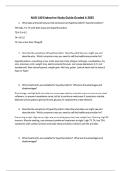
NUR 140 Endocrine Study Guide Graded A 2025
1. What labs and levels tell you that someone has Hypothyroidism? Hyperthyroidism? TSH labs, T3, T4 with both hypo and hyperthyroidism TSH: 0.4-4.2 T4: 4.6-12 T3: low is less than 70mg/dL 2. Describe the symptoms of hypothyroidism. Describe what labs you might see and describe why. Which symptoms may you need to call the healthcare provider for? Hypothyroidism: everything is low. Cold, slow heart rate, fatigue, lethargic, constipation, dry skin, anorexia, LOW, weight loss, edema around the eyes. Can cause depression if it's not treated well. Slow slurred speech, weight gain. Hair loss, goiter. Look at heart rate to know if hypo or hyper. 3. What treatments are available for hypothyroidism? What are the advantages and disadvantages? Diet change: eat high bulk, low calories, encourage activity, maintain warm environment, stool softeners, to prevent myxedema coma, tell pt to continue meds even if symptoms subside. Maintain airway patent, give Synthroid, glucose, IV replacement, treat infection. 4. Describe the symptoms of hyperthyroidism. Describe what labs you might see and describe why. Which symptoms may you need to call the healthcare provider for? Everything is high. High temp, high rate, protruding eyes, diarrhea, weight loss, flushing, high BP, tremors. Muscle wasting, use ointments preferred treatment at night. high T3, T4, low TSH. symptoms with cardiac function and body temp would be critical to call the provider. 5. What treatments are available for hyperthyroidism? What are the advantages and disadvantages?
Written for
- Institution
- William Rainey Harper College
- Course
- NUR 140
Document information
- Uploaded on
- July 23, 2025
- Number of pages
- 4
- Written in
- 2024/2025
- Type
- Exam (elaborations)
- Contains
- Questions & answers
Subjects
-
nur 140
-
nur 140 endocrine study guide

Document also available in package deal