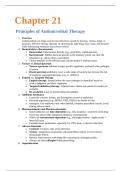
Chapter 21
Principles of Antimicrobial Therapy
1. Overview
Antimicrobials are drugs used to treat infections caused by bacteria, viruses, fungi, or
parasites. Effective therapy depends on choosing the right drug, dose, route, and duration
while minimizing resistance and adverse effects.
2. Bactericidal vs. Bacteriostatic
o Bactericidal: Kills bacteria directly (e.g., penicillins, cephalosporins)
o Bacteriostatic: Inhibits bacterial growth so the immune system can clear the
infection (e.g., tetracyclines, macrolides)
o Choice depends on the infection type and the patient’s immune status
3. Narrow vs. Broad Spectrum
o Narrow-spectrum antibiotics target specific organisms; preferred when pathogen
is known
o Broad-spectrum antibiotics cover a wide range of bacteria but increase the risk
of resistance and superinfections (e.g., C. difficile)
4. Empiric vs. Targeted Therapy
o Empiric therapy: Started before the exact pathogen is identified, based on
clinical judgment and likely organisms
o Targeted (definitive) therapy: Adjusted once culture and sensitivity results are
available
o De-escalation is key to antimicrobial stewardship
5. Antibiotic Resistance
o Caused by overuse, misuse, and incomplete courses of antibiotics
o Resistant organisms (e.g., MRSA, VRE, ESBLs) are harder to treat
o Strategies: Use antibiotics only when needed, complete prescribed courses, avoid
sharing leftover meds
6. Pharmacokinetics and Pharmacodynamics
o Some antibiotics are time-dependent (e.g., beta-lactams)—work best when drug
levels stay above MIC (minimum inhibitory concentration)
o Others are concentration-dependent (e.g., aminoglycosides)—higher peaks =
better kill rates
o Consider tissue penetration, especially for CNS, bone, or abscess infections
7. Adverse Reactions
o Common: GI upset, rash, yeast infections
o Serious: Anaphylaxis (especially with penicillins), kidney or liver toxicity,
hematologic effects
o Monitor renal function with drugs like vancomycin, aminoglycosides
o Always ask about allergies before prescribing
8. Superinfections
, o Secondary infections (e.g., C. diff colitis, oral/vaginal candidiasis) that occur due
to antibiotic disruption of normal flora
o Broad-spectrum and prolonged antibiotic use increases risk
o Educate patients to report persistent diarrhea or new symptoms during therapy
9. Patient Education
o Take antibiotics exactly as prescribed—don’t skip doses or stop early
o Store and administer medications properly (e.g., refrigerate suspensions if needed)
o Avoid alcohol with certain antibiotics (e.g., metronidazole)
o Report side effects like rash, swelling, or severe diarrhea
10. Stewardship and Public Health
Use narrow-spectrum agents when possible
Limit antibiotic use for viral illnesses (e.g., colds, most sore throats)
Follow local or national guidelines for common infections
Collaborate with pharmacists and infection control teams to optimize therapy
, Chapter 22
Penicillins and Other Beta-Lactam Antibiotics
1. Overview
Beta-lactam antibiotics share a chemical ring structure that disrupts bacterial cell wall
synthesis. This class includes penicillins, cephalosporins, carbapenems, and
monobactams. These drugs are generally bactericidal and widely used due to their
broad coverage and safety.
Penicillins
2. Mechanism of Action
Penicillins inhibit bacterial cell wall formation by binding to penicillin-binding proteins
(PBPs), leading to cell lysis.
3. Resistance Mechanisms
Bacteria may:
o Produce beta-lactamase enzymes that break down the antibiotic
o Alter PBPs to prevent binding (e.g., MRSA)
o Reduce drug entry or increase efflux
4. Types of Penicillins
o Natural penicillins (e.g., penicillin G, penicillin V): Treat streptococcal
infections and syphilis
o Penicillinase-resistant penicillins (e.g., nafcillin, dicloxacillin): Used for MSSA
(methicillin-sensitive Staph aureus)
o Aminopenicillins (e.g., amoxicillin, ampicillin): Broader coverage; used for ear
infections, strep throat, UTIs
o Extended-spectrum penicillins (e.g., piperacillin-tazobactam): Treat serious
infections including Pseudomonas
5. Beta-Lactamase Inhibitors
Combined with penicillins to protect them from degradation:
o Amoxicillin-clavulanate (Augmentin)
o Ampicillin-sulbactam (Unasyn)
o Piperacillin-tazobactam (Zosyn)
o These combinations extend the drug's spectrum
6. Adverse Effects
o Allergic reactions are the most common concern
Rash, urticaria, or anaphylaxis (rare but life-threatening)
Cross-reactivity possible with other beta-lactams
Principles of Antimicrobial Therapy
1. Overview
Antimicrobials are drugs used to treat infections caused by bacteria, viruses, fungi, or
parasites. Effective therapy depends on choosing the right drug, dose, route, and duration
while minimizing resistance and adverse effects.
2. Bactericidal vs. Bacteriostatic
o Bactericidal: Kills bacteria directly (e.g., penicillins, cephalosporins)
o Bacteriostatic: Inhibits bacterial growth so the immune system can clear the
infection (e.g., tetracyclines, macrolides)
o Choice depends on the infection type and the patient’s immune status
3. Narrow vs. Broad Spectrum
o Narrow-spectrum antibiotics target specific organisms; preferred when pathogen
is known
o Broad-spectrum antibiotics cover a wide range of bacteria but increase the risk
of resistance and superinfections (e.g., C. difficile)
4. Empiric vs. Targeted Therapy
o Empiric therapy: Started before the exact pathogen is identified, based on
clinical judgment and likely organisms
o Targeted (definitive) therapy: Adjusted once culture and sensitivity results are
available
o De-escalation is key to antimicrobial stewardship
5. Antibiotic Resistance
o Caused by overuse, misuse, and incomplete courses of antibiotics
o Resistant organisms (e.g., MRSA, VRE, ESBLs) are harder to treat
o Strategies: Use antibiotics only when needed, complete prescribed courses, avoid
sharing leftover meds
6. Pharmacokinetics and Pharmacodynamics
o Some antibiotics are time-dependent (e.g., beta-lactams)—work best when drug
levels stay above MIC (minimum inhibitory concentration)
o Others are concentration-dependent (e.g., aminoglycosides)—higher peaks =
better kill rates
o Consider tissue penetration, especially for CNS, bone, or abscess infections
7. Adverse Reactions
o Common: GI upset, rash, yeast infections
o Serious: Anaphylaxis (especially with penicillins), kidney or liver toxicity,
hematologic effects
o Monitor renal function with drugs like vancomycin, aminoglycosides
o Always ask about allergies before prescribing
8. Superinfections
, o Secondary infections (e.g., C. diff colitis, oral/vaginal candidiasis) that occur due
to antibiotic disruption of normal flora
o Broad-spectrum and prolonged antibiotic use increases risk
o Educate patients to report persistent diarrhea or new symptoms during therapy
9. Patient Education
o Take antibiotics exactly as prescribed—don’t skip doses or stop early
o Store and administer medications properly (e.g., refrigerate suspensions if needed)
o Avoid alcohol with certain antibiotics (e.g., metronidazole)
o Report side effects like rash, swelling, or severe diarrhea
10. Stewardship and Public Health
Use narrow-spectrum agents when possible
Limit antibiotic use for viral illnesses (e.g., colds, most sore throats)
Follow local or national guidelines for common infections
Collaborate with pharmacists and infection control teams to optimize therapy
, Chapter 22
Penicillins and Other Beta-Lactam Antibiotics
1. Overview
Beta-lactam antibiotics share a chemical ring structure that disrupts bacterial cell wall
synthesis. This class includes penicillins, cephalosporins, carbapenems, and
monobactams. These drugs are generally bactericidal and widely used due to their
broad coverage and safety.
Penicillins
2. Mechanism of Action
Penicillins inhibit bacterial cell wall formation by binding to penicillin-binding proteins
(PBPs), leading to cell lysis.
3. Resistance Mechanisms
Bacteria may:
o Produce beta-lactamase enzymes that break down the antibiotic
o Alter PBPs to prevent binding (e.g., MRSA)
o Reduce drug entry or increase efflux
4. Types of Penicillins
o Natural penicillins (e.g., penicillin G, penicillin V): Treat streptococcal
infections and syphilis
o Penicillinase-resistant penicillins (e.g., nafcillin, dicloxacillin): Used for MSSA
(methicillin-sensitive Staph aureus)
o Aminopenicillins (e.g., amoxicillin, ampicillin): Broader coverage; used for ear
infections, strep throat, UTIs
o Extended-spectrum penicillins (e.g., piperacillin-tazobactam): Treat serious
infections including Pseudomonas
5. Beta-Lactamase Inhibitors
Combined with penicillins to protect them from degradation:
o Amoxicillin-clavulanate (Augmentin)
o Ampicillin-sulbactam (Unasyn)
o Piperacillin-tazobactam (Zosyn)
o These combinations extend the drug's spectrum
6. Adverse Effects
o Allergic reactions are the most common concern
Rash, urticaria, or anaphylaxis (rare but life-threatening)
Cross-reactivity possible with other beta-lactams