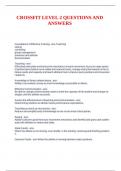
CROSSFIT LEVEL 2 QUESTIONS AND
ANSWERS
Foundations of Effective Training - ans-Teaching 30 30 30 30 30
seeing
correcting
group management 30
presence and attitude 30 30
demonstration
Teaching - ans- 30 30
Effectively articulate and instruct the mechanics of each movement, focus on major points
30 30 30 30 30 30 30 30 30 30 30 30 30
of performance before more subtle and nuanced ones, change instruction based on the at
30 30 30 30 30 30 30 30 30 30 30 30 30
hletes needs and capacity and teach athletes how to improve poor positions and movemen
30 30 30 30 30 30 30 30 30 30 30 30 30
t patterns.
30
Knowledge in fitness related areas - ans- 30 30 30 30 30 30
Ability to accurately convey as much knowledge as possible to others.
30 30 30 30 30 30 30 30 30 30
Effective Communication - ans- 30 30 30
Be able to change communication style to meet the capacity of the student and change str
30 30 30 30 30 30 30 30 30 30 30 30 30 30 30
ategies until the athlete succeeds.
30 30 30 30
Assess the effectiveness of teaching and communication - ans-
30 30 30 30 30 30 30 30
Determining whether an athlete meets performance expectations. 30 30 30 30 30 30
Teaching as much as neccessary - ans- 30 30 30 30 30 30
Reduce and simplify body of knowledge to one or two most critical points.
30 30 30 30 30 30 30 30 30 30 30 30
Seeing - ans- 30 30
Ability to discern good from poor movement mechanics and identify both gross and subtle f
30 30 30 30 30 30 30 30 30 30 30 30 30 30
aults with athletes in motion and static.
30 30 30 30 30 30
Static Faults - ans-30 30 30
When the athlete is not moving, even briefly. In the starting, receiving and finishing position
30 30 30 30 30 30 30 30 30 30 30 30 30 30
s.
Dynamic Faults - ans-When the athlete is moving between static positions.
30 30 30 30 30 30 30 30 30 30
, Most useful dynamic view - ans-A profile view offset by 45 degrees
30 30 30 30 30 30 30 30 30 30 30
Difficulty seeing dynamic faults increases when - ans-
30 30 30 30 30 30 30
Athlete moves quickly and faults become subtler
30 30 30 30 30 30
Methods to develop ability to see faults - ans-Study film
30 30 30 30 30 30 30 30 30
Survey athletes for only one fault at a time
30 30 30 30 30 30 30 30
Correcting - ans- 30 30
Ability to facilitate better mechanics for an athlete using visual, verbal or tactile cues. Ability
30 30 30 30 30 30 30 30 30 30 30 30 30 30 3
to triage faults. Understanding of how multiple faults are related.
0 30 30 30 30 30 30 30 30 30
Correcting mechanics results in - ans- 30 30 30 30 30
Increased performance gains and decreased risk of injury.30 30 30 30 30 30 30
Abilities for correcting - ans-Use successful cues
30 30 30 30 30 30
Know multiple corrections for each fault
30 30 30 30 30
Triage faulty movement 30 30
Balance critique with praise. 30 30 30
Cues - ans-Direction to help an athlete execute perfect mechanics.
30 30 30 30 30 30 30 30 30
Good Cue - ans-Any cue that results in improved movement mechanics
30 30 30 30 30 30 30 30 30 30
Cues do not - ans-Perfectly describe the mechanics of the movement
30 30 30 30 30 30 30 30 30 30
Cues should be - ans-Short
30 30 30 30
Specific
Actionable
Actionable cue - ans-Gives a single task for the athlete to complete
30 30 30 30 30 30 30 30 30 30 30
Fault Identification - Bad Cue - ans-
30 30 30 30 30 30
Pointing out the fault, does not tell the athlete how to fix it
30 30 30 30 30 30 30 30 30 30 30 30
Cue language - ans-Simple and easily understood by anyone
30 30 30 30 30 30 30 30
Three step cue proccess - ans-Identify the fault
30 30 30 30 30 30 30
Identify what is out of place 30 30 30 30 30
Give direction to that body part
30 30 30 30 30
If athletes movement does not improve - ans-Use multiple cues until the fault is resolved
30 30 30 30 30 30 30 30 30 30 30 30 30 30
Corrective strategies - ans-Verbal 30 30 30
Visual
Tactile
ANSWERS
Foundations of Effective Training - ans-Teaching 30 30 30 30 30
seeing
correcting
group management 30
presence and attitude 30 30
demonstration
Teaching - ans- 30 30
Effectively articulate and instruct the mechanics of each movement, focus on major points
30 30 30 30 30 30 30 30 30 30 30 30 30
of performance before more subtle and nuanced ones, change instruction based on the at
30 30 30 30 30 30 30 30 30 30 30 30 30
hletes needs and capacity and teach athletes how to improve poor positions and movemen
30 30 30 30 30 30 30 30 30 30 30 30 30
t patterns.
30
Knowledge in fitness related areas - ans- 30 30 30 30 30 30
Ability to accurately convey as much knowledge as possible to others.
30 30 30 30 30 30 30 30 30 30
Effective Communication - ans- 30 30 30
Be able to change communication style to meet the capacity of the student and change str
30 30 30 30 30 30 30 30 30 30 30 30 30 30 30
ategies until the athlete succeeds.
30 30 30 30
Assess the effectiveness of teaching and communication - ans-
30 30 30 30 30 30 30 30
Determining whether an athlete meets performance expectations. 30 30 30 30 30 30
Teaching as much as neccessary - ans- 30 30 30 30 30 30
Reduce and simplify body of knowledge to one or two most critical points.
30 30 30 30 30 30 30 30 30 30 30 30
Seeing - ans- 30 30
Ability to discern good from poor movement mechanics and identify both gross and subtle f
30 30 30 30 30 30 30 30 30 30 30 30 30 30
aults with athletes in motion and static.
30 30 30 30 30 30
Static Faults - ans-30 30 30
When the athlete is not moving, even briefly. In the starting, receiving and finishing position
30 30 30 30 30 30 30 30 30 30 30 30 30 30
s.
Dynamic Faults - ans-When the athlete is moving between static positions.
30 30 30 30 30 30 30 30 30 30
, Most useful dynamic view - ans-A profile view offset by 45 degrees
30 30 30 30 30 30 30 30 30 30 30
Difficulty seeing dynamic faults increases when - ans-
30 30 30 30 30 30 30
Athlete moves quickly and faults become subtler
30 30 30 30 30 30
Methods to develop ability to see faults - ans-Study film
30 30 30 30 30 30 30 30 30
Survey athletes for only one fault at a time
30 30 30 30 30 30 30 30
Correcting - ans- 30 30
Ability to facilitate better mechanics for an athlete using visual, verbal or tactile cues. Ability
30 30 30 30 30 30 30 30 30 30 30 30 30 30 3
to triage faults. Understanding of how multiple faults are related.
0 30 30 30 30 30 30 30 30 30
Correcting mechanics results in - ans- 30 30 30 30 30
Increased performance gains and decreased risk of injury.30 30 30 30 30 30 30
Abilities for correcting - ans-Use successful cues
30 30 30 30 30 30
Know multiple corrections for each fault
30 30 30 30 30
Triage faulty movement 30 30
Balance critique with praise. 30 30 30
Cues - ans-Direction to help an athlete execute perfect mechanics.
30 30 30 30 30 30 30 30 30
Good Cue - ans-Any cue that results in improved movement mechanics
30 30 30 30 30 30 30 30 30 30
Cues do not - ans-Perfectly describe the mechanics of the movement
30 30 30 30 30 30 30 30 30 30
Cues should be - ans-Short
30 30 30 30
Specific
Actionable
Actionable cue - ans-Gives a single task for the athlete to complete
30 30 30 30 30 30 30 30 30 30 30
Fault Identification - Bad Cue - ans-
30 30 30 30 30 30
Pointing out the fault, does not tell the athlete how to fix it
30 30 30 30 30 30 30 30 30 30 30 30
Cue language - ans-Simple and easily understood by anyone
30 30 30 30 30 30 30 30
Three step cue proccess - ans-Identify the fault
30 30 30 30 30 30 30
Identify what is out of place 30 30 30 30 30
Give direction to that body part
30 30 30 30 30
If athletes movement does not improve - ans-Use multiple cues until the fault is resolved
30 30 30 30 30 30 30 30 30 30 30 30 30 30
Corrective strategies - ans-Verbal 30 30 30
Visual
Tactile