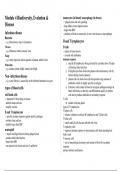
odule 4 Biodiversity, Evolution &
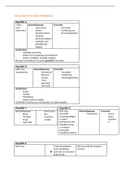
M monocytes (in blood)/ macrophage (in tissue)
- > phagocytosis and cell signalling
Disease - large kidney- bean shaped nucleus
- larger than RBC
Infectious disease - circulate in blood as monocytes, or move into tissues as macrophages
Bacteria
- e.g. tuberculosis, ring rot in potatoes B and T lymphocytes
Viruses B cells
- e.g. influenza, tobacco mosaic virus - mature in bone marrow
Fungi - covered with antibodies
- e.g. cattle ringworm, black sigatoka in banana, athlete's foot immune response
Protoctists 1. specific B lymphocytes being activated by cytokines from T helper
- e.g. malaria, potato blight/ tomato late blight cell during clonal selection
2. B lymphocytes then divide into plasma cells and memory cells by
Non- infectious disease mitosis during clonal expansion
- e.g. cystic fibrosis is caused due to the inherited mutation in a gene 3. plasma cells are short-lived cells that produce large amount of
antibodies which are highly specific to antigens
types of blood cells 4. B memory cells remain in blood to recognise pathogens/antigen in
future infections, so that they can differentiate quickly to plasma
red blood cells cells and to produce antibodies in secondary response
- > transport O2 from lungs to tissues T cells
- uniform shape and size ● mature in thymus gland
- roughly circular types of T lymphocytes
B and T lymphocytes T helper cells
- > specific immune response against specific pathogen -> release cytokines to activate B lymphocytes and T killer cells
- contains large nucleus T killer cells
- slightly larger than RBC -> attach and kill cells that are infected with virus
T regulatory cells
neutrophil -> suppress immune response to stop immune cells from attacking host
- > engulf and digest bacteria during phagocytosis body's cells
- contain multi-lobed nucleus T memory cells
- larger than RBC -> act as immunological memory and remain in blood for secondary
- can squeeze into tissues and out of capillaries response
primary defence mechanism
M monocytes (in blood)/ macrophage (in tissue)
- > phagocytosis and cell signalling
Disease - large kidney- bean shaped nucleus
- larger than RBC
Infectious disease - circulate in blood as monocytes, or move into tissues as macrophages
Bacteria
- e.g. tuberculosis, ring rot in potatoes B and T lymphocytes
Viruses B cells
- e.g. influenza, tobacco mosaic virus - mature in bone marrow
Fungi - covered with antibodies
- e.g. cattle ringworm, black sigatoka in banana, athlete's foot immune response
Protoctists 1. specific B lymphocytes being activated by cytokines from T helper
- e.g. malaria, potato blight/ tomato late blight cell during clonal selection
2. B lymphocytes then divide into plasma cells and memory cells by
Non- infectious disease mitosis during clonal expansion
- e.g. cystic fibrosis is caused due to the inherited mutation in a gene 3. plasma cells are short-lived cells that produce large amount of
antibodies which are highly specific to antigens
types of blood cells 4. B memory cells remain in blood to recognise pathogens/antigen in
future infections, so that they can differentiate quickly to plasma
red blood cells cells and to produce antibodies in secondary response
- > transport O2 from lungs to tissues T cells
- uniform shape and size ● mature in thymus gland
- roughly circular types of T lymphocytes
B and T lymphocytes T helper cells
- > specific immune response against specific pathogen -> release cytokines to activate B lymphocytes and T killer cells
- contains large nucleus T killer cells
- slightly larger than RBC -> attach and kill cells that are infected with virus
T regulatory cells
neutrophil -> suppress immune response to stop immune cells from attacking host
- > engulf and digest bacteria during phagocytosis body's cells
- contain multi-lobed nucleus T memory cells
- larger than RBC -> act as immunological memory and remain in blood for secondary
- can squeeze into tissues and out of capillaries response
primary defence mechanism