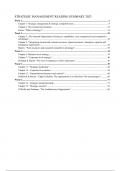
Inhoud
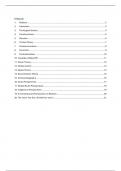
1. Realism ...........................................................................................................................2
2. Liberalism .......................................................................................................................3
3. The English School...........................................................................................................4
4. Constructivism ................................................................................................................5
5. Marxism ..........................................................................................................................6
6. Critical Theory .................................................................................................................7
7. Poststructuralism ............................................................................................................8
8. Feminism ........................................................................................................................9
9. Postcolonialism............................................................................................................. 10
10. Towards a Global IR? ....................................................................................................... 11
11. Green Theory ................................................................................................................... 12
12. Global Justice .................................................................................................................. 13
13. Queer Theory ................................................................................................................... 14
14. Securitisation Theory ....................................................................................................... 15
15. Critical Geography ........................................................................................................... 16
16. Asian Perspectives........................................................................................................... 17
17. Global South Perspectives ............................................................................................... 18
18. Indigenous Perspectives .................................................................................................. 19
19. A Contemporary Perspective on Realism .......................................................................... 20
20. The ‘Isms’ Are Evil. All Hail the ‘Isms’! ............................................................................... 21
, 1. Realism
Realism is one of the main theories used to understand how countries behave in the
world. It says that the world is a dangerous place where no one is truly in charge.
Because of this, countries (also called “states”) must rely on themselves to stay safe
and strong.
Realism is based on a few key ideas. First, it believes that states are the most important
players in global politics. People and groups like the United Nations may exist, but they
don’t have much real power. Second, the state is seen as a single actor that always
works to protect its national interests. Third, realism sees leaders as rational — they
make choices based on what will help their country survive and avoid weakness. Finally,
because there is no world government, each state is alone in protecting itself. In other
words, the world is “anarchic.”
Realism also believes that humans are naturally selfish and want power. These traits,
when combined with the lack of trust between states, often lead to conflict. That’s why
war has happened so often in history. Writers like Machiavelli said leaders should be
smart and strong — like a lion and a fox — and should use power and even lies when
needed to protect their country. Hans Morgenthau, another important realist thinker,
said that politics is about power, not morals. He believed that trying to be too kind or fair
in global politics could make a country weak. Later, Kenneth Waltz introduced a new
kind of realism called “neorealism,” which focuses more on how the world is structured
and less on human nature.
Many people criticize realism for being too negative. They say it ignores things like
human rights, international groups, and the actions of regular people. For example,
realism could not explain the end of the Cold War, which happened mostly because of
people rising up against powerful governments. Realism also focuses only on states,
like solid balls on a pool table, and doesn’t look at what’s going on inside them.
Still, realism is often used by world leaders. When the Islamic State group (also known
as ISIS) took land in Iraq and Syria and used terrorism to spread fear, countries like the
US, Russia, and France responded with military power. They didn’t wait for the United
Nations or other groups to act. Instead, they made temporary alliances and used force
to protect their interests. This is a clear example of realism in action — countries acting
to protect themselves in a dangerous world.
In conclusion, realism gives us a clear picture of how countries often behave. It focuses
on power, fear, and survival. Personally, I think realism is useful because it explains a lot
of what happens in the world. But I also think it can be dangerous if we believe that war
and competition are the only answers. To build a more peaceful future, we need to
understand realism — but also be willing to think beyond it, and look for ways to
cooperate and solve problems together.
, 2. Liberalism
Liberalism is a theory in international relations that focuses on the rights and freedom of
individuals. It believes that the main job of any government is to protect people’s rights to
life, liberty, and property. To do this, power must be limited — both at home and abroad.
Liberals believe that governments should be controlled by laws and democratic systems,
such as elections and the separation of powers between different parts of the government.
Even though liberalism starts with domestic politics, it also cares a lot about foreign policy.
That’s because what a country does abroad can affect freedom at home. For example,
when a government goes to war, it needs to build up military power. This power can be used
against other countries — but it could also be used to control its own people. That’s why
liberal countries try to keep the military under civilian control and avoid unnecessary wars.
Liberals are especially against wars of expansion (imperialism), where countries try to take
land and control other nations. These wars make governments stronger and more
controlling, which is dangerous for freedom. Liberals want to find a balance: countries must
be able to protect themselves, but without turning into oppressive regimes.
One of liberalism’s most famous ideas is the Democratic Peace Theory. It says that
democratic countries almost never go to war with each other. This is because they have
systems that limit power and because they see other democracies as friendly and
trustworthy. However, some people say this idea has limits. For example, democracies may
still go to war with non-democratic countries, like when the US invaded Iraq in 2003.
After World War II, many liberal ideas shaped the modern world. International organisations
like the United Nations, the World Bank, and the World Trade Organization were created
to help countries work together, solve problems, and reduce war. These institutions are
based on the same ideas as domestic liberalism: sharing power, solving conflicts
peacefully, and benefiting from cooperation. (neoliberalism)
Liberalism also supports free trade. Countries that trade a lot with each other are less likely
to go to war, because war would destroy profits and hurt everyone. This leads to what liberal
theorists call absolute gains — where all countries benefit, not just one side. This is very
different from realism, where states only care about having more power than others (called
relative gains).
A good example of liberalism in action is how the US dealt with Mexico in the early 1900s.
Even though America was powerful, it avoided taking over Mexico. President Woodrow
Wilson believed in democracy and self-determination, and public opinion in the US did not
support war. Institutions like Congress, public debate, and international criticism helped
stop American expansion. This shows how liberal values and systems can limit violent
power.
Liberalism sees unlimited power as the biggest threat to freedom. To stop this, it promotes
strong institutions and shared rules, both inside countries and between them. It also
encourages trade, diplomacy, and cooperation. While not perfect, liberalism offers a more
hopeful view of the world than realism. Personally, I believe liberalism helps us imagine a
world where freedom, cooperation, and peace are possible — not just power and fear.
1. Realism ...........................................................................................................................2
2. Liberalism .......................................................................................................................3
3. The English School...........................................................................................................4
4. Constructivism ................................................................................................................5
5. Marxism ..........................................................................................................................6
6. Critical Theory .................................................................................................................7
7. Poststructuralism ............................................................................................................8
8. Feminism ........................................................................................................................9
9. Postcolonialism............................................................................................................. 10
10. Towards a Global IR? ....................................................................................................... 11
11. Green Theory ................................................................................................................... 12
12. Global Justice .................................................................................................................. 13
13. Queer Theory ................................................................................................................... 14
14. Securitisation Theory ....................................................................................................... 15
15. Critical Geography ........................................................................................................... 16
16. Asian Perspectives........................................................................................................... 17
17. Global South Perspectives ............................................................................................... 18
18. Indigenous Perspectives .................................................................................................. 19
19. A Contemporary Perspective on Realism .......................................................................... 20
20. The ‘Isms’ Are Evil. All Hail the ‘Isms’! ............................................................................... 21
, 1. Realism
Realism is one of the main theories used to understand how countries behave in the
world. It says that the world is a dangerous place where no one is truly in charge.
Because of this, countries (also called “states”) must rely on themselves to stay safe
and strong.
Realism is based on a few key ideas. First, it believes that states are the most important
players in global politics. People and groups like the United Nations may exist, but they
don’t have much real power. Second, the state is seen as a single actor that always
works to protect its national interests. Third, realism sees leaders as rational — they
make choices based on what will help their country survive and avoid weakness. Finally,
because there is no world government, each state is alone in protecting itself. In other
words, the world is “anarchic.”
Realism also believes that humans are naturally selfish and want power. These traits,
when combined with the lack of trust between states, often lead to conflict. That’s why
war has happened so often in history. Writers like Machiavelli said leaders should be
smart and strong — like a lion and a fox — and should use power and even lies when
needed to protect their country. Hans Morgenthau, another important realist thinker,
said that politics is about power, not morals. He believed that trying to be too kind or fair
in global politics could make a country weak. Later, Kenneth Waltz introduced a new
kind of realism called “neorealism,” which focuses more on how the world is structured
and less on human nature.
Many people criticize realism for being too negative. They say it ignores things like
human rights, international groups, and the actions of regular people. For example,
realism could not explain the end of the Cold War, which happened mostly because of
people rising up against powerful governments. Realism also focuses only on states,
like solid balls on a pool table, and doesn’t look at what’s going on inside them.
Still, realism is often used by world leaders. When the Islamic State group (also known
as ISIS) took land in Iraq and Syria and used terrorism to spread fear, countries like the
US, Russia, and France responded with military power. They didn’t wait for the United
Nations or other groups to act. Instead, they made temporary alliances and used force
to protect their interests. This is a clear example of realism in action — countries acting
to protect themselves in a dangerous world.
In conclusion, realism gives us a clear picture of how countries often behave. It focuses
on power, fear, and survival. Personally, I think realism is useful because it explains a lot
of what happens in the world. But I also think it can be dangerous if we believe that war
and competition are the only answers. To build a more peaceful future, we need to
understand realism — but also be willing to think beyond it, and look for ways to
cooperate and solve problems together.
, 2. Liberalism
Liberalism is a theory in international relations that focuses on the rights and freedom of
individuals. It believes that the main job of any government is to protect people’s rights to
life, liberty, and property. To do this, power must be limited — both at home and abroad.
Liberals believe that governments should be controlled by laws and democratic systems,
such as elections and the separation of powers between different parts of the government.
Even though liberalism starts with domestic politics, it also cares a lot about foreign policy.
That’s because what a country does abroad can affect freedom at home. For example,
when a government goes to war, it needs to build up military power. This power can be used
against other countries — but it could also be used to control its own people. That’s why
liberal countries try to keep the military under civilian control and avoid unnecessary wars.
Liberals are especially against wars of expansion (imperialism), where countries try to take
land and control other nations. These wars make governments stronger and more
controlling, which is dangerous for freedom. Liberals want to find a balance: countries must
be able to protect themselves, but without turning into oppressive regimes.
One of liberalism’s most famous ideas is the Democratic Peace Theory. It says that
democratic countries almost never go to war with each other. This is because they have
systems that limit power and because they see other democracies as friendly and
trustworthy. However, some people say this idea has limits. For example, democracies may
still go to war with non-democratic countries, like when the US invaded Iraq in 2003.
After World War II, many liberal ideas shaped the modern world. International organisations
like the United Nations, the World Bank, and the World Trade Organization were created
to help countries work together, solve problems, and reduce war. These institutions are
based on the same ideas as domestic liberalism: sharing power, solving conflicts
peacefully, and benefiting from cooperation. (neoliberalism)
Liberalism also supports free trade. Countries that trade a lot with each other are less likely
to go to war, because war would destroy profits and hurt everyone. This leads to what liberal
theorists call absolute gains — where all countries benefit, not just one side. This is very
different from realism, where states only care about having more power than others (called
relative gains).
A good example of liberalism in action is how the US dealt with Mexico in the early 1900s.
Even though America was powerful, it avoided taking over Mexico. President Woodrow
Wilson believed in democracy and self-determination, and public opinion in the US did not
support war. Institutions like Congress, public debate, and international criticism helped
stop American expansion. This shows how liberal values and systems can limit violent
power.
Liberalism sees unlimited power as the biggest threat to freedom. To stop this, it promotes
strong institutions and shared rules, both inside countries and between them. It also
encourages trade, diplomacy, and cooperation. While not perfect, liberalism offers a more
hopeful view of the world than realism. Personally, I believe liberalism helps us imagine a
world where freedom, cooperation, and peace are possible — not just power and fear.