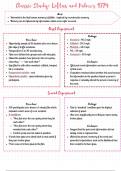
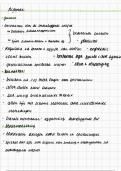
Classic Study: Loftus and Palmer 1974
Aims:
Interested in the that human memory is fallible - inspired by reconstructive memory.
Memory can be influenced by information which occurs after an event.
First Experiment
Findings:
Procedure: Smashed = 40.5 mph
Opportunity sample of 45 students who were shown Collided = 39.3 mph
film clips of traffic accidents. Bumped = 38.1 mph
Ranged from 5 to 30 seconds long . Hit = 34 mph
Ppts were divided into groups each with nine ppts. Contacted = 31.8 mph
Asked the question ‘how fast were the cars going
when they ------ into each other?’ Conclusion:
Gap filled in with either smashed, collided, bumped, Effect post-event information can have on the recall
hit or contacted. of that event.
Independent variable - verb A question remained about whether this was because
Dependent variable - speed estimates given by the information in the question biased a person’s
participant. response or actually altered the person’s memory of
the event.
Second Experiment
Procedure: Findings:
150 participants were shown a 1 minute film which Ppts in ‘smashed’ condition gave the highest
included a short scene of a car accident. estimate of speed.
3 conditions: Also were significantly more likely to report seeing
‘How fast were the cars going when they hit broken glass.
each other?’
‘How fast were the cars going when they Conclusion:
smashed into each other?’ Suggest that the post-event information did not
Control group was not asked a question. simply create a response bias.
A week later ppts were asked back in and asked if Altered the person’s memory of the event and
they saw broken glass. generated expectations, such as the likelihood that
There was no broken glass in the film. there would be broken glass.
Aims:
Interested in the that human memory is fallible - inspired by reconstructive memory.
Memory can be influenced by information which occurs after an event.
First Experiment
Findings:
Procedure: Smashed = 40.5 mph
Opportunity sample of 45 students who were shown Collided = 39.3 mph
film clips of traffic accidents. Bumped = 38.1 mph
Ranged from 5 to 30 seconds long . Hit = 34 mph
Ppts were divided into groups each with nine ppts. Contacted = 31.8 mph
Asked the question ‘how fast were the cars going
when they ------ into each other?’ Conclusion:
Gap filled in with either smashed, collided, bumped, Effect post-event information can have on the recall
hit or contacted. of that event.
Independent variable - verb A question remained about whether this was because
Dependent variable - speed estimates given by the information in the question biased a person’s
participant. response or actually altered the person’s memory of
the event.
Second Experiment
Procedure: Findings:
150 participants were shown a 1 minute film which Ppts in ‘smashed’ condition gave the highest
included a short scene of a car accident. estimate of speed.
3 conditions: Also were significantly more likely to report seeing
‘How fast were the cars going when they hit broken glass.
each other?’
‘How fast were the cars going when they Conclusion:
smashed into each other?’ Suggest that the post-event information did not
Control group was not asked a question. simply create a response bias.
A week later ppts were asked back in and asked if Altered the person’s memory of the event and
they saw broken glass. generated expectations, such as the likelihood that
There was no broken glass in the film. there would be broken glass.