Engels
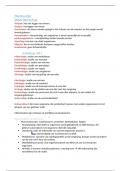
1. Glass ceiling: This is a metaphor for the invisible barriers that prevent
certain groups, such as women or minorities, from reaching higher
positions in an organization, even though they are qualified. It refers to a
level in a hierarchy where people cannot rise further, despite no explicit
restrictions.
2. Net vs gross profit:
o Gross profit: This is the difference between revenue (the total
income from sales) and the direct costs of goods sold (e.g.,
production costs). It measures the profitability of the product itself,
without considering overhead costs, taxes, etc.
o Net profit: This is the profit that remains after all expenses,
including taxes, interest, and overhead costs, have been deducted
from gross profit. It gives a complete picture of a company's
profitability.
3. Limited or unlimited liability:
o Limited liability: This means that the owners of a business are
only financially responsible for the company's debts up to the
amount they have invested. Their personal assets are protected.
o Unlimited liability: This means that the owners are fully
responsible for all the company's debts. Their personal assets can
be used to pay off debts.
4. Stock index: A stock index is a measure that represents the performance
of a group of stocks. It is used to track the overall performance of a stock
market or a sector within a market. Well-known examples include the Dow
Jones Industrial Average, S&P 500, and the AEX index.
5. Supply chain: This is the entire network of organizations, people,
activities, information, and resources involved in moving a product or
service from the supplier to the customer. It includes everything from raw
material extraction, production, distribution, to final delivery to the
customer.
6. SWOT analysis: This is a strategic planning technique used to identify the
Strengths, Weaknesses, Opportunities, and Threats of a company or
project. It helps organizations assess their strategic position and make
decisions.
7. Creditworthiness: This is an assessment of the likelihood that a person
or organization will be able to repay a loan. It is often used by lenders to
determine whether to extend credit and at what interest rate. Factors such
as credit history, income, and current debt levels play a role in determining
creditworthiness.
8. GDP (Gross Domestic Product): This is the total value of all goods and
services produced in a country within a certain period, usually a year. It is
often used as a measure of a country's economic performance.
1. Glass ceiling: This is a metaphor for the invisible barriers that prevent
certain groups, such as women or minorities, from reaching higher
positions in an organization, even though they are qualified. It refers to a
level in a hierarchy where people cannot rise further, despite no explicit
restrictions.
2. Net vs gross profit:
o Gross profit: This is the difference between revenue (the total
income from sales) and the direct costs of goods sold (e.g.,
production costs). It measures the profitability of the product itself,
without considering overhead costs, taxes, etc.
o Net profit: This is the profit that remains after all expenses,
including taxes, interest, and overhead costs, have been deducted
from gross profit. It gives a complete picture of a company's
profitability.
3. Limited or unlimited liability:
o Limited liability: This means that the owners of a business are
only financially responsible for the company's debts up to the
amount they have invested. Their personal assets are protected.
o Unlimited liability: This means that the owners are fully
responsible for all the company's debts. Their personal assets can
be used to pay off debts.
4. Stock index: A stock index is a measure that represents the performance
of a group of stocks. It is used to track the overall performance of a stock
market or a sector within a market. Well-known examples include the Dow
Jones Industrial Average, S&P 500, and the AEX index.
5. Supply chain: This is the entire network of organizations, people,
activities, information, and resources involved in moving a product or
service from the supplier to the customer. It includes everything from raw
material extraction, production, distribution, to final delivery to the
customer.
6. SWOT analysis: This is a strategic planning technique used to identify the
Strengths, Weaknesses, Opportunities, and Threats of a company or
project. It helps organizations assess their strategic position and make
decisions.
7. Creditworthiness: This is an assessment of the likelihood that a person
or organization will be able to repay a loan. It is often used by lenders to
determine whether to extend credit and at what interest rate. Factors such
as credit history, income, and current debt levels play a role in determining
creditworthiness.
8. GDP (Gross Domestic Product): This is the total value of all goods and
services produced in a country within a certain period, usually a year. It is
often used as a measure of a country's economic performance.