Schizophrenia
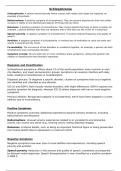
Schizophrenia: A severe mental disorder where contact with reality and insight are impaired, an
example of psychosis.
Hallucinations: A positive symptom of schizophrenia. They are sensory experiences that have either
no basis in reality or are distorted perceptions of things that are there.
Delusions: A positive symptom of schizophrenia. They involve beliefs that have no basis in reality, for
example, a person believes that they are someone else or that they are the victim of a conspiracy.
Speech poverty: A negative symptom of schizophrenia. It involves reduced frequency and quality of
speech.
Avolition: A negative symptom of schizophrenia. It involves loss of motivation to carry out tasks and
results in lowered activity levels.
Co-morbidity: The occurrence of two disorders or conditions together, for example, a person has both
schizophrenia and a personality disorder.
Symptom overlap: Occurs when two or more conditions share symptoms, calling into question the
validity of classifying the two disorders separately.
Diagnosis and Classification
Schizophrenia prevalence: Affects about 1% of the world population; more common in men,
city-dwellers, and lower socioeconomic groups. Symptoms can severely interfere with daily
tasks, leading to homelessness or hospitalization.
Diagnosis process: To diagnose a specific disorder, clusters of symptoms that occur together
are identified and classified as one disorder.
ICD-10 and DSM-5: Both classify mental disorders, with slight differences. DSM-5 requires one
positive symptom for diagnosis, whereas ICD-10 allows diagnosis with two or more negative
symptoms.
Previous editions: Recognized subtypes of schizophrenia, which have been dropped in current
editions due to inconsistency.
Positive Symptoms
Positive symptoms overview: Additional experiences beyond ordinary existence, including
hallucinations and delusions.
Hallucinations: Unusual sensory experiences related to or unrelated to environmental
events. Can involve any sense (e.g., hearing voices, seeing distorted images).
Delusions: Irrational beliefs, such as being an important historical figure or being persecuted.
Can involve beliefs about superpowers or external control.
Negative Symptoms
Negative symptoms overview: Loss of usual abilities and experiences, including speech
poverty and avolition.
Speech poverty: Reduction in the amount and quality of speech, sometimes accompanied
by delayed verbal responses. Speech disorganization is now classified as a positive symptom
in DSM-5.
, Avolition: Difficulty in starting or maintaining goal-directed activities, leading to reduced
motivation and activity levels. Signs include poor hygiene, lack of persistence, and lack of
energy.
EVALUATION: Issues in diagnosis and classification
Good Reliability
P - One strength of the diagnosis of schizophrenia is its reliability.
E - Reliability refers to consistency in diagnosis. Flávia Osório et al. (2019) found excellent
reliability using DSM-5 with inter-rater reliability of +0.97 and test-retest reliability of +0.92.
E - This means that different clinicians consistently reach the same diagnosis for the same
individual, and the same clinician reaches the same diagnosis on different occasions.
L - Thus, the diagnosis of schizophrenia is reliably applied, ensuring consistency.
Low Validity
P - One limitation of the diagnosis of schizophrenia is its validity.
E - Elie Cheniaux et al. (2009) found that 68 clients were diagnosed with schizophrenia using
ICD-10 and 39 using DSM-IV, indicating low criterion validity.
E - This suggests that schizophrenia is over- or underdiagnosed depending on the diagnostic
system, challenging the accuracy of the diagnosis.
L - Consequently, the criterion validity of schizophrenia diagnosis is low, raising concerns
about its precision.
Co-Morbidity
P - Another limitation of schizophrenia diagnosis is its co-morbidity with other conditions.
E - Schizophrenia is often diagnosed alongside other conditions, with about half of those
diagnosed also having depression or substance abuse (Buckley et al.).
E - This raises questions about the validity of distinguishing schizophrenia as a separate
condition, suggesting it might be part of a broader spectrum.
L - Co-morbidity complicates the classification and diagnosis of schizophrenia, affecting its
perceived distinctness.
Gender Bias in Diagnosis
P - A further limitation of schizophrenia diagnosis is the existence of gender bias.
E - Men are diagnosed more frequently than women (ratio of 1.4:1, Fischer and Buchanan
2017), potentially due to women’s closer relationships providing better support (Cotton et al.
2009).
E - This underdiagnosis in women means they may not receive the necessary treatment and
services.
L - Gender bias in diagnosis leads to disparities in treatment, highlighting a significant flaw in
the diagnostic process.
Culture Bias in Diagnosis
P - A further limitation of schizophrenia diagnosis is the existence of culture bias.
E - British people of African-Caribbean origin are up to nine times more likely to receive a
diagnosis compared to white British people (Pinto and Jones 2008).
E - Cultural interpretations of symptoms, such as hearing voices, differ, leading to
overinterpretation by psychiatrists from different cultural backgrounds (Escobar 2012).
L - Cultural bias results in potential discrimination within the diagnostic system, affecting
certain ethnic groups unfairly.
Symptom Overlap
P - A final limitation of schizophrenia diagnosis is symptom overlap with other conditions.
Schizophrenia: A severe mental disorder where contact with reality and insight are impaired, an
example of psychosis.
Hallucinations: A positive symptom of schizophrenia. They are sensory experiences that have either
no basis in reality or are distorted perceptions of things that are there.
Delusions: A positive symptom of schizophrenia. They involve beliefs that have no basis in reality, for
example, a person believes that they are someone else or that they are the victim of a conspiracy.
Speech poverty: A negative symptom of schizophrenia. It involves reduced frequency and quality of
speech.
Avolition: A negative symptom of schizophrenia. It involves loss of motivation to carry out tasks and
results in lowered activity levels.
Co-morbidity: The occurrence of two disorders or conditions together, for example, a person has both
schizophrenia and a personality disorder.
Symptom overlap: Occurs when two or more conditions share symptoms, calling into question the
validity of classifying the two disorders separately.
Diagnosis and Classification
Schizophrenia prevalence: Affects about 1% of the world population; more common in men,
city-dwellers, and lower socioeconomic groups. Symptoms can severely interfere with daily
tasks, leading to homelessness or hospitalization.
Diagnosis process: To diagnose a specific disorder, clusters of symptoms that occur together
are identified and classified as one disorder.
ICD-10 and DSM-5: Both classify mental disorders, with slight differences. DSM-5 requires one
positive symptom for diagnosis, whereas ICD-10 allows diagnosis with two or more negative
symptoms.
Previous editions: Recognized subtypes of schizophrenia, which have been dropped in current
editions due to inconsistency.
Positive Symptoms
Positive symptoms overview: Additional experiences beyond ordinary existence, including
hallucinations and delusions.
Hallucinations: Unusual sensory experiences related to or unrelated to environmental
events. Can involve any sense (e.g., hearing voices, seeing distorted images).
Delusions: Irrational beliefs, such as being an important historical figure or being persecuted.
Can involve beliefs about superpowers or external control.
Negative Symptoms
Negative symptoms overview: Loss of usual abilities and experiences, including speech
poverty and avolition.
Speech poverty: Reduction in the amount and quality of speech, sometimes accompanied
by delayed verbal responses. Speech disorganization is now classified as a positive symptom
in DSM-5.
, Avolition: Difficulty in starting or maintaining goal-directed activities, leading to reduced
motivation and activity levels. Signs include poor hygiene, lack of persistence, and lack of
energy.
EVALUATION: Issues in diagnosis and classification
Good Reliability
P - One strength of the diagnosis of schizophrenia is its reliability.
E - Reliability refers to consistency in diagnosis. Flávia Osório et al. (2019) found excellent
reliability using DSM-5 with inter-rater reliability of +0.97 and test-retest reliability of +0.92.
E - This means that different clinicians consistently reach the same diagnosis for the same
individual, and the same clinician reaches the same diagnosis on different occasions.
L - Thus, the diagnosis of schizophrenia is reliably applied, ensuring consistency.
Low Validity
P - One limitation of the diagnosis of schizophrenia is its validity.
E - Elie Cheniaux et al. (2009) found that 68 clients were diagnosed with schizophrenia using
ICD-10 and 39 using DSM-IV, indicating low criterion validity.
E - This suggests that schizophrenia is over- or underdiagnosed depending on the diagnostic
system, challenging the accuracy of the diagnosis.
L - Consequently, the criterion validity of schizophrenia diagnosis is low, raising concerns
about its precision.
Co-Morbidity
P - Another limitation of schizophrenia diagnosis is its co-morbidity with other conditions.
E - Schizophrenia is often diagnosed alongside other conditions, with about half of those
diagnosed also having depression or substance abuse (Buckley et al.).
E - This raises questions about the validity of distinguishing schizophrenia as a separate
condition, suggesting it might be part of a broader spectrum.
L - Co-morbidity complicates the classification and diagnosis of schizophrenia, affecting its
perceived distinctness.
Gender Bias in Diagnosis
P - A further limitation of schizophrenia diagnosis is the existence of gender bias.
E - Men are diagnosed more frequently than women (ratio of 1.4:1, Fischer and Buchanan
2017), potentially due to women’s closer relationships providing better support (Cotton et al.
2009).
E - This underdiagnosis in women means they may not receive the necessary treatment and
services.
L - Gender bias in diagnosis leads to disparities in treatment, highlighting a significant flaw in
the diagnostic process.
Culture Bias in Diagnosis
P - A further limitation of schizophrenia diagnosis is the existence of culture bias.
E - British people of African-Caribbean origin are up to nine times more likely to receive a
diagnosis compared to white British people (Pinto and Jones 2008).
E - Cultural interpretations of symptoms, such as hearing voices, differ, leading to
overinterpretation by psychiatrists from different cultural backgrounds (Escobar 2012).
L - Cultural bias results in potential discrimination within the diagnostic system, affecting
certain ethnic groups unfairly.
Symptom Overlap
P - A final limitation of schizophrenia diagnosis is symptom overlap with other conditions.