, PLEASE USE THIS DOCUMENT AS A GUIDE TO ANSWER YOUR ASSIGNMENT
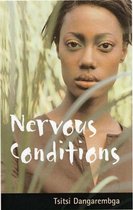
Question 1 - Nervous Conditions by Tsitsi Dangarembga
1. In the first paragraph of Tsitsi Dangarembga’s Nervous Conditions, the main character
Tambu states that the novel is about her “escape”. In the same paragraph she goes on to use the
word “entrapment”. She uses these words because they refer to patriarchy, oppression and
freedom which are central in the plot of the novel. Write an essay in which you discuss the idea
of women’s ‘entrapment’ and ‘escape’ within the context of the novel’s incidents. In your essay,
refer closely to the following women:
(i) Tambu
(ii) Maiguru
(iii) Lucia
(iv) Nyasha
Exploring Entrapment and Escape in Tsitsi Dangarembga’s Nervous Conditions
In Nervous Conditions, Tsitsi Dangarembga intricately weaves a narrative that explores the dual
forces of entrapment and escape as experienced by women living under the intersecting pressures of
patriarchy and colonialism. These themes are introduced by the protagonist, Tambu, in the novel’s
opening paragraph, setting the tone for a story that not only recounts personal experiences but also
reflects on the wider social structures shaping women’s lives. Tambu’s declaration that the novel is
about her "escape," and that of Lucia, contrasts sharply with her description of her mother and
Maiguru as "entrapped," and Nyasha as "rebellious." These terms are not used lightly—they
encapsulate the diverse ways in which women in the novel confront, endure, or resist the roles
imposed upon them. As I read through the text, I found myself both inspired and deeply saddened by
the characters’ struggles. Their stories echo the continuing relevance of these issues in today’s world,
where many women still face similar constraints and choices.
Tambu: Seeking Freedom Through Education
Tambu’s story is central to the novel and illustrates the complex path between entrapment and escape.
Growing up in a rural, patriarchal environment, she is immediately made aware of her inferior
position as a girl. Her brother, Nhamo, bluntly reminds her of this hierarchy, stating that it is only
natural that he, as a boy, should be given the chance to attend school while she remains at home.
Tambu internalizes this inequality early on but refuses to accept it as inevitable. Her determination to
grow her own maize to fund her primary education is a symbolic act of rebellion, one that shows her
refusal to be passively shaped by societal expectations. I admired Tambu’s fierce sense of purpose
and resilience; her willingness to take control of her destiny resonated with my own experiences of
pushing against limitations in pursuit of personal goals.
When Tambu gains the opportunity to attend the mission school after Nhamo's death, she believes
she is finally breaking free. However, the mission introduces a more sophisticated form of
entrapment—one that requires her to conform to ideals of gratitude, obedience, and respectability,
particularly under the watchful eye of her uncle, Babamukuru. Tambu is expected to embody the
success of the family and to accept Babamukuru’s authority without question. While she sees herself
as escaping poverty, she gradually becomes aware that her freedom is conditional and constrained by
expectations to assimilate into a Eurocentric, patriarchal mold. Her internal conflict deepens as she
tries to reconcile her rural roots with the genteel identity imposed by the mission. I found her
struggles deeply moving, particularly as she began to understand that the education she had fought so
hard for came with its own set of compromises. Tambu’s journey thus becomes one of partial escape,
where each step toward liberation brings new forms of control and alienation.
Question 1 - Nervous Conditions by Tsitsi Dangarembga
1. In the first paragraph of Tsitsi Dangarembga’s Nervous Conditions, the main character
Tambu states that the novel is about her “escape”. In the same paragraph she goes on to use the
word “entrapment”. She uses these words because they refer to patriarchy, oppression and
freedom which are central in the plot of the novel. Write an essay in which you discuss the idea
of women’s ‘entrapment’ and ‘escape’ within the context of the novel’s incidents. In your essay,
refer closely to the following women:
(i) Tambu
(ii) Maiguru
(iii) Lucia
(iv) Nyasha
Exploring Entrapment and Escape in Tsitsi Dangarembga’s Nervous Conditions
In Nervous Conditions, Tsitsi Dangarembga intricately weaves a narrative that explores the dual
forces of entrapment and escape as experienced by women living under the intersecting pressures of
patriarchy and colonialism. These themes are introduced by the protagonist, Tambu, in the novel’s
opening paragraph, setting the tone for a story that not only recounts personal experiences but also
reflects on the wider social structures shaping women’s lives. Tambu’s declaration that the novel is
about her "escape," and that of Lucia, contrasts sharply with her description of her mother and
Maiguru as "entrapped," and Nyasha as "rebellious." These terms are not used lightly—they
encapsulate the diverse ways in which women in the novel confront, endure, or resist the roles
imposed upon them. As I read through the text, I found myself both inspired and deeply saddened by
the characters’ struggles. Their stories echo the continuing relevance of these issues in today’s world,
where many women still face similar constraints and choices.
Tambu: Seeking Freedom Through Education
Tambu’s story is central to the novel and illustrates the complex path between entrapment and escape.
Growing up in a rural, patriarchal environment, she is immediately made aware of her inferior
position as a girl. Her brother, Nhamo, bluntly reminds her of this hierarchy, stating that it is only
natural that he, as a boy, should be given the chance to attend school while she remains at home.
Tambu internalizes this inequality early on but refuses to accept it as inevitable. Her determination to
grow her own maize to fund her primary education is a symbolic act of rebellion, one that shows her
refusal to be passively shaped by societal expectations. I admired Tambu’s fierce sense of purpose
and resilience; her willingness to take control of her destiny resonated with my own experiences of
pushing against limitations in pursuit of personal goals.
When Tambu gains the opportunity to attend the mission school after Nhamo's death, she believes
she is finally breaking free. However, the mission introduces a more sophisticated form of
entrapment—one that requires her to conform to ideals of gratitude, obedience, and respectability,
particularly under the watchful eye of her uncle, Babamukuru. Tambu is expected to embody the
success of the family and to accept Babamukuru’s authority without question. While she sees herself
as escaping poverty, she gradually becomes aware that her freedom is conditional and constrained by
expectations to assimilate into a Eurocentric, patriarchal mold. Her internal conflict deepens as she
tries to reconcile her rural roots with the genteel identity imposed by the mission. I found her
struggles deeply moving, particularly as she began to understand that the education she had fought so
hard for came with its own set of compromises. Tambu’s journey thus becomes one of partial escape,
where each step toward liberation brings new forms of control and alienation.