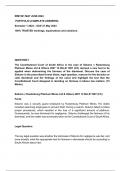
HED4806
Assignment 3 2025
Unique #:
Due Date: 2025
Detailed solutions, explanations, workings
and references.
+27 81 278 3372
, SECTION A
3.1 a) Explain the effects of the above practice in the broader context of
decolonisation
Punishing learners for speaking their indigenous language, as described by
Ngũgĩ wa Thiong’o, represents a deliberate act of cultural and psychological
subjugation. This form of punishment, which included corporal discipline and
public humiliation, was designed to instil shame and inferiority associated with the
mother tongue. In the broader context of decolonisation, such practices reflect the
systematic erasure of indigenous identity, promoting the dominance of colonial
languages and values. Language is deeply tied to one’s culture, heritage, and
worldview. Therefore, repressing the mother tongue equates to suppressing
cultural self-expression and knowledge systems. It creates internalised
oppression, where individuals begin to perceive their own languages and cultures
as inferior. This disruption of linguistic harmony, once present in homes and
communities, creates alienation in educational settings. Decolonisation, therefore,
seeks to reverse this damage by reclaiming indigenous languages as legitimate
mediums of knowledge, restoring dignity and cognitive empowerment for African
learners..
3.2
―Decolonisation of the mind‖, as advocated by Ngũgĩ wa Thiong’o, refers to the
process of liberating the African consciousness from the lingering effects of
colonial domination, particularly in how people perceive themselves, their
cultures, and their languages. It challenges the internalised belief that European
languages and worldviews are superior, and instead reclaims indigenous
languages and knowledge systems as legitimate and powerful tools for self-
expression, education, and cultural identity.
Wa Thiong’o argues that language is central to identity and plays a critical role in
shaping how individuals relate to their environment, community, and broader
world. He posits that colonisation did not only involve the physical conquest of
African territories but also the psychological conquest of the African mind.
Varsity Cube 2025 +27 81 278 3372
Assignment 3 2025
Unique #:
Due Date: 2025
Detailed solutions, explanations, workings
and references.
+27 81 278 3372
, SECTION A
3.1 a) Explain the effects of the above practice in the broader context of
decolonisation
Punishing learners for speaking their indigenous language, as described by
Ngũgĩ wa Thiong’o, represents a deliberate act of cultural and psychological
subjugation. This form of punishment, which included corporal discipline and
public humiliation, was designed to instil shame and inferiority associated with the
mother tongue. In the broader context of decolonisation, such practices reflect the
systematic erasure of indigenous identity, promoting the dominance of colonial
languages and values. Language is deeply tied to one’s culture, heritage, and
worldview. Therefore, repressing the mother tongue equates to suppressing
cultural self-expression and knowledge systems. It creates internalised
oppression, where individuals begin to perceive their own languages and cultures
as inferior. This disruption of linguistic harmony, once present in homes and
communities, creates alienation in educational settings. Decolonisation, therefore,
seeks to reverse this damage by reclaiming indigenous languages as legitimate
mediums of knowledge, restoring dignity and cognitive empowerment for African
learners..
3.2
―Decolonisation of the mind‖, as advocated by Ngũgĩ wa Thiong’o, refers to the
process of liberating the African consciousness from the lingering effects of
colonial domination, particularly in how people perceive themselves, their
cultures, and their languages. It challenges the internalised belief that European
languages and worldviews are superior, and instead reclaims indigenous
languages and knowledge systems as legitimate and powerful tools for self-
expression, education, and cultural identity.
Wa Thiong’o argues that language is central to identity and plays a critical role in
shaping how individuals relate to their environment, community, and broader
world. He posits that colonisation did not only involve the physical conquest of
African territories but also the psychological conquest of the African mind.
Varsity Cube 2025 +27 81 278 3372