Liberalism Essay Plans
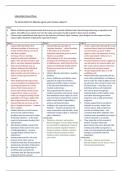
To what extent to liberals agree over human nature?
Intro:
Whilst all liberals agree fundamentally that humans are naturally individual and rational beings deserving of equality/social
justice, they differ to an extent over how the state and society should respond to these human qualities
Classical and model liberals both agree on the existence of human rights, however, they disagree on what aspect of those
natural rights should be emphasised, especially freedom
Para 1 Para 2 Para 3
Classical liberals believe that Classical liberals subscribe to Locke’s explanation through the social
individual qualities of humans are ‘negative freedom’ – define freedom contract theory holds that individuals
innate and that humans are born as the absence of restraints – consent to give up some of their
with their qualities individuals should be given as much rights in return for protection as long
As long as there is nothing freedom as possible as the state doesn’t behave in an
interfering with their individual Mill explained in his ‘harm principle; authoritarian manner
rights, they will have freedom and developed from Bentham’s concept He believed that the state’s legitimacy
able to see their individual qualities of utilitarianism, which holds that the was formed by the natural rights and
Early classical liberals such as actions of individuals should only be the social contract theory formed by
Voltaire believed that individual limited to prevent harm to other the governed and government
liberty was needed for self- individuals He also despised the idea of an all-
determination and self-reliance, as Modern liberals subscribe to ‘positive meddling state
well as having a government by freedom’ Modern liberalism generally calls for
consent. Green, Hobhouse and Hobson were more state participation as it believes
Mary Wollstonecraft argues that prepared to argue that modern, that in order for natural rights to truly
women shouldn’t be stopped from advanced societies made a mockery be achieved, there must be some sort
receiving education as it could of the idea that individuals were of intervention – only then can an
release their innate powers of innately autonomous individual achieve self-realisation
reason and women should not be They argued that the nature of This can be done through the
stopped from voting, as women modern economics and society meant implementation of the welfare state
make up a large percentage of the that individuals were subject to socio- and other-directed government
population and it goes against the economic forces beyond their control programs such as skill and training
idea of government by consent which would make it impossible to programs
Classical liberals are heavy on the achieve self-determination Friedan argued that it was liberal
idea of negative freedom – freedom Leading to the concept of positive attitudes to society, rather than
from restraint freedom – freedom would now be human nature, that condemned
Modern liberals say that humans more cooperative and altruistic, some women to underachieve – she
aren’t innate and that these individuals would enable or empower contested that these attitudes were
qualities must be nurtured in order other individuals nurtured and transmitted via society’s
to be fully released – so the state Conclusion: ‘culture channels’ e.g. schools
needs to help people develop their Therefore, classical, and modern They subscribe to the concept of
individualism liberals disagree on how rights should positive freedom where the
John Rawls justified a substantial be exercised for individuals. Classical government intervenes through skill
extension of the state in the name liberals promote negative freedom – training and welfare programs to
of individual liberty – became freedom without restraint, whereas make sure that people actualise their
strongly linked with the idea of modern liberals promote positive freedom consistently with the
collectivism freedom where individuals support population
Having embraced this, ML faced each other Conclusion:
criticism from critics such as Therefore, classical and modern
Friedrich Hayek that is betrayed the liberals disagree on the state’s role in
fundamental principle of liberalism influencing individualism.
However, Rawls argued that an
enabling state was perfectly
consistent with the liberal principle
of government by consent
, Conclusion:
Therefore, both modern and
classical liberals believe that
humans should remain
individualistic, however, classical
liberals believe that humans are
born with their individualistic
qualities and a minimal state will
uphold this, whereas modern
liberals believe an enabling state
should be introduced to build
individualistic qualities in humans.
To what extent do liberals agree over the nature of the state?
Intro:
Each strand of liberalism believes in the idea of a limited state which is places there by the people it governs, an idea brought
about during the Enlightenment
However, each of the strands believes in a limited state to a varying degree, with early classical liberals believing in the most
limited state, and modern liberals extending that role
This essay will argue that all strands of liberalism are unified by the ‘representative state’ but what this means changes
depending on the political and economic context
Para 1 Para 2 Para 3
What unites liberals is their belief in Classical liberals emphasise minimal In regard to the economy, classical
the necessity of the state state intervention and negative liberals believe in a non-
Despite their optimistic view of freedom – a notion of freedom which interventionist state and in laissez-
human nature, liberals still believe involves individuals being left alone to faire economic policy
that in the state of nature there pursue their own path with an The free-market system suggested by
would have been conflicts between absence of restraint Adam Smith allowed the market to
individuals pursuing their own They believe that freedom is achieved regulate itself, encouraging
egocentric agendas as a result of as little intervention as competition
John Locke was worried that possible He argued that the ‘invisible hand’ of
without formal structures that only Mary Wollstonecraft expanded this the market had a capacity to enrich
a state can provide the resolution of argument by making the point that both the individual and the society
then these clashes might be brutally through restraining individualism, This concept of classical, free market
resolved societies were limiting their stock of economics emerged in political forms
All liberals therefore agree that a intelligence, wisdom, and morality in the governments of Margaret
state is required to play the role of The denial of liberty to an entire Thatcher and Ronald Reagan in the
the referee and arbitrate between gender could lead to an undermining 1980s – they advocated a rolling back
competing claims of rational of the spirit of the Enlightenment in of the state which they sought to
individuals which liberals place such great faith achieve through policies such as
Locke said ‘freedom can only exist Modern Liberals favour greater state privatisation and lower taxation
under the law, where there is no intervention The minimal state that is left, in
law, there is no freedom’ John Rawls argued that the Lockean nature, should be restricted
Further, liberals are also united by foundational equality of classical to maintain social order
their concerns regarding an overly liberals is not enough to secure a just Modern liberals believe that the state
powerful state society and that social and economic should be larger and its intervention
This is the case for both modern, equality were also desirable if an in the economy much more
who advocate a larger state, and for individual’s life is to be rich and significant
classical, who favour minimal state fulfilled They support economic management
All liberals will tend to agree with He argued that this form of equality along Keynesian grounds, arguing that
Lord Acton that ‘power tends to could only be provided by a self-regulating free market Is a myth,
corrupt… and absolute power significant redistribution of wealth via and that government intervention can
To what extent to liberals agree over human nature?
Intro:
Whilst all liberals agree fundamentally that humans are naturally individual and rational beings deserving of equality/social
justice, they differ to an extent over how the state and society should respond to these human qualities
Classical and model liberals both agree on the existence of human rights, however, they disagree on what aspect of those
natural rights should be emphasised, especially freedom
Para 1 Para 2 Para 3
Classical liberals believe that Classical liberals subscribe to Locke’s explanation through the social
individual qualities of humans are ‘negative freedom’ – define freedom contract theory holds that individuals
innate and that humans are born as the absence of restraints – consent to give up some of their
with their qualities individuals should be given as much rights in return for protection as long
As long as there is nothing freedom as possible as the state doesn’t behave in an
interfering with their individual Mill explained in his ‘harm principle; authoritarian manner
rights, they will have freedom and developed from Bentham’s concept He believed that the state’s legitimacy
able to see their individual qualities of utilitarianism, which holds that the was formed by the natural rights and
Early classical liberals such as actions of individuals should only be the social contract theory formed by
Voltaire believed that individual limited to prevent harm to other the governed and government
liberty was needed for self- individuals He also despised the idea of an all-
determination and self-reliance, as Modern liberals subscribe to ‘positive meddling state
well as having a government by freedom’ Modern liberalism generally calls for
consent. Green, Hobhouse and Hobson were more state participation as it believes
Mary Wollstonecraft argues that prepared to argue that modern, that in order for natural rights to truly
women shouldn’t be stopped from advanced societies made a mockery be achieved, there must be some sort
receiving education as it could of the idea that individuals were of intervention – only then can an
release their innate powers of innately autonomous individual achieve self-realisation
reason and women should not be They argued that the nature of This can be done through the
stopped from voting, as women modern economics and society meant implementation of the welfare state
make up a large percentage of the that individuals were subject to socio- and other-directed government
population and it goes against the economic forces beyond their control programs such as skill and training
idea of government by consent which would make it impossible to programs
Classical liberals are heavy on the achieve self-determination Friedan argued that it was liberal
idea of negative freedom – freedom Leading to the concept of positive attitudes to society, rather than
from restraint freedom – freedom would now be human nature, that condemned
Modern liberals say that humans more cooperative and altruistic, some women to underachieve – she
aren’t innate and that these individuals would enable or empower contested that these attitudes were
qualities must be nurtured in order other individuals nurtured and transmitted via society’s
to be fully released – so the state Conclusion: ‘culture channels’ e.g. schools
needs to help people develop their Therefore, classical, and modern They subscribe to the concept of
individualism liberals disagree on how rights should positive freedom where the
John Rawls justified a substantial be exercised for individuals. Classical government intervenes through skill
extension of the state in the name liberals promote negative freedom – training and welfare programs to
of individual liberty – became freedom without restraint, whereas make sure that people actualise their
strongly linked with the idea of modern liberals promote positive freedom consistently with the
collectivism freedom where individuals support population
Having embraced this, ML faced each other Conclusion:
criticism from critics such as Therefore, classical and modern
Friedrich Hayek that is betrayed the liberals disagree on the state’s role in
fundamental principle of liberalism influencing individualism.
However, Rawls argued that an
enabling state was perfectly
consistent with the liberal principle
of government by consent
, Conclusion:
Therefore, both modern and
classical liberals believe that
humans should remain
individualistic, however, classical
liberals believe that humans are
born with their individualistic
qualities and a minimal state will
uphold this, whereas modern
liberals believe an enabling state
should be introduced to build
individualistic qualities in humans.
To what extent do liberals agree over the nature of the state?
Intro:
Each strand of liberalism believes in the idea of a limited state which is places there by the people it governs, an idea brought
about during the Enlightenment
However, each of the strands believes in a limited state to a varying degree, with early classical liberals believing in the most
limited state, and modern liberals extending that role
This essay will argue that all strands of liberalism are unified by the ‘representative state’ but what this means changes
depending on the political and economic context
Para 1 Para 2 Para 3
What unites liberals is their belief in Classical liberals emphasise minimal In regard to the economy, classical
the necessity of the state state intervention and negative liberals believe in a non-
Despite their optimistic view of freedom – a notion of freedom which interventionist state and in laissez-
human nature, liberals still believe involves individuals being left alone to faire economic policy
that in the state of nature there pursue their own path with an The free-market system suggested by
would have been conflicts between absence of restraint Adam Smith allowed the market to
individuals pursuing their own They believe that freedom is achieved regulate itself, encouraging
egocentric agendas as a result of as little intervention as competition
John Locke was worried that possible He argued that the ‘invisible hand’ of
without formal structures that only Mary Wollstonecraft expanded this the market had a capacity to enrich
a state can provide the resolution of argument by making the point that both the individual and the society
then these clashes might be brutally through restraining individualism, This concept of classical, free market
resolved societies were limiting their stock of economics emerged in political forms
All liberals therefore agree that a intelligence, wisdom, and morality in the governments of Margaret
state is required to play the role of The denial of liberty to an entire Thatcher and Ronald Reagan in the
the referee and arbitrate between gender could lead to an undermining 1980s – they advocated a rolling back
competing claims of rational of the spirit of the Enlightenment in of the state which they sought to
individuals which liberals place such great faith achieve through policies such as
Locke said ‘freedom can only exist Modern Liberals favour greater state privatisation and lower taxation
under the law, where there is no intervention The minimal state that is left, in
law, there is no freedom’ John Rawls argued that the Lockean nature, should be restricted
Further, liberals are also united by foundational equality of classical to maintain social order
their concerns regarding an overly liberals is not enough to secure a just Modern liberals believe that the state
powerful state society and that social and economic should be larger and its intervention
This is the case for both modern, equality were also desirable if an in the economy much more
who advocate a larger state, and for individual’s life is to be rich and significant
classical, who favour minimal state fulfilled They support economic management
All liberals will tend to agree with He argued that this form of equality along Keynesian grounds, arguing that
Lord Acton that ‘power tends to could only be provided by a self-regulating free market Is a myth,
corrupt… and absolute power significant redistribution of wealth via and that government intervention can