Support and transport in plants
Water is utilized in metabolism and lost from the leaves by transpiration.
Water moves into root by osmosis. WP in soil is higher than in root therefor
the water moves into the root
Roots structurally suitable
1. L number of root hairs = L SA
2. No vacuole and thin cellulose cell wall
3. L vacuole with low water potential
4. New root hairs replace old ones, when the root tip grows. Allowing more
water sources to be reached
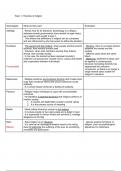
Three pathways
Apoplast pathway – water moves through the cell walls without passing
through cytoplasm due to transpiration pull
Symplast pathway – water moves by diffusion, down the water potential
gradient through the cytoplasm along plasmodasmata (cytoplasmic strands
which go through
pores of the cell)
Vacuolar
pathway –
osmosis, along
WP gradient,
from the soil to
the xylem across
vacuoles of the
root
Transpiration
The process of water movement through the plant and its evaporation from aerial
parts such as leaves, stems and flowers
Where it takes place?
1. Stomata (90%)
2. Cuticle (+- 10%) – not
impermeable to gas
3. Lenticels – found on
woody stems
Water is utilized in metabolism and lost from the leaves by transpiration.
Water moves into root by osmosis. WP in soil is higher than in root therefor
the water moves into the root
Roots structurally suitable
1. L number of root hairs = L SA
2. No vacuole and thin cellulose cell wall
3. L vacuole with low water potential
4. New root hairs replace old ones, when the root tip grows. Allowing more
water sources to be reached
Three pathways
Apoplast pathway – water moves through the cell walls without passing
through cytoplasm due to transpiration pull
Symplast pathway – water moves by diffusion, down the water potential
gradient through the cytoplasm along plasmodasmata (cytoplasmic strands
which go through
pores of the cell)
Vacuolar
pathway –
osmosis, along
WP gradient,
from the soil to
the xylem across
vacuoles of the
root
Transpiration
The process of water movement through the plant and its evaporation from aerial
parts such as leaves, stems and flowers
Where it takes place?
1. Stomata (90%)
2. Cuticle (+- 10%) – not
impermeable to gas
3. Lenticels – found on
woody stems