WILEY MC FOR EXAM 3 (JUST ANSWER
AND EXPLANATION) LATEST UPDATED
2025
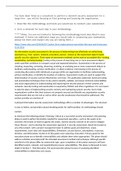
Audit Sampling Section - ANSWER✔✔33-48,58
33. Which of the following statements is correct concerning statistical sampling in
tests of controls? - ANSWER✔✔B. Deviations from specific internal control
procedures at a given rate ordinarily result in misstatements at a lower rate.
B. The requirement is to identify the correct statement concerning statistical
sampling in tests of controls. Answer B is correct because while deviations from
pertinent control procedures increase the risk o material misstatements, any
specific deviation need not necessarily result in a misstatement. For example, a
recorded disbursement that does not chow evidence of required approval might
nevertheless be a transaction that is properly authorized and recorded (AICPA
Audit Sampling Guide).
34. What is an auditor's evaluation of a statistical sample for attributes when a test
of fifty documents results in three deviations if tolerable rate is 7%, the expected
population deviation rate is 5%, and the allowance for sampling risk id 2%? -
ANSWER✔✔D. Modify the planned assessed level of control risk because the
sample deviation rate plus the allowance for sampling risk exceeds the tolerable
rate.
D. The requirement is to determine the proper evaluation of a statistical sample for
attributes when a test of 50 documents results in 3 deviations, given a tolerable rate
of 7%, an expected population deviation rate of 5%, and an allowance for sampling
risk of 2%. Answer D is correct because when the deviation rate plus the allowance
for sampling risk exceeds the tolerable rate, the assessed level of control risk may
increase. Here the deviation rate of 6% (3/50) plus the allowance for sampling risk
of 2% equals 8% and exceeds the tolerable rate of 7%.
,35. In the evaluation of this sample, the auditor decided to increase the level of the
preliminary assessment of control risk because the - ANSWER✔✔A. Tolerable
rate (7%) was less than the achieved upper precision limit (8%)
A. The requirement is to determine the circumstance in which an auditor would
decide to increase the level of the preliminary assessment of control risk. Answer
A is correct because the assessment of control risk will increase when the achieved
upper precision limit (here 8%) exceeds the tolerable rate (7% here)
36. The allowance for sampling risk was - ANSWER✔✔B. 4 1/2%
B. The requirement is to determine the allowance for sampling risk of presented
sample. When considering the allowance for sampling risk, one may consider both
the planned allowance for sampling risk or the adjusted allowance based on the
sample results. Answer B is correct because both the planned and adjusted
allowance for sampling risk are 4 1/2% (7%-2.5% for planning purposes, and 8%-
3.5% (7/200) as adjusted)
37. Which of the following statements is correct concerning statistical sampling in
tests of controls? - ANSWER✔✔A. The population size has little or no effect on
determining sample size except for very small populations
A. the requirement is to identify the correct statement concerning statistical
sampling for tests of controls. Answer A is correct because population size has
little or NO effect on sample size.
38. When an auditor has chosen a random sample and is using nonstatisitical
attributes sampling, that auditor - ANSWER✔✔D. Should compare the deviation
rate of the sample to the tolerable deviation rate
,D. The requirement is to identify the proper statement concerning a random sample
when nonstatisitical attributes sampling is being used. Answer D is correct because
the deviation rate of the sample should be compare to the tolerable deviation rate
regardless of whether statistical or non statistical sampling is being used.
39. How would increases in tolerable misstatement and assessed level of control
risk affect the sample size in a substantive test of details? - ANSWER✔✔C.
Increase in tolerable misstatement - Decrease Sample Size//Increase in assessed
level of control risk - Increase sample size
C. The requirement is to determine whether either or both of an increase in
tolerable misstatement and an increase in the assessed level of control risk increase
sample size in a substantive test of details. Answer C is correct because while an
increase in tolerable misstatement decreases sample size for a substantive test of
details, an increase in the assessed level of control risk increases in the sample size
for substantive test of details because a lower level of detection risk is required.
40. Which of the following courses of action would an auditor MOST likely follow
in planning a sample of cash disbursements if the auditor is aware of several
unusually large cash disbursements? - ANSWER✔✔B. Stratify the cash
disbursements population so that the unusually large disbursements are selected
B. The requirement is to determine the proper course of action when an auditor is
planning a sample of cash disbursements and he or she is aware of several
unusually large cash disbursements. Given the description of the several
disbursements as "unusually large," an auditor will generally test them. Answer B
is therefore correct because stratifying the population will allow the auditor to
ensure inclusion of disbursements. The sampling procedure (selecting less than all
items) will then be applied only to the smaller disbursements.
, 41. Which of the following sample planning factors would influence the sample
size for a substantive test of details for a specific account? - ANSWER✔✔B.
Expected amount of misstatements - yes//measure of tolerable misstatement - yes
B. The requirement is to determine whether wither or both of the expected amount
of misstatement and the measure of tolerable misstatement influence sample size
for a substantive test of details. Answer B is correct because both the expected
amount of misstatement and the tolerable misstatement affect sample size (AICPA
Audit Sampling Guide). Increases in the expected amount of misstatements
increase sample size, while increases in tolerable misstatement decrease sample
size.
42. When planning a sample for a substantive test of details, an auditor should
consider tolerable misstatement for the sample. The consideration should -
ANSWER✔✔C. Be related to preliminary judgments about materiality levels
C. The requirement is to determine the correct statement concerning the auditor's
consideration of tolerable misstatement. Answer C is correct because the
consideration of tolerable misstatement is related to preliminary judgments in a
manner such that when the auditors preliminary judgments about tolerable
misstatement levels for accounts or transaction types are combined for the entire
audit plan, the preliminary judgments about materiality levels for the financial
statements are not exceeded.
43. A number of factors influences the sample size for a substantive test of details
of an account balance. All other factors being equal, which of the following would
lead to a larger sample size? - ANSWER✔✔D. Smaller measure of tolerable
misstatement
D. The requirement is to determine the factor that would lead to larger sample size
in a substantive test of details. Answer D is correct because the sample size
required to achieve the auditor's objective at a given risk of incorrect acceptance
AND EXPLANATION) LATEST UPDATED
2025
Audit Sampling Section - ANSWER✔✔33-48,58
33. Which of the following statements is correct concerning statistical sampling in
tests of controls? - ANSWER✔✔B. Deviations from specific internal control
procedures at a given rate ordinarily result in misstatements at a lower rate.
B. The requirement is to identify the correct statement concerning statistical
sampling in tests of controls. Answer B is correct because while deviations from
pertinent control procedures increase the risk o material misstatements, any
specific deviation need not necessarily result in a misstatement. For example, a
recorded disbursement that does not chow evidence of required approval might
nevertheless be a transaction that is properly authorized and recorded (AICPA
Audit Sampling Guide).
34. What is an auditor's evaluation of a statistical sample for attributes when a test
of fifty documents results in three deviations if tolerable rate is 7%, the expected
population deviation rate is 5%, and the allowance for sampling risk id 2%? -
ANSWER✔✔D. Modify the planned assessed level of control risk because the
sample deviation rate plus the allowance for sampling risk exceeds the tolerable
rate.
D. The requirement is to determine the proper evaluation of a statistical sample for
attributes when a test of 50 documents results in 3 deviations, given a tolerable rate
of 7%, an expected population deviation rate of 5%, and an allowance for sampling
risk of 2%. Answer D is correct because when the deviation rate plus the allowance
for sampling risk exceeds the tolerable rate, the assessed level of control risk may
increase. Here the deviation rate of 6% (3/50) plus the allowance for sampling risk
of 2% equals 8% and exceeds the tolerable rate of 7%.
,35. In the evaluation of this sample, the auditor decided to increase the level of the
preliminary assessment of control risk because the - ANSWER✔✔A. Tolerable
rate (7%) was less than the achieved upper precision limit (8%)
A. The requirement is to determine the circumstance in which an auditor would
decide to increase the level of the preliminary assessment of control risk. Answer
A is correct because the assessment of control risk will increase when the achieved
upper precision limit (here 8%) exceeds the tolerable rate (7% here)
36. The allowance for sampling risk was - ANSWER✔✔B. 4 1/2%
B. The requirement is to determine the allowance for sampling risk of presented
sample. When considering the allowance for sampling risk, one may consider both
the planned allowance for sampling risk or the adjusted allowance based on the
sample results. Answer B is correct because both the planned and adjusted
allowance for sampling risk are 4 1/2% (7%-2.5% for planning purposes, and 8%-
3.5% (7/200) as adjusted)
37. Which of the following statements is correct concerning statistical sampling in
tests of controls? - ANSWER✔✔A. The population size has little or no effect on
determining sample size except for very small populations
A. the requirement is to identify the correct statement concerning statistical
sampling for tests of controls. Answer A is correct because population size has
little or NO effect on sample size.
38. When an auditor has chosen a random sample and is using nonstatisitical
attributes sampling, that auditor - ANSWER✔✔D. Should compare the deviation
rate of the sample to the tolerable deviation rate
,D. The requirement is to identify the proper statement concerning a random sample
when nonstatisitical attributes sampling is being used. Answer D is correct because
the deviation rate of the sample should be compare to the tolerable deviation rate
regardless of whether statistical or non statistical sampling is being used.
39. How would increases in tolerable misstatement and assessed level of control
risk affect the sample size in a substantive test of details? - ANSWER✔✔C.
Increase in tolerable misstatement - Decrease Sample Size//Increase in assessed
level of control risk - Increase sample size
C. The requirement is to determine whether either or both of an increase in
tolerable misstatement and an increase in the assessed level of control risk increase
sample size in a substantive test of details. Answer C is correct because while an
increase in tolerable misstatement decreases sample size for a substantive test of
details, an increase in the assessed level of control risk increases in the sample size
for substantive test of details because a lower level of detection risk is required.
40. Which of the following courses of action would an auditor MOST likely follow
in planning a sample of cash disbursements if the auditor is aware of several
unusually large cash disbursements? - ANSWER✔✔B. Stratify the cash
disbursements population so that the unusually large disbursements are selected
B. The requirement is to determine the proper course of action when an auditor is
planning a sample of cash disbursements and he or she is aware of several
unusually large cash disbursements. Given the description of the several
disbursements as "unusually large," an auditor will generally test them. Answer B
is therefore correct because stratifying the population will allow the auditor to
ensure inclusion of disbursements. The sampling procedure (selecting less than all
items) will then be applied only to the smaller disbursements.
, 41. Which of the following sample planning factors would influence the sample
size for a substantive test of details for a specific account? - ANSWER✔✔B.
Expected amount of misstatements - yes//measure of tolerable misstatement - yes
B. The requirement is to determine whether wither or both of the expected amount
of misstatement and the measure of tolerable misstatement influence sample size
for a substantive test of details. Answer B is correct because both the expected
amount of misstatement and the tolerable misstatement affect sample size (AICPA
Audit Sampling Guide). Increases in the expected amount of misstatements
increase sample size, while increases in tolerable misstatement decrease sample
size.
42. When planning a sample for a substantive test of details, an auditor should
consider tolerable misstatement for the sample. The consideration should -
ANSWER✔✔C. Be related to preliminary judgments about materiality levels
C. The requirement is to determine the correct statement concerning the auditor's
consideration of tolerable misstatement. Answer C is correct because the
consideration of tolerable misstatement is related to preliminary judgments in a
manner such that when the auditors preliminary judgments about tolerable
misstatement levels for accounts or transaction types are combined for the entire
audit plan, the preliminary judgments about materiality levels for the financial
statements are not exceeded.
43. A number of factors influences the sample size for a substantive test of details
of an account balance. All other factors being equal, which of the following would
lead to a larger sample size? - ANSWER✔✔D. Smaller measure of tolerable
misstatement
D. The requirement is to determine the factor that would lead to larger sample size
in a substantive test of details. Answer D is correct because the sample size
required to achieve the auditor's objective at a given risk of incorrect acceptance