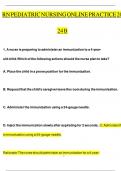
RN PEDIATRIC NURSING ONLINE PRACTICE 20
n n n n n
24 B n
1. A nurse is preparing to administer an immunization to a 4-year-
n n n n n n n n n n
old child.Which of the following actions should the nurse plan to take?
n n n n n n n n n n n n
A. Place the child in a prone position for the immunization.
n n n n n n n n n
B. Request that the child's caregiver leave the room during the immunization.
n n n n n n n n n n
C. Administer the immunization using a 24-gauge needle.
n n n n n n
D. Inject the immunization slowly after aspirating for 3 seconds.: C. Administerth
n n n n n n n n n n n
e immunization using a 24-gauge needle.
n n n n n
Rationale: The nurse should administer an immunization for a 4-year-
n n n n n n n n n
1n/n30
,old child usinga 22 to 25-
n n n n n n
gauge needle to minimize the amount of pain the child experiences.
n n n n n n n n n n
2. A nurse is caring for a school-age child who has experienced a tonic-
n n n n n n n n n n n n
clonicseizure. Which of the following actions should the nurse take during the
n n n n n n n n n n n n n
immediate postictal period? n n
A. Place the child in a side-lying position.
n n n n n n
B. Delay documentation until the child is fully alert.
n n n n n n n
C. Give the child a high-carbohydrate snack.
n n n n n
D. Administer an oral sedative to the child.: A. Place the child in a side-
n n n n n n n n n n n n n
lyingposition.
n
Rationale: The nurse should place the child in a side-
n n n n n n n n n
2n/n30
,lying position to preventaspiration.
n n n n
3. NGN* A nurse on a pediatric unit is admitting a preschooler. After reviewingth
n n n n n n n n n n n n n
e information in the medical record the nurse should identify that the childis at
n n n n n n n n n n n n n n n
risk for developing which of the following conditions?
n n n n n n n
Dropdown 1: n
Splenomegaly
Acute post- n
streptococcal glomerulonephritis (APSGN)Dysrhythmi
n n n
as
Dropdown 2: n
3n/n30
, Positive mononucleosis rapid test
n n n n
Urinary output n
Cardiovascular assessment: 1. Splenomegaly n n n
Rationale: The child's positive mononucleosis rapid test result indicates the pres-
n n n n n n n n n n
n ence of infectious mono, a condition caused by the Epstein-
n n n n n n n n n
Barr virus.Therefore, thenurse should identify that the child is at risk for developing sple
n n n n n n n n n n n n n n n
nomegaly, a commoncomplication of infectious mono.
n n n n n n
2. Positive mono rapid test
n n n n
Rationale: The child's positive mononucleosis rapid test result indicates the pres-
n n n n n n n n n n
n ence of infectious mono, a condition caused by the Epstein-
n n n n n n n n n
Barr virus.Therefore, thenurse should identify that the child is at risk for developing sple
n n n n n n n n n n n n n n n
nomegaly, a commoncomplication of infectious mono.
n n n n n n
4. A nurse is assessing an infant who has a ventricular septal defect. Whichof
n n n n n n n n n n n n n
4n/n30
n n n n n
24 B n
1. A nurse is preparing to administer an immunization to a 4-year-
n n n n n n n n n n
old child.Which of the following actions should the nurse plan to take?
n n n n n n n n n n n n
A. Place the child in a prone position for the immunization.
n n n n n n n n n
B. Request that the child's caregiver leave the room during the immunization.
n n n n n n n n n n
C. Administer the immunization using a 24-gauge needle.
n n n n n n
D. Inject the immunization slowly after aspirating for 3 seconds.: C. Administerth
n n n n n n n n n n n
e immunization using a 24-gauge needle.
n n n n n
Rationale: The nurse should administer an immunization for a 4-year-
n n n n n n n n n
1n/n30
,old child usinga 22 to 25-
n n n n n n
gauge needle to minimize the amount of pain the child experiences.
n n n n n n n n n n
2. A nurse is caring for a school-age child who has experienced a tonic-
n n n n n n n n n n n n
clonicseizure. Which of the following actions should the nurse take during the
n n n n n n n n n n n n n
immediate postictal period? n n
A. Place the child in a side-lying position.
n n n n n n
B. Delay documentation until the child is fully alert.
n n n n n n n
C. Give the child a high-carbohydrate snack.
n n n n n
D. Administer an oral sedative to the child.: A. Place the child in a side-
n n n n n n n n n n n n n
lyingposition.
n
Rationale: The nurse should place the child in a side-
n n n n n n n n n
2n/n30
,lying position to preventaspiration.
n n n n
3. NGN* A nurse on a pediatric unit is admitting a preschooler. After reviewingth
n n n n n n n n n n n n n
e information in the medical record the nurse should identify that the childis at
n n n n n n n n n n n n n n n
risk for developing which of the following conditions?
n n n n n n n
Dropdown 1: n
Splenomegaly
Acute post- n
streptococcal glomerulonephritis (APSGN)Dysrhythmi
n n n
as
Dropdown 2: n
3n/n30
, Positive mononucleosis rapid test
n n n n
Urinary output n
Cardiovascular assessment: 1. Splenomegaly n n n
Rationale: The child's positive mononucleosis rapid test result indicates the pres-
n n n n n n n n n n
n ence of infectious mono, a condition caused by the Epstein-
n n n n n n n n n
Barr virus.Therefore, thenurse should identify that the child is at risk for developing sple
n n n n n n n n n n n n n n n
nomegaly, a commoncomplication of infectious mono.
n n n n n n
2. Positive mono rapid test
n n n n
Rationale: The child's positive mononucleosis rapid test result indicates the pres-
n n n n n n n n n n
n ence of infectious mono, a condition caused by the Epstein-
n n n n n n n n n
Barr virus.Therefore, thenurse should identify that the child is at risk for developing sple
n n n n n n n n n n n n n n n
nomegaly, a commoncomplication of infectious mono.
n n n n n n
4. A nurse is assessing an infant who has a ventricular septal defect. Whichof
n n n n n n n n n n n n n
4n/n30