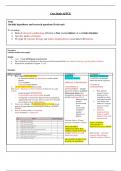
Core Study APFCE
Aims
(include hypotheses and research questions if relevant)
To examine:
• Role of classical conditioning [relation to fear and avoidance of a certain stimulus]
• Specific phobia of buttons
• If a type of exposure therapy can reduce disgust/distress associated with buttons
Procedure
(include method and sample)
Sample
• 1 ppt – 9 year old Hispanic American boy
• Ppt evaluated by psychologists in the program and determined that he met criteria for having a specific phobia of buttons
• Experienced symptoms for approx. 4 years
Procedure
Before treatment Treatment 1 Treatment 2
1. Boy + mum INTERVIEWED: POSITIVE IMAGERY EXPOSURE
- to determine whether any abuse/trauma could explain REINFORCEMENT (visualisation techniques
phobia rather than direct exposure)
- onset of phobia OPERANT CONDITIONING
- behaviour around buttons CLASSICAL
2. ACTIVATING EVENT discovered: CONTINGENCY CONDITIONING
Boy was 5 – knocked over bowl of buttons in front of class and MANAGEMENT – reward
teacher person for evidence of positive 1. Boy asked to
- Found incident DISTRESSING behavioural change [boy imagine buttons
- Fear/avoidance increased steadily onwards rewarded for showing less fear falling on him -
- EXTREME AVOIDANCE BEHAVIOURS [interfered and for handling buttons] consider how they
significantly with everyday life/ no longer dress himself/ - Mum provided looked/felt/smelled
preoccupied with avoiding buttons] positive 2. Also had to talk
3. Discussion with ppt – FEAR HIERARCHY of stimuli [each reinforcement about how imagery
item on list provoked an INCREASED FEAR on a 9 POINT if boy exposures made
SCALE] successfully him feel
4. Buttons touching body => disgusting completed 3. Exposure
Smell of buttons => unpleasant gradual progressed from
exposure to larger to smaller
buttons buttons in line with
fear hierarchy
Sessions alone = 30 mins
Sessions with mum = 20 mins SELF-CONTROL
STRATEGIES =>
RESEARCHERS POSITIVE EVALUATIONS
OBSERVED HOW BOY
APPROACHED BUTTONS
(whether number he could Each session – self-report
handle increased). measures taken of boy’s
subjective ratings of distress
MEASURED SUBJECTIVE
RATING OF DISTRESS
Aims
(include hypotheses and research questions if relevant)
To examine:
• Role of classical conditioning [relation to fear and avoidance of a certain stimulus]
• Specific phobia of buttons
• If a type of exposure therapy can reduce disgust/distress associated with buttons
Procedure
(include method and sample)
Sample
• 1 ppt – 9 year old Hispanic American boy
• Ppt evaluated by psychologists in the program and determined that he met criteria for having a specific phobia of buttons
• Experienced symptoms for approx. 4 years
Procedure
Before treatment Treatment 1 Treatment 2
1. Boy + mum INTERVIEWED: POSITIVE IMAGERY EXPOSURE
- to determine whether any abuse/trauma could explain REINFORCEMENT (visualisation techniques
phobia rather than direct exposure)
- onset of phobia OPERANT CONDITIONING
- behaviour around buttons CLASSICAL
2. ACTIVATING EVENT discovered: CONTINGENCY CONDITIONING
Boy was 5 – knocked over bowl of buttons in front of class and MANAGEMENT – reward
teacher person for evidence of positive 1. Boy asked to
- Found incident DISTRESSING behavioural change [boy imagine buttons
- Fear/avoidance increased steadily onwards rewarded for showing less fear falling on him -
- EXTREME AVOIDANCE BEHAVIOURS [interfered and for handling buttons] consider how they
significantly with everyday life/ no longer dress himself/ - Mum provided looked/felt/smelled
preoccupied with avoiding buttons] positive 2. Also had to talk
3. Discussion with ppt – FEAR HIERARCHY of stimuli [each reinforcement about how imagery
item on list provoked an INCREASED FEAR on a 9 POINT if boy exposures made
SCALE] successfully him feel
4. Buttons touching body => disgusting completed 3. Exposure
Smell of buttons => unpleasant gradual progressed from
exposure to larger to smaller
buttons buttons in line with
fear hierarchy
Sessions alone = 30 mins
Sessions with mum = 20 mins SELF-CONTROL
STRATEGIES =>
RESEARCHERS POSITIVE EVALUATIONS
OBSERVED HOW BOY
APPROACHED BUTTONS
(whether number he could Each session – self-report
handle increased). measures taken of boy’s
subjective ratings of distress
MEASURED SUBJECTIVE
RATING OF DISTRESS