OB Exam 2
Chapter 9: Fetal Heart Rate Assessment
★ Introduction Table on pg 273
○ FHR assessment
■ Can signal fetal compromise
○ Nursing diagnoses and outcomes
■ AWHONN recommendations
● Goal of EFM is to interpret and continually assess fetal
oxygenation to prevent significant fetal acidemia while minimizing
unnecessary interventions and promote family-centered care
● GOAL healthy mom & healthy baby
★ Types of FHR Monitoring
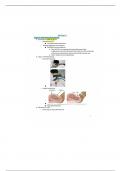
○ External monitoring
■
○ Internal monitoring
■
■ Fetal Spiral Electrode
★ Influences on FHR
○ Physiology of utero-placental unit
1
, ■ We have to have effective oxygen going to the fetus and carbon dioxide
being able to leave between the fetal and maternal blood streams
■ Dependent on having adequate uterine blood flow, a good placenta (with a
cord that doesn’t have any compression)
■ Oxygenation of the fetus is going to depend on oxygenation of the mom,
the blood flow to the placenta, utero-placental and umbilical circulation
○ Fetal nervous system and fetal reserves
■ Sympathetic nervous system: increases the HR
■ Parasympathetic nervous system: decreases the HR
■ Variability develops around 28 weeks
○ Chemoreceptors
■ When there are pH changes, and the baby is born, the shunts will try to
stay open (esp.if the baby will get acidotic)
■ Fetus is very sensitive to ~ such as during pH, O2, or CO2 changes
○ Baroreceptors
■ Fetus is very sensitive to ~ such as the barometric pressure (which can
alter FHR)
★ Fetal Heart Tracings
○ Categories 1, 2, and 3 <don’t go in great detail=
■ Category 1 = Everything is great
● Continue what we’re doing
● The fetus is tolerating everything that is happening to him
● No interventions needed
■ Category 2 = we have to monitor the baby (indeterminate)
● We must find and correct the issue
■ Category 3 = c. section
● We have done everything within our scope of practice
● Intrauterine resuscitation in the uterus (what we can do to try to
maximize fetal oxygenation)
○ Turn mom on her side
○ 10 mL of O2
○ Stop oxytocin
○ Fluid bolus
● If we have no other options, we have to intervene & deliver with a
c. section
○ Indications and required actions
○ Definitions
■ Baseline
● In increments of 5, it’s where the FHR tends to fall back to
● Normal = 110-160
2
, ● If fetal heart rate baseline goes above 160 for at least ten minutes
or more, it is tachycardia
○ Baby might get tachycardia if mom has a fever, she’s been
ruptured for a while and she has developed
chorioamnionitis
● If fetal heart rate baseline goes below 110 for at least ten minutes
or more, it is bradycardia
■ Variability ~ develops around 28 weeks
● Absent
○ Flat line, hardly detected
● Minimal
○ We need to investigate
● Moderate
○ 6-25 bpm of change
○ Well oxygenated
○ What we want to see
● Marked:
○ All over the place
○ Can’t determine baseline
○ Baby is saying i have used up all of my resources and i
need to get out of this environment
○ Maybe the contraction are too close together (turn the
oxytocin off)
■ Periodic/Episodic changes
● Prolonged Accelerations
○ HR > 160 for at least two minutes but less than ten minutes
● Decelerations variable, early, late, and prolonged
○ HR < 110 for at least two minutes but less than ten minutes
■ Uterine Activity
● Contractions
○ Is she contracting?
■ We look at how they are palpating if they are
external: mild, moderate, or strong
■ What is the frequency?
● Beginning of one contraction to the
beginning of the next one
● Example: mom has a contraction at noon
lasting 1 minute, then the next contraction
started at 12:05- the frequency is 5 minutes
■ Are the contractions getting stronger?
3
, ○ IUPC tells us the true strength
○
★ Intrauterine Resuscitation Strategies
○ Categories 1, 2, and 3
○ Decelerations, early, late, and variable
○ Position change
○ IV bolus
○ Oxygen
○ SVE - sterile vaginal exam
○ Alter uterine activity
■ Turn the oxytocin off
★ Baseline Fetal Heart Rate
○ Normal baseline
○ Fetal tachycardia
■ Fever
○ Fetal bradycardia
■ Supine positioning
■ If mom is pushing and holding her breath, baby’s HR can drop
● We want <open glottis pushing= NOT the <valsalva maneuver=
★ Baseline Variability
○ Normal peaks and troughs
○ Interpretation
■ Absent
4
Chapter 9: Fetal Heart Rate Assessment
★ Introduction Table on pg 273
○ FHR assessment
■ Can signal fetal compromise
○ Nursing diagnoses and outcomes
■ AWHONN recommendations
● Goal of EFM is to interpret and continually assess fetal
oxygenation to prevent significant fetal acidemia while minimizing
unnecessary interventions and promote family-centered care
● GOAL healthy mom & healthy baby
★ Types of FHR Monitoring
○ External monitoring
■
○ Internal monitoring
■
■ Fetal Spiral Electrode
★ Influences on FHR
○ Physiology of utero-placental unit
1
, ■ We have to have effective oxygen going to the fetus and carbon dioxide
being able to leave between the fetal and maternal blood streams
■ Dependent on having adequate uterine blood flow, a good placenta (with a
cord that doesn’t have any compression)
■ Oxygenation of the fetus is going to depend on oxygenation of the mom,
the blood flow to the placenta, utero-placental and umbilical circulation
○ Fetal nervous system and fetal reserves
■ Sympathetic nervous system: increases the HR
■ Parasympathetic nervous system: decreases the HR
■ Variability develops around 28 weeks
○ Chemoreceptors
■ When there are pH changes, and the baby is born, the shunts will try to
stay open (esp.if the baby will get acidotic)
■ Fetus is very sensitive to ~ such as during pH, O2, or CO2 changes
○ Baroreceptors
■ Fetus is very sensitive to ~ such as the barometric pressure (which can
alter FHR)
★ Fetal Heart Tracings
○ Categories 1, 2, and 3 <don’t go in great detail=
■ Category 1 = Everything is great
● Continue what we’re doing
● The fetus is tolerating everything that is happening to him
● No interventions needed
■ Category 2 = we have to monitor the baby (indeterminate)
● We must find and correct the issue
■ Category 3 = c. section
● We have done everything within our scope of practice
● Intrauterine resuscitation in the uterus (what we can do to try to
maximize fetal oxygenation)
○ Turn mom on her side
○ 10 mL of O2
○ Stop oxytocin
○ Fluid bolus
● If we have no other options, we have to intervene & deliver with a
c. section
○ Indications and required actions
○ Definitions
■ Baseline
● In increments of 5, it’s where the FHR tends to fall back to
● Normal = 110-160
2
, ● If fetal heart rate baseline goes above 160 for at least ten minutes
or more, it is tachycardia
○ Baby might get tachycardia if mom has a fever, she’s been
ruptured for a while and she has developed
chorioamnionitis
● If fetal heart rate baseline goes below 110 for at least ten minutes
or more, it is bradycardia
■ Variability ~ develops around 28 weeks
● Absent
○ Flat line, hardly detected
● Minimal
○ We need to investigate
● Moderate
○ 6-25 bpm of change
○ Well oxygenated
○ What we want to see
● Marked:
○ All over the place
○ Can’t determine baseline
○ Baby is saying i have used up all of my resources and i
need to get out of this environment
○ Maybe the contraction are too close together (turn the
oxytocin off)
■ Periodic/Episodic changes
● Prolonged Accelerations
○ HR > 160 for at least two minutes but less than ten minutes
● Decelerations variable, early, late, and prolonged
○ HR < 110 for at least two minutes but less than ten minutes
■ Uterine Activity
● Contractions
○ Is she contracting?
■ We look at how they are palpating if they are
external: mild, moderate, or strong
■ What is the frequency?
● Beginning of one contraction to the
beginning of the next one
● Example: mom has a contraction at noon
lasting 1 minute, then the next contraction
started at 12:05- the frequency is 5 minutes
■ Are the contractions getting stronger?
3
, ○ IUPC tells us the true strength
○
★ Intrauterine Resuscitation Strategies
○ Categories 1, 2, and 3
○ Decelerations, early, late, and variable
○ Position change
○ IV bolus
○ Oxygen
○ SVE - sterile vaginal exam
○ Alter uterine activity
■ Turn the oxytocin off
★ Baseline Fetal Heart Rate
○ Normal baseline
○ Fetal tachycardia
■ Fever
○ Fetal bradycardia
■ Supine positioning
■ If mom is pushing and holding her breath, baby’s HR can drop
● We want <open glottis pushing= NOT the <valsalva maneuver=
★ Baseline Variability
○ Normal peaks and troughs
○ Interpretation
■ Absent
4