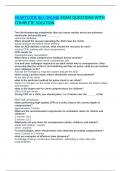
HEARTCODE BLS ONLINE EXAM QUESTIONS WITH
COMPLETE SOLUTION
Two life-threatening arrhythmias that can cause cardiac arrest are pulseless
ventricular tachycardia and __________
ventricular fibrillation
When should the rescuer operating the AED clear the victim
during analysis and before shock delivery
After an AED delivers a shock, what should the rescuers do next?
resume CPR, starting with chest compressions
CPR stands for
Cardiopulmonary resuscitation
What does a chest compression feedback device monitor?
compression depth, chest recoil, compression rate
You and your colleague respond to an adult victim who is unresponsive. After
assessing that the victim is not breathing and has no pulse, what do you instruct
your colleague to do?
Activate the emergency response system and get the AED
when using a pocket mask, where should the rescuer be positioned?
At the side of the victim
what is the preferred method for pulse check in an infant?
Place 2 or 3 fingers on the inside of the upper arm, midway between the infant's elbow
and shoulder
what is the target rate for chest compressions for children?
100 to 120 per minute
During CPR on a child, you should place 1 or 2 hands over the ______ of the
_____
lower half, breastbone
when performing high-quality CPR on a child, what is the correct depth of
compressions?
approximately 2 inches
What are the recommended compression to ventilation ratios for infants and
children?
1 rescuer: 30:2
2 rescuer: 15:2
What pulse do you chest for unresponsive adults, children, and infants?
adults and children - carotid
infant - brachial
To avoid fatigue, when should team roles alternate providing compressions?
every 5 cycles or 2 minutes
what are examples of effective team dynamics?
Knowledge sharing, constructive intervention , debriefing, & clear roles and
responsibilities.
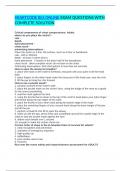
COMPLETE SOLUTION
Two life-threatening arrhythmias that can cause cardiac arrest are pulseless
ventricular tachycardia and __________
ventricular fibrillation
When should the rescuer operating the AED clear the victim
during analysis and before shock delivery
After an AED delivers a shock, what should the rescuers do next?
resume CPR, starting with chest compressions
CPR stands for
Cardiopulmonary resuscitation
What does a chest compression feedback device monitor?
compression depth, chest recoil, compression rate
You and your colleague respond to an adult victim who is unresponsive. After
assessing that the victim is not breathing and has no pulse, what do you instruct
your colleague to do?
Activate the emergency response system and get the AED
when using a pocket mask, where should the rescuer be positioned?
At the side of the victim
what is the preferred method for pulse check in an infant?
Place 2 or 3 fingers on the inside of the upper arm, midway between the infant's elbow
and shoulder
what is the target rate for chest compressions for children?
100 to 120 per minute
During CPR on a child, you should place 1 or 2 hands over the ______ of the
_____
lower half, breastbone
when performing high-quality CPR on a child, what is the correct depth of
compressions?
approximately 2 inches
What are the recommended compression to ventilation ratios for infants and
children?
1 rescuer: 30:2
2 rescuer: 15:2
What pulse do you chest for unresponsive adults, children, and infants?
adults and children - carotid
infant - brachial
To avoid fatigue, when should team roles alternate providing compressions?
every 5 cycles or 2 minutes
what are examples of effective team dynamics?
Knowledge sharing, constructive intervention , debriefing, & clear roles and
responsibilities.