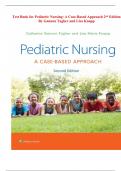
Test Bank for Pediatric Nursing: A Case-Based Approach 2nd Edition
By Gannon Tagher and Lisa Knapp
,Chapter 1- Bronchiolitis
1. Which intervention is appropriate for an infant hospitalized with bronchiolitis?
a. Position on the side with neck slightly flexed.
b. Administer antibiotics as ordered.
c. Restrict oral and parenteral fluids if tachypneic.
d. Give cool, humidified oxygen.
Correct Answer: D
Rationale:
Cool, humidified oxygen is provided to help reduce breathing difficulty, improve low oxygen levels, and replace flu
lost through rapid breathing. The infant should be placed with the head and chest elevated at a 30- to 40-degree ang
and the neck slightly extended. This position helps maintain a clear airway and reduces pressure on the diaphragm.
Since bronchiolitis is typically caused by a virus, antibiotics are only used when there is evidence of a secondary
bacterial infection. Tachypnea increases the risk of fluid loss, so fluids are administered intravenously to prevent
dehydration rather than being restricted.
2. An infant with bronchiolitis is admitted to the hospital. The infection is caused by respiratory syncytial vir
(RSV). What type of isolation should the nurse implement?
a. Reverse isolation
b. Airborne isolation
c. Contact Precautions
d. Standard Precautions
Correct Answer: C
Rationale:
RSV spreads through direct contact with respiratory secretions. In addition to practicing standard precautions and
hand hygiene, contact precautions are required. Healthcare providers must wear gloves and gowns when entering th
patient’s room and avoid touching their own face or mucous membranes with contaminated gloves. Infants with RS
are placed in private rooms or cohorted with other RSV-positive patients. Reverse isolation is designed to protect
immunocompromised patients from infection, which is not the case here. RSV is not transmitted through the air, so
airborne precautions are unnecessary.
,3. A child is experiencing a persistent cough and widespread wheezing during the exhalation phase of
breathing. This most likely indicates which condition?
a. Asthma
b. Pneumonia
c. Bronchiolitis
d. Foreign body in the trachea
Correct Answer: A
Rationale:
Chronic cough along with diffuse wheezing during exhalation is a common sign of asthma. Pneumonia usually has
sudden onset with symptoms like fever and overall feeling of illness. Bronchiolitis is typically a short-term illness
triggered by RSV and presents differently. In contrast, a foreign body in the airway often causes sudden respiratory
distress, and symptoms may include stridor.
4. What is the most appropriate nursing diagnosis for an infant with acute bronchiolitis caused by respirator
syncytial virus (RSV)?
a. Activity Intolerance
b. Decreased Cardiac Output
c. Pain, Acute
d. Ineffective Tissue Perfusion (peripheral)
Correct Answer: A
Rationale:
Activity intolerance occurs due to a mismatch between the body’s oxygen supply and demand, which is common in
respiratory illnesses like bronchiolitis. Cardiac output is not typically reduced during the acute phase of this illness.
Pain is not a significant symptom associated with bronchiolitis. Additionally, peripheral tissue perfusion is not usua
affected by this respiratory condition.
Chapter 2: Asthma
, 1. A nurse is caring for a child hospitalized with status asthmaticus. Which of the following signs indicates th
child’s condition is becoming more severe?
a. Slowed breathing (hypoventilation)
b. Increased thirst
c. Slow heart rate (bradycardia)
d. Finger clubbing
Correct Answer: A
Rationale:
Increased work of breathing may lead to fatigue, resulting in shallow or slowed breathing, which increases carbon
dioxide retention. This is a sign that respiratory function is worsening. Other signs of oxygen deprivation include
restlessness, irritability, fatigue, and elevated heart and breathing rates. While thirst relates to hydration status, and
bradycardia is not typical in hypoxia—rather, tachycardia is expected—clubbing is a long-term response to chronic
hypoxia and does not suggest sudden deterioration.
2. What clinical finding is most likely to be observed in a child hospitalized with asthma?
a. Noisy breathing during inhalation (inspiratory stridor)
b. A dry, barking cough
c. Wheezing sounds
d. Runny nose (rhinorrhea)
Correct Answer: C
Rationale:
Wheezing is a hallmark sign of asthma due to airway narrowing and inflammation. Stridor is more commonly
associated with croup, as is the characteristic harsh, barking cough. Rhinorrhea is often seen in upper respiratory
infections or allergic rhinitis but is not specific to asthma.
3. A child has had symptoms of a cold for over two weeks, including nasal congestion with thick discharge,
facial pressure, a worsening cough at night, and headache. These are most consistent with which respiratory
condition?
a. Allergic rhinitis
b. Bronchitis
By Gannon Tagher and Lisa Knapp
,Chapter 1- Bronchiolitis
1. Which intervention is appropriate for an infant hospitalized with bronchiolitis?
a. Position on the side with neck slightly flexed.
b. Administer antibiotics as ordered.
c. Restrict oral and parenteral fluids if tachypneic.
d. Give cool, humidified oxygen.
Correct Answer: D
Rationale:
Cool, humidified oxygen is provided to help reduce breathing difficulty, improve low oxygen levels, and replace flu
lost through rapid breathing. The infant should be placed with the head and chest elevated at a 30- to 40-degree ang
and the neck slightly extended. This position helps maintain a clear airway and reduces pressure on the diaphragm.
Since bronchiolitis is typically caused by a virus, antibiotics are only used when there is evidence of a secondary
bacterial infection. Tachypnea increases the risk of fluid loss, so fluids are administered intravenously to prevent
dehydration rather than being restricted.
2. An infant with bronchiolitis is admitted to the hospital. The infection is caused by respiratory syncytial vir
(RSV). What type of isolation should the nurse implement?
a. Reverse isolation
b. Airborne isolation
c. Contact Precautions
d. Standard Precautions
Correct Answer: C
Rationale:
RSV spreads through direct contact with respiratory secretions. In addition to practicing standard precautions and
hand hygiene, contact precautions are required. Healthcare providers must wear gloves and gowns when entering th
patient’s room and avoid touching their own face or mucous membranes with contaminated gloves. Infants with RS
are placed in private rooms or cohorted with other RSV-positive patients. Reverse isolation is designed to protect
immunocompromised patients from infection, which is not the case here. RSV is not transmitted through the air, so
airborne precautions are unnecessary.
,3. A child is experiencing a persistent cough and widespread wheezing during the exhalation phase of
breathing. This most likely indicates which condition?
a. Asthma
b. Pneumonia
c. Bronchiolitis
d. Foreign body in the trachea
Correct Answer: A
Rationale:
Chronic cough along with diffuse wheezing during exhalation is a common sign of asthma. Pneumonia usually has
sudden onset with symptoms like fever and overall feeling of illness. Bronchiolitis is typically a short-term illness
triggered by RSV and presents differently. In contrast, a foreign body in the airway often causes sudden respiratory
distress, and symptoms may include stridor.
4. What is the most appropriate nursing diagnosis for an infant with acute bronchiolitis caused by respirator
syncytial virus (RSV)?
a. Activity Intolerance
b. Decreased Cardiac Output
c. Pain, Acute
d. Ineffective Tissue Perfusion (peripheral)
Correct Answer: A
Rationale:
Activity intolerance occurs due to a mismatch between the body’s oxygen supply and demand, which is common in
respiratory illnesses like bronchiolitis. Cardiac output is not typically reduced during the acute phase of this illness.
Pain is not a significant symptom associated with bronchiolitis. Additionally, peripheral tissue perfusion is not usua
affected by this respiratory condition.
Chapter 2: Asthma
, 1. A nurse is caring for a child hospitalized with status asthmaticus. Which of the following signs indicates th
child’s condition is becoming more severe?
a. Slowed breathing (hypoventilation)
b. Increased thirst
c. Slow heart rate (bradycardia)
d. Finger clubbing
Correct Answer: A
Rationale:
Increased work of breathing may lead to fatigue, resulting in shallow or slowed breathing, which increases carbon
dioxide retention. This is a sign that respiratory function is worsening. Other signs of oxygen deprivation include
restlessness, irritability, fatigue, and elevated heart and breathing rates. While thirst relates to hydration status, and
bradycardia is not typical in hypoxia—rather, tachycardia is expected—clubbing is a long-term response to chronic
hypoxia and does not suggest sudden deterioration.
2. What clinical finding is most likely to be observed in a child hospitalized with asthma?
a. Noisy breathing during inhalation (inspiratory stridor)
b. A dry, barking cough
c. Wheezing sounds
d. Runny nose (rhinorrhea)
Correct Answer: C
Rationale:
Wheezing is a hallmark sign of asthma due to airway narrowing and inflammation. Stridor is more commonly
associated with croup, as is the characteristic harsh, barking cough. Rhinorrhea is often seen in upper respiratory
infections or allergic rhinitis but is not specific to asthma.
3. A child has had symptoms of a cold for over two weeks, including nasal congestion with thick discharge,
facial pressure, a worsening cough at night, and headache. These are most consistent with which respiratory
condition?
a. Allergic rhinitis
b. Bronchitis