Irrationality
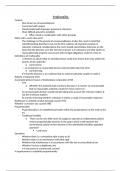
Context
- Also known as unreasonableness
- Concerned with output
- Closely linked with improper purpose & relevance
- Most difficult ground to establish
o Often relied in combination with other grounds
When will a court intervene?
- The challenge on the ground of unreasonableness invites the court to hold that
notwithstanding that there may not be firm evidence of improper purpose or
relevant/ irrelevant considerations the court should nevertheless intervene on the
basis that the decision as to the exercise of power is in substance one that which no
reasonable body properly conversant with its legal obligations could’ve come to
Definitions of irrationality
- ‘a decision so absurd that no sensible person could ever dream that it lay within the
powers of the authority’
o Lord Greene
- ‘… so wrong that no reasonable person could sensibly take that view’
o Lord denning
- It’s that the decision is so irrational that no rational authority would’ve made it
Roberts v Hopwood 1925
Associated picture houses v Wednesbury corporation 1948
- Test
o Whether the authority had reached a decision in a manner so unreasonable
that no reasonable authority could ever have come to it
- An unreasonable decision would include taking into account the relevant matters &
not the irrelevant matters
- Its merely reviewing whether a decision is within a range of reasonable responses
Backhouse v Lambeth London borough council 1972
Wheeler v Leicester city council 1985
Proportionality
- Proportionality is an established principle within the jurisprudence of the ecthr & the
ecj
- Traditional hostility
o ‘There can be very little room for judges to operate an independent judicial
review proportionality doctrine in the space which is left between the
conventional judicial review doctrine & the admittedly forbidden appellate
approach’
Lord lowry
Questions
- Whether there is a convention right in play at all
- Whether there is an interference with that right
- Whether that interference is in accordance with the law or prescribed by law
- Whether it serves a legitimate aim
- Is it necessary in a democratic society?
4 requirements to establish proportionality
Context
- Also known as unreasonableness
- Concerned with output
- Closely linked with improper purpose & relevance
- Most difficult ground to establish
o Often relied in combination with other grounds
When will a court intervene?
- The challenge on the ground of unreasonableness invites the court to hold that
notwithstanding that there may not be firm evidence of improper purpose or
relevant/ irrelevant considerations the court should nevertheless intervene on the
basis that the decision as to the exercise of power is in substance one that which no
reasonable body properly conversant with its legal obligations could’ve come to
Definitions of irrationality
- ‘a decision so absurd that no sensible person could ever dream that it lay within the
powers of the authority’
o Lord Greene
- ‘… so wrong that no reasonable person could sensibly take that view’
o Lord denning
- It’s that the decision is so irrational that no rational authority would’ve made it
Roberts v Hopwood 1925
Associated picture houses v Wednesbury corporation 1948
- Test
o Whether the authority had reached a decision in a manner so unreasonable
that no reasonable authority could ever have come to it
- An unreasonable decision would include taking into account the relevant matters &
not the irrelevant matters
- Its merely reviewing whether a decision is within a range of reasonable responses
Backhouse v Lambeth London borough council 1972
Wheeler v Leicester city council 1985
Proportionality
- Proportionality is an established principle within the jurisprudence of the ecthr & the
ecj
- Traditional hostility
o ‘There can be very little room for judges to operate an independent judicial
review proportionality doctrine in the space which is left between the
conventional judicial review doctrine & the admittedly forbidden appellate
approach’
Lord lowry
Questions
- Whether there is a convention right in play at all
- Whether there is an interference with that right
- Whether that interference is in accordance with the law or prescribed by law
- Whether it serves a legitimate aim
- Is it necessary in a democratic society?
4 requirements to establish proportionality