100% satisfaction guarantee Immediately available after payment Both online and in PDF No strings attached 4.2 TrustPilot
logo-home
Exam (elaborations)

NAH Review Exam | Questions, Answers and Rationales

Rating
-
Sold
-
Pages
23
Grade
A
Uploaded on
09-03-2025
Written in
2024/2025

NAH Review Exam | Questions, Answers and Rationales A nurse is teaching a community education course about the physical complications related to substance use disorder. Which of the following findings should the nurse identify as the primary cause of liver cirrhosis? Alcohol Caffeine Cocaine Inhalants Chronic alcohol use disorder is one of the primary causes of cirrhosis of the liver. A nurse is planning care for a client who has hepatitis B. Which of the following interventions should the nurse include in the plan? Administer antibiotics. Provide a diet high in fat. Restrict fluids. Encourage short periods of ambulation. The nurse should encourage a client who has hepatitis B to alternate between activity and rest. A nurse is assessing a client who has Parkinson's disease. Which of the following manifestations should the nurse expect? Pruritus Hypertension Bradykinesia Xerostomia The nurse should expect to find bradykinesia or difficulty moving in a client who has Parkinson's disease. A nurse is modifying the diet of a client who has Parkinson's disease and is prescribed selegiline, an MAOI. Which of the following foods should the nurse eliminate? Fresh fish Cheddar cheese Cherries Chicken The nurse should eliminate aged cheeses from the diet of a client who is prescribed selegiline. Cheddar cheese contains tyramine, which can cause a hypertensive crisis. A nurse is caring for a client who has cirrhosis and a new prescription for lactulose. Which of the following manifestations indicates an adverse effect of the medication? Dry mouth Vomiting Headache Peripheral edema The nurse will monitor for vomiting as an adverse effect of lactulose. A nurse is teaching the family of a client who has a new diagnosis of epilepsy about actions to take if the client experiences a seizure. Which of the following instructions should the nurse include in the teaching? "Insert a padded tongue blade into the client's mouth." "Restrain the client." "Place the client on his back." "Move objects away from the client." The nurse should instruct the family to move objects away from the client to reduce the risk of injury to the client. A nurse is preparing a presentation at a community center about systemic lupus erythematosus (SLE). The nurse should plan to include which of the following findings as a manifestation of SLE? Hypothermia Muscle hyperreflexia Weight gain A raised rash A dry, raised rash (butterfly rash) on the face or on sun exposed areas of the body is a manifestation of SLE. A nurse is monitoring a client who has a leaking cerebral aneurysm. Which of the following manifestations should indicate to the nurse the client is experiencing an increase in intracranial pressure (ICP)? (Select all that apply.) Headache Neck pain and stiffness Slurred speech Pupillary changes Disorientation A nurse is planning care for a client who has end-stage cirrhosis of the liver with encephalopathy. Which of the following interventions should the nurse plan to implement to decrease the client's ammonia level? Administer diuretics. Restrict the client's intake of fluids. Reduce the client's intake of protein. Administer vitamin K. Ammonia is formed in the gastrointestinal tract by the action of bacteria on protein. Limiting dietary protein intake can assist with decreasing the client's ammonia level. Protein is necessary for healing, so strict limitation of dietary protein is not recommended. A nurse is teaching the family of a client who is receiving treatment for a spinal cord injury with a halo fixation device. Which of the following statements should the nurse make? "Turn the screws on the device once each day." "The purpose of this device is to immobilize the cervical spine." "Apply talcum powder under the vest to limit friction." "The purpose of this device is to allow for neck movement during the healing process." A client who has an injury to the cervical spine can have a halo fixation device to provide immobilization of the head and neck for a period of 8 to 12 weeks. A nurse is preparing to administer PO medication to a client who has myasthenia gravis. Which of the following actions should the nurse take prior to administering the client medication? Have the client empty his bladder. Put up the side rails on the client's bed. Ask the client to take a few sips of water. Place the client in low Fowler's position. Clients who have myasthenia gravis, an autoimmune disorder, have weakness of the muscles of the face and throat, which increases the risk for aspiration. The nurse should check the client's ability to swallow before administering oral medication. A nurse is developing a plan of care for a client who has a spinal fracture and complete spinal cord transection at the level of C5. Which of the following rehabilitation goals should the nurse add to the client's plan of care? Ability to achieve independent transfer from bed to wheelchair Independent control of bowel and bladder function Use of a wheelchair with a chin or mouth stick Ability to self-feed with the use of adaptive equipment A client who has a spinal cord transection at the level of the fifth cervical vertebrae should have full neck, partial shoulder, back, biceps, and gross elbow movements. A realistic rehabilitation goal for the client is the ability to feed himself with the use of adaptive equipment. A nurse is caring for a client who has a T-4 spinal cord injury. Which of the following client findings should the nurse identify as an indication the client is at risk for experiencing autonomic dysreflexia? The client states having a severe headache. The client's bladder becomes distended. The client's blood pressure becomes elevated. The client states having nasal congestion. Autonomic dysreflexia (sometimes called hyperreflexia) can occur in clients with a spinal cord injury at or above the T6 level. Autonomic dysreflexia happens when there is an irritation, pain, or stimulus to the nervous system below the level of injury. There are many kinds of stimulation that can precipitate autonomic dysreflexia. For example, catheter changes, a distended bladder or bowel, enemas, and sudden position changes. Manifestations include elevated blood pressure, severe headache, and flushed face. A nurse suspects a client who has myasthenia gravis is experiencing a myasthenic crisis. Which of the following interventions should the nurse take? Prepare the client for mechanical ventilation. Administer an anticholinesterase medication. Instruct the client to perform the pursed lip breathing. Prepare to administer a vasoconstrictor. The client who is experiencing a myasthenic crisis is at risk for loss of adequate respiratory function. The nurse should closely monitor the client's respiratory status and prepare for possible mechanical ventilation. A nurse is assessing a client who has advanced cirrhosis. Which of the following manifestations should the nurse expect? Petechiae Hypertension Osteoarthritis Peripheral ulcers A manifestation of advanced cirrhosis is petechiae due to impaired coagulation from a dysfunctional liver. A nurse is teaching a client who taking benztropine to treat Parkinson's disease. The nurse should instruct the client to report which of the following adverse effects? Excess salivation Difficulty voiding Diarrhea Slow pulse The nurse should instruct the client to report difficulty voiding, which may indicate urinary retention, as an adverse effect of benztropine. Benztropine is an anticholinergic medication that helps decrease the rigidity and tremors of Parkinson's disease. A nurse is caring for a client who has a traumatic head injury and is exhibiting signs of increasing intracranial pressure. Which of the following medications should the nurse plan to administer? Albumin 25% Dextran 70 Hydroxyethyl glucose Mannitol 25% The nurse should plan to administer mannitol 25%, an osmotic diuretic that lowers intracranial pressure by promoting diuresis. A nurse is providing teaching to the family of a client who has Parkinson's disease. Which of the following information should the nurse include in the teaching? Provide client supervision. Limit client physical activity. Speak loudly to the client. Leave the television on continuously. Because the client's voluntary motor control is affected by the disease, the nurse should recommend that the family provide client supervision to create a safe and respectful environment. A nurse is caring for a client following surgical treatment for a supratentorial brain tumor. Which of the following interventions should the nurse take? Elevate the head of the bed to 30°. Notify the provider for drainage greater than 80 mL/8hr. Place the client in a flat, lateral position. Provide passive range-of-motion exercises to the neck. The client who has surgery to treat a supratentorial brain tumor is at risk for increased intracranial pressure (ICP). Elevation of the head of the bed to 30° assists in promoting venous and CNS fluid drainage from the head to prevent increased ICP. A nurse is assessing a client following a head injury and a brief loss of consciousness. Which of the following findings should the nurse report to the provider? Edematous bruise on forehead Small drops of clear fluid in left ear Pupils are 4 mm and reactive to light Glasgow Coma Scale (GCS) score of 12 Clear fluid in the ear canal might be cerebrospinal fluid (CSF) and indicates a basilar skull fracture. CSF drainage is a serious problem because meningeal infection can occur if organisms gain access to the cranial contents. This finding should be reported to the provider. A nurse is assessing a client who has systemic lupus erythematosus (SLE). Which of the following findings should the nurse expect? Wrinkles in the skin Constipation Iritis Facial rash SLE affects the skin. A facial "butterfly" rash that is dry, scaly, red, and raised is a manifestation of SLE. A nurse is caring for a client who has had a spinal cord injury at the level of the T2-T3 vertebrae. When planning care, the nurse should anticipate which of the following types of disability? Paresthesia Hemiplegia Quadriplegia Paraplegia Paraplegia, or paralysis of both legs, is seen after a spinal cord injury below T1. A nurse is caring for a client who has quadriplegia from a spinal cord injury and reports having a severe headache. The nurse obtains a blood pressure reading of 210/108 mm Hg and suspects the client is experiencing autonomic dysreflexia. Which of the following actions should the nurse take first? Administer a nitrate antihypertensive. Assess the client for bladder distention. Place the client in a high-Fowler's position. Obtain the client's heart rate. The client who is experiencing autonomic dysreflexia is at risk for a cerebrovascular accident resulting from severe hypertension. According to the safety and risk reduction priority setting framework, the nurse's initial action should be to place the client in a high-Fowler's position to assist in providing immediate reduction in blood pressure and intracranial pressure. A rehabilitation nurse is caring for a client who has had a spinal cord injury that resulted in paraplegia. After a week on the unit, the nurse notes that the client is withdrawn and increasingly resistant to rehabilitative efforts by the staff. Which of the following actions should the nurse take? Inform the client that privileges are related to participation in therapy. Limit visiting hours until the client begins to participate in therapy. Allow the client to control the timing and frequency of the therapy. Establish a plan of care with the client that sets attainable goals. The nurse should develop a plan of care for this client with mutually set goals. This action invests the client in the rehabilitation process, which encourages feelings of ownership for it, and sees the goals as more attainable. A nurse is teaching self-management to a client who has hepatitis B. Which of the following Instructions should the nurse include in the teaching? You may donate blood 6 months after completing the medication regimen. Consume a high-protein diet. Rest frequently throughout the day. Take acetaminophen every 4 hr, as needed, for discomfort Limiting activity is usually recommended until the symptoms of hepatitis have subsided. The nurse should recommend the client rest frequently throughout the day to reduce the metabolic demands upon the liver and decrease energy demands. A nurse in the emergency room is assessing a client who was brought in following a seizure. The nurse suspects the client may have meningococcal meningitis when assessment findings include nuchal rigidity and a petechial rash. After implementing droplet precautions, which of the following actions should the nurse initiate next? Complete a vascular assessment. Administer an antipyretic. Decrease environmental stimuli. Assess the cranial nerves. The greatest risk to the client is from increased intracranial pressure (ICP) which may lead to herniation of the brain and death. The nurse should perform neurological assessments including evaluation of the cranial nerves at least every 4 hr. Early neurological changes to be monitoring for include a decrease in the level of consciousness, the development of Cushing's triad (severe hypertension, widened pulse pressure, and bradycardia), and changes in pupillary reaction. A nurse is caring for a client who has an intracranial pressure (ICP) reading of 40 mm Hg. Which of the following findings should the nurse identify as a late sign of ICP? (Select all that apply.) Confusion Bradycardia Hypotension Nonreactive dilated pupils Slurred speech Confusion is incorrect. A change in the level of consciousness is an early sign of neurologic status. This is often manifested as restlessness, irritability, and confusion. Bradycardia is correct. Bradycardia is one of three findings of Cushing's triad, which is a late sign of increased intracranial pressure. A client who has hypovolemic shock is more likely to have tachycardia. Hypotension is incorrect. Severe hypertension is one of three findings of Cushing's triad, which is a late sign of increased intracranial pressure. A client who has hypovolemic shock is more likely to have hypotension. Nonreactive dilated pupils is correct. Increased intracranial pressure can lead to nonreactive dilated pupils or constricted nonreactive pupils. Slurred speech is incorrect. Slowed speech can be an early sign of increased intracranial pressure. Late manifestations include stupor, progressing to coma, and abnormal motor responses, including decorticate and decerebrate posturing. A nurse is caring for a client with who has hepatitis A. The client asks the nurse how he might have contracted the virus. Which of the following is a question the nurse should ask the client? "Have you eaten any fresh water fish lately?" "Have you received a blood transfusion recently?" "Have you been to a third world country in the past?" "Do you take any recreational drugs?" The nurse should understand Hepatitis A is particularly prevalent in third world countries and may be the cause of contracting the virus from contaminated food or water. A nurse is caring for a client who has bleeding esophageal varices and is being treated with a Sengstaken-Blakemore tube. Which of the following actions should the nurse perform? Deflate the balloons for 5 min every 2 hr to prevent tissue necrosis. Maintain constant observation while the balloons are inflated. Suction the tube every 2 hr and as needed to maintain patency. Keep the head of the bed flat at all times to prevent the development of shock. A Sengstaken-Blakemore tube is used to stop or slow bleeding from the esophagus and stomach. When the balloons are inflated, they put pressure on the areas that are hemorrhaging to tamponade the bleeding. While the balloons are inflated, the client must be observed constantly because displacement can cause airway obstruction. A nurse is caring for a client who has cirrhosis and has a prescription for bumetanide. When delivering the client's lunch tray, which of the following items should the nurse identify as contraindicated for the client? Baked potato Stewed tomatoes Ham sandwich Milkshake Ham is high in sodium and can increase fluid retention, leading to edema. Clients who have cirrhosis are prone to edema as the osmotic pressures change due to a decrease in plasma albumin and are placed on low-sodium diets. A nurse is assessing a client who has cirrhosis. Which of the following is an expected finding for this client? Moist skin Spider angiomas Tarry stools Blood in the urine Spider angiomas are lesions with a red center and numerous extensions that spread out like a spider web. This is an expected finding for a client who has cirrhosis. A nurse is planning care for a client who has cirrhosis and ascites. Which of the following interventions should the nurse include in the plan of care? Decrease the client's fluid intake. Increase the client's saturated fat intake. Increase the client's sodium intake. Decrease the client's carbohydrate intake. The nurse should restrict fluids for a client who has cirrhosis and ascites due to the client's risk for increased fluid retention. A nurse working on a medical unit is caring for a client who is prescribed seizure precautions. Which of the following interventions should the nurse include in the client's plan of care? Obtain IV access. Keep the lights on when the client is sleeping. Place the client's bed in the high position. Keep a padded tongue blade available at the client's bedside. The nurse should obtain IV access as a precaution so the client can receive IV medications in the event of a seizure. A nurse is planning care for a client who has cirrhosis of the liver. Which of the following actions should the nurse include in the plan? (Select all that apply.) Administer furosemide. Administer warfarin. Implement a low-sodium diet. Measure the client's abdominal girth. Encourage weight lifting during physical therapy. Administer furosemide is correct. The nurse should administer furosemide to the client to reduce fluid accumulation in the abdomen. Administer warfarin is incorrect. The nurse should avoid administering warfarin to the client due to possible destruction of platelets caused by splenomegaly, which can result in spontaneous bleeding. Propranolol is prescribed instead to discourage bleeding. Implement a low-sodium diet is correct. The nurse should implement a low-sodium diet to control fluid accumulation in the abdomen. Measure the client's abdominal girth is correct. The nurse should measure the client's abdominal girth. Daily weights are an even more reliable indicator of fluid accumulation. Encourage weight lifting during physical therapy is incorrect. The nurse should understand weight lifting can cause bleeding. A nurse is preparing to administer a dose of lactulose to a client who has cirrhosis. The client states, "I don't need this medication. I am not constipated." The nurse should explain that in clients who have cirrhosis, lactulose is used to decrease levels of which of the following components in the bloodstream? Glucose Ammonia Potassium Bicarbonate Lactulose, a disaccharide, is a sugar that works as an osmotic diuretic. It prevents absorption of ammonia in the colon. Accumulation of ammonia in the bloodstream, which occurs in pathologic conditions of the liver, such as cirrhosis, may affect the central nervous system, causing hepatic encephalopathy or coma. A nurse in the emergency department is caring for a client who has myasthenia gravis and is in crisis. Which of the following factors should the nurse identify as a possible cause of myasthenic crisis? Developing a respiratory infection Taking too much prescribed medication Diet high in protein Not exercising enough The most common triggers of myasthenic crises are respiratory infection, not taking, or taking too little, of the prescribed medication, surgery, and high environmental temperatures. A nurse is caring for a client who has Parkinson's disease and is taking diphenhydramine 25 mg PO TID. Which of the following therapeutic outcomes should the nurse expect to see? Delay in disease progression Improved bladder function Relief of depression Decreased tremors Clients who have Parkinson's disease often experience trembling, muscle rigidity, difficulty walking, and problems with balance and coordination. Antihistamines, like diphenhydramine, have a mild anticholinergic effect and may be helpful in controlling tremors in the early stage of the disease. A nurse is planning care for a female client who has a T4 spinal cord injury and is at risk for acquiring urinary tract infections. Which of the following actions should the nurse include in the client's plan of care? Cleanse the perineum from back to front. Obtain a prescription for an indwelling urinary catheter. Encourage fluid intake at and between meals. Offer the client the bedpan every 2 hr. Increased fluid intake dilutes the urine, reduces stasis, and greatly reduces the urinary bacterial count. Consequently, the risk of nosocomial (hospital-acquired) UTI is reduced, even for a client who has a spinal cord injury. A nurse is caring for a client who is experiencing a seizure. Which of the following actions should the nurse take? (Select all that apply.) Loosen restrictive clothing. Insert a bite stick into the client's mouth. Place the client into a supine position. Place a pillow under the client's head. Apply restraints. Loosen restrictive clothing is correct. Loosening clothing, such as a belt or collar, aids in respiratory and abdominal expansion. The client should not be restrained. Insert a bite stick into the client's mouth is incorrect. A bite stick or padded tongue blade can cause an obstruction in the client's airway or further injury if teeth are broken as a result of the jaw clamping down on the bite stick. Place the client into a supine position is incorrect. If it is possible to do without causing injury to the client, the nurse should assist the client who is having a seizure into a lateral position. This position assists with the drainage of saliva and mucus, preventing aspiration, and allows the tongue to fall forward, preventing airway obstruction. Place a pillow under the client's head is correct. The nurse should place a pillow or rolled blanket under the client's head to protect the head from injury. Apply restraints is incorrect. The nurse should not restrict movement of a client who is having a seizure. Instead, the nurse should guide the client's movements to prevent injury and, if possible, assist the client into a lateral position. A nurse is assessing a client who has a spinal cord injury. Which of the following actions should the nurse take to monitor C4 function? Apply downward pressure while the client shrugs his shoulders upward. Apply resistance while the client lifts his legs from the bed. Ask the client to grasp an object and form a fist. Apply resistance while the client flexes his arms. This assessment monitors the motor function of C4 to C5. A nurse is caring for a client who is unconscious following a cerebral hemorrhage. Which of the following nursing interventions is of highest priority? Perform passive range of motion on each extremity. Monitor the client's electrolyte levels. Suction saliva from the client's mouth. Record the client's intake and output. The unconscious client is unable to independently maintain a clear airway and is at risk for ineffective airway clearance. According to the safety and risk reduction priority setting framework, maintaining the client's airway, breathing, and circulation is the highest priority.

Show more Read less
Institution
NAH
Course
NAH


Whoops! We can’t load your doc right now. Try again or contact support.

Written for

Institution
NAH
Course
NAH

Document information

Uploaded on
March 9, 2025
Number of pages
23
Written in
2024/2025
Type
Exam (elaborations)
Contains
Questions & answers

Subjects

Content preview

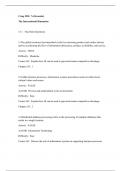
NAH Review Exam


A nurse is teaching a community education course about the physical complications
related to substance use disorder. Which of the following findings should the nurse
identify as the primary cause of liver cirrhosis?

Alcohol
Caffeine
Cocaine
Inhalants

Chronic alcohol use disorder is one of the primary causes of cirrhosis of the liver.

A nurse is planning care for a client who has hepatitis B. Which of the following
interventions should the nurse include in the plan?

Administer antibiotics.
Provide a diet high in fat.
Restrict fluids.
Encourage short periods of ambulation.

The nurse should encourage a client who has hepatitis B to alternate between activity
and rest.

A nurse is assessing a client who has Parkinson's disease. Which of the following
manifestations should the nurse expect?

Pruritus
Hypertension
Bradykinesia
Xerostomia

The nurse should expect to find bradykinesia or difficulty moving in a client who has
Parkinson's disease.

A nurse is modifying the diet of a client who has Parkinson's disease and is prescribed
selegiline, an MAOI. Which of the following foods should the nurse eliminate?

Fresh fish
Cheddar cheese
Cherries
Chicken

,The nurse should eliminate aged cheeses from the diet of a client who is prescribed
selegiline. Cheddar cheese contains tyramine, which can cause a hypertensive crisis.

A nurse is caring for a client who has cirrhosis and a new prescription for lactulose.
Which of the following manifestations indicates an adverse effect of the medication?

Dry mouth
Vomiting
Headache
Peripheral edema

The nurse will monitor for vomiting as an adverse effect of lactulose.

A nurse is teaching the family of a client who has a new diagnosis of epilepsy about
actions to take if the client experiences a seizure. Which of the following instructions
should the nurse include in the teaching?

"Insert a padded tongue blade into the client's mouth."
"Restrain the client."
"Place the client on his back."
"Move objects away from the client."

The nurse should instruct the family to move objects away from the client to reduce the
risk of injury to the client.

A nurse is preparing a presentation at a community center about systemic lupus
erythematosus (SLE). The nurse should plan to include which of the following findings
as a manifestation of SLE?

Hypothermia
Muscle hyperreflexia
Weight gain
A raised rash

A dry, raised rash (butterfly rash) on the face or on sun exposed areas of the body is a
manifestation of SLE.

A nurse is monitoring a client who has a leaking cerebral aneurysm. Which of the
following manifestations should indicate to the nurse the client is experiencing an
increase in intracranial pressure (ICP)? (Select all that apply.)

Headache
Neck pain and stiffness
Slurred speech
Pupillary changes
Disorientation

, A nurse is planning care for a client who has end-stage cirrhosis of the liver with
encephalopathy. Which of the following interventions should the nurse plan to
implement to decrease the client's ammonia level?

Administer diuretics.
Restrict the client's intake of fluids.
Reduce the client's intake of protein.
Administer vitamin K.

Ammonia is formed in the gastrointestinal tract by the action of bacteria on protein.
Limiting dietary protein intake can assist with decreasing the client's ammonia level.
Protein is necessary for healing, so strict limitation of dietary protein is not
recommended.

A nurse is teaching the family of a client who is receiving treatment for a spinal cord
injury with a halo fixation device. Which of the following statements should the nurse
make?

"Turn the screws on the device once each day."
"The purpose of this device is to immobilize the cervical spine."
"Apply talcum powder under the vest to limit friction."
"The purpose of this device is to allow for neck movement during the healing process."

A client who has an injury to the cervical spine can have a halo fixation device to
provide immobilization of the head and neck for a period of 8 to 12 weeks.

A nurse is preparing to administer PO medication to a client who has myasthenia gravis.
Which of the following actions should the nurse take prior to administering the client
medication?

Have the client empty his bladder.
Put up the side rails on the client's bed.
Ask the client to take a few sips of water.
Place the client in low Fowler's position.

Clients who have myasthenia gravis, an autoimmune disorder, have weakness of the
muscles of the face and throat, which increases the risk for aspiration. The nurse should
check the client's ability to swallow before administering oral medication.

A nurse is developing a plan of care for a client who has a spinal fracture and complete
spinal cord transection at the level of C5. Which of the following rehabilitation goals
should the nurse add to the client's plan of care?

Ability to achieve independent transfer from bed to wheelchair
Independent control of bowel and bladder function
Use of a wheelchair with a chin or mouth stick

Get to know the seller

Seller avatar
Reputation scores are based on the amount of documents a seller has sold for a fee and the reviews they have received for those documents. There are three levels: Bronze, Silver and Gold. The better the reputation, the more your can rely on the quality of the sellers work.
NurseHenny EXAMS
Follow You need to be logged in order to follow users or courses
Sold
149
Member since
2 year
Number of followers
71
Documents
1887
Last sold
1 week ago
AFFORDABLE EXAMS AND STUDY GUIDES

On this page you will find verified, well elaborated exams and packages, offered by seller NURSE HENNY.

4,3

27 reviews

5
19
4
4
3
0
2
1
1
3

Recently viewed by you

Why students choose Stuvia

Created by fellow students, verified by reviews

Quality you can trust: written by students who passed their exams and reviewed by others who've used these notes.

Didn't get what you expected? Choose another document

No worries! You can immediately select a different document that better matches what you need.

Pay how you prefer, start learning right away

No subscription, no commitments. Pay the way you're used to via credit card or EFT and download your PDF document instantly.

Student with book image

“Bought, downloaded, and aced it. It really can be that simple.”

Alisha Student

Frequently asked questions