

Man Acc
Valuations Correia chp 6
Why are valuations done?
• Buying and selling of shares / other instruments
• Tax purposes – e.g. Estate duty tax
• When shares are given as security
• Financial reporting
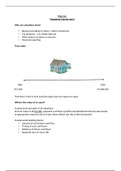
Time value
1960 2020
R15 000 R1 000 000
Therefore: Point in time and time lapse have an impact on value
What is the value of an asset?
Fundamental principle of all valuations:
Present value of all FUTURE expected cash flows (profits/cash/dividends/interest) discounted
at appropriate required rate of return (that reflects the risk of the instrument)
Fundamental building blocks:
• Amount of each future cash flow
• Timing of such cash flows
• Riskiness of future cash flows
• Required rate of return (Ri)
, Risk free
(RF)
Focus for 2nd year
4 Types of instruments
1. Government bonds (R186)
2. Debentures
3. Preference shares
4. Ordinary shares (Simplified dividend discount model)
What is it? Why do we value? How do we value?
Valuations myths (p6-2)
• Valuations are quantitative and therefore correct
• Valuations are objective
• Valuations are precise
• Valuations are valid over an extended time period
• Only the answer matters
Basis points
• Interest rate was originally 10% What is it?
1 percentage point = 100 basis points Unit in which interest rates are measured
10% = 10 x 100 = 1 000 base points
Remember:
• Decrease with 260 base points
1 Base point = 0.01%
= 1 000 – 260
If interest rate increase by 25 base points =
= 740 basis points / 100
25*0.01%= 0.25%
= 7.4%
• Decrease with 2.6%
= 10% – (2.6%*10%)
=9.74%
• Decrease with 2.6 percentage points
10% -2.6%
=7.4%
, Impact of risk on the required rate of return
From our Risk and Return knowledge
Class example
This document certifies that you are entitled to
R10 "coupon" per year, ad infinitum
Original cost price: R100
Return = R10 / R100 = 10%
After a year the whole market drops. Inflation and interest rates become very high and similar
instruments, with a nominal value of R100, are now issued with a coupon of R40, i.e. at a rate
of return of 40%.
You need the money and try to sell the instrument. At what price would you be able to sell the
instrument?
(people are not willing to pay R100 for R10 each year return when they can pay R100 for R40
return each year)
Valuations Correia chp 6
Why are valuations done?
• Buying and selling of shares / other instruments
• Tax purposes – e.g. Estate duty tax
• When shares are given as security
• Financial reporting
Time value
1960 2020
R15 000 R1 000 000
Therefore: Point in time and time lapse have an impact on value
What is the value of an asset?
Fundamental principle of all valuations:
Present value of all FUTURE expected cash flows (profits/cash/dividends/interest) discounted
at appropriate required rate of return (that reflects the risk of the instrument)
Fundamental building blocks:
• Amount of each future cash flow
• Timing of such cash flows
• Riskiness of future cash flows
• Required rate of return (Ri)
, Risk free
(RF)
Focus for 2nd year
4 Types of instruments
1. Government bonds (R186)
2. Debentures
3. Preference shares
4. Ordinary shares (Simplified dividend discount model)
What is it? Why do we value? How do we value?
Valuations myths (p6-2)
• Valuations are quantitative and therefore correct
• Valuations are objective
• Valuations are precise
• Valuations are valid over an extended time period
• Only the answer matters
Basis points
• Interest rate was originally 10% What is it?
1 percentage point = 100 basis points Unit in which interest rates are measured
10% = 10 x 100 = 1 000 base points
Remember:
• Decrease with 260 base points
1 Base point = 0.01%
= 1 000 – 260
If interest rate increase by 25 base points =
= 740 basis points / 100
25*0.01%= 0.25%
= 7.4%
• Decrease with 2.6%
= 10% – (2.6%*10%)
=9.74%
• Decrease with 2.6 percentage points
10% -2.6%
=7.4%
, Impact of risk on the required rate of return
From our Risk and Return knowledge
Class example
This document certifies that you are entitled to
R10 "coupon" per year, ad infinitum
Original cost price: R100
Return = R10 / R100 = 10%
After a year the whole market drops. Inflation and interest rates become very high and similar
instruments, with a nominal value of R100, are now issued with a coupon of R40, i.e. at a rate
of return of 40%.
You need the money and try to sell the instrument. At what price would you be able to sell the
instrument?
(people are not willing to pay R100 for R10 each year return when they can pay R100 for R40
return each year)


