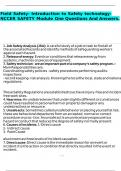
Field Safety- Introduction to Safety technology-
NCCER SAFETY Module One Questions And Answers.
1.Job Safety Analysis (JSA): A careful study of a job or task to find all of
jl jl jl jl jl jl jl jl jl jl jl jl jl jl jl
the associated hazards and identify methods of safeguarding workers
jl jl jl jl jl jl jl jl jl
against each hazard.
jl jl jl
2.Release of energy: Events or conditions that release energy from jl jl jl jl jl jl jl jl jl
systems, machines or pieces of equipment.
jl jl jl jl jl jl
3.Safety technician - are an important part of a company's safety program.: -
jl jl jl jl jl jl jl jl jl jl jl jl
Main Responsibilities are:
jl jl
Coordinating safety policies - safety procedures performing audits- jl jl jl jl jl jl jl
inspections
jl
- record keeping- risk analysis. Knowing the local the local, state and nationa
jl jl jl jl jl jl jl jl jl jl jl jl
regulations.
jl
These Safety Regulations are established to achieve injury-free and incident
jl jl jl jl jl jl jl jl jl
free work sites.
jl jl jl
4.Near miss: An undesired even that under slightly different circumstances
jl jl jl jl jl jl jl jl jl
could have resulted in personal harm or property damage or any
jl jl jl jl jl jl jl jl jl jl jl
undesired loss or resource.
jl jl jl jl
5.Unsafe acts: Sometimes called unsafe behavior or placing yourself at risk;
jl jl jl jl jl jl jl jl jl jl
these are behavioral departures from an accepted, normal or correct
jl jl jl jl jl jl jl jl jl jl
procedure or prac- tice. An unsafe act is an unnecessary exposure to a
jl jl jl jl jl jl jl jl jl jl jl jl jl
hazard or conduct that reduces the degree of safety normally present.
jl jl jl jl jl jl jl jl jl jl jl
6.Causes of incidents: 1-Direct cause jl jl jl jl
2- Indirect cause jl
3- Root Cause jl
also known as three levels of incident causation.
jl jl jl jl jl jl jl
7.Direct cause: Direct cause is the immediate reason for an event or
jl jl jl jl jl jl jl jl jl jl jl
incident.It is the action or condition that directly resulted in the event or
jl jl jl jl jl jl jl jl jl jl jl jl jl
incident.
jl
jl jl
,8.Indirect cause: unsafe acts and/or conditions are indirect causes, or
jl jl jl jl jl jl jl jl jl
symptoms. Unsafe acts and conditions are typically traceable to poor
jl jl jl jl jl jl jl jl jl jl
management policies and decisions or to environmental factors, which are
jl jl jl jl jl jl jl jl jl jl
known as basic causes. By eliminating one or more of the causes, many
jl jl jl jl jl jl jl jl jl jl jl jl jl
incidents are preventable.
jl jl jl
9.Root cause: Root cause analysis (RCA) is the process of discovering the
jl jl jl jl jl jl jl jl jl jl jl
root causes of problems in order to identify appropriate solutions. RCA
jl jl jl jl jl jl jl jl jl jl jl
assumes that it is much more effective to systematically prevent and solve
jl jl jl jl jl jl jl jl jl jl jl jl
for underlying issues rather than just treating ad hoc symptoms and
jl jl jl jl jl jl jl jl jl jl jl
putting out fires1
jl jl jl
10.Here's an example: Direct cause, Indirect cause & Root cause.: A worker is
jl jl jl jl jl jl jl jl jl jl jl jl
injured when they tripped and fell over an electrical cord lying across the
jl jl jl jl jl jl jl jl jl jl jl jl jl
plant floor. Direct Cause: electrical cord running across the floor Indirect
jl jl jl jl jl jl jl jl jl jl jl
Cause: housekeeping,
jl jl
jl jl
, not following safe work procedures, rushing Root Cause: design of workspac
jl jl jl jl jl jl jl jl jl jl
specifically, not enough electrical outlets
jl jl jl jl jl
11.Unsafe Acts examples: Failing to use PPE jl jl jl jl jl jl
•Failing to warn coworkers or to secure equipment jl jl jl jl jl jl jl
•Engaging in horseplay jl jl
•Lifting improperly, loading or storing materials improperly jl jl jl jl jl jl
•Operating at too high a speed jl jl jl jl jl
•Servicing equipment that is in use or motion jl jl jl jl jl jl jl
•Abusing alcohol or drugs jl jl jl
•Using defective equipment jl jl
•Using equipment improperly jl jl
lack of proper and appropriate training.
jl jl jl jl jl
12.Example of unsafe conditions: *Poor housekeeping jl jl jl jl jl
*Poor illumination jl
*Poor Ventilation jl
*Congested workplace jl
*Defective tools Equipment, or supplies jl jl jl jl
* Extreme temperatures jl
* Excessive noise and pressure jl jl jl
* Weather Hazards jl
13.Worker safety is ensured by both compliance with established standards jl jl jl jl jl jl jl jl jl
and industry best practices. There is a difference between Compliance and
jl jl jl jl jl jl jl jl jl jl jl
best practices.: OSHA- Determines Compliance.
jl jl jl jl jl
Individual company- Determine best practices. jl jl jl jl
14.OSHA (Occupational Safety and Health Administration): Sets minimum jl jl jl jl jl jl jl
safety requirements, investigates serious accidents, and inspects
jl jl jl jl jl jl jl
worksites.
jl
15.A Company: Is in compliance when it meets all minimum safety
jl jl jl jl jl jl jl jl jl jl
regulations.jl
16.In addition to specific guidelines, Osha regulations include a GENERAL
jl jl jl jl jl jl jl jl jl
DUTY CLAUSE.: Each employer has a general duty to provide employees
jl jl jl jl jl jl jl jl jl jl jl
with a workplace free from recognized hazards that may cause death or
jl jl jl jl jl jl jl jl jl jl jl jl
severe harm.
jl jl
- Companies are required to develop a work-site safety program that defines
jl jl jl jl jl jl jl jl jl jl jl
prac- tices and procedures to make sure all workers are safe.
jl jl jl jl jl jl jl jl jl jl jl
17.Best practice plan: A safety program that includes the best available
jl jl jl jl jl jl jl jl jl jl
practices and equipment to ensure worker safety.
jl jl jl jl jl jl jl
jl jl
NCCER SAFETY Module One Questions And Answers.
1.Job Safety Analysis (JSA): A careful study of a job or task to find all of
jl jl jl jl jl jl jl jl jl jl jl jl jl jl jl
the associated hazards and identify methods of safeguarding workers
jl jl jl jl jl jl jl jl jl
against each hazard.
jl jl jl
2.Release of energy: Events or conditions that release energy from jl jl jl jl jl jl jl jl jl
systems, machines or pieces of equipment.
jl jl jl jl jl jl
3.Safety technician - are an important part of a company's safety program.: -
jl jl jl jl jl jl jl jl jl jl jl jl
Main Responsibilities are:
jl jl
Coordinating safety policies - safety procedures performing audits- jl jl jl jl jl jl jl
inspections
jl
- record keeping- risk analysis. Knowing the local the local, state and nationa
jl jl jl jl jl jl jl jl jl jl jl jl
regulations.
jl
These Safety Regulations are established to achieve injury-free and incident
jl jl jl jl jl jl jl jl jl
free work sites.
jl jl jl
4.Near miss: An undesired even that under slightly different circumstances
jl jl jl jl jl jl jl jl jl
could have resulted in personal harm or property damage or any
jl jl jl jl jl jl jl jl jl jl jl
undesired loss or resource.
jl jl jl jl
5.Unsafe acts: Sometimes called unsafe behavior or placing yourself at risk;
jl jl jl jl jl jl jl jl jl jl
these are behavioral departures from an accepted, normal or correct
jl jl jl jl jl jl jl jl jl jl
procedure or prac- tice. An unsafe act is an unnecessary exposure to a
jl jl jl jl jl jl jl jl jl jl jl jl jl
hazard or conduct that reduces the degree of safety normally present.
jl jl jl jl jl jl jl jl jl jl jl
6.Causes of incidents: 1-Direct cause jl jl jl jl
2- Indirect cause jl
3- Root Cause jl
also known as three levels of incident causation.
jl jl jl jl jl jl jl
7.Direct cause: Direct cause is the immediate reason for an event or
jl jl jl jl jl jl jl jl jl jl jl
incident.It is the action or condition that directly resulted in the event or
jl jl jl jl jl jl jl jl jl jl jl jl jl
incident.
jl
jl jl
,8.Indirect cause: unsafe acts and/or conditions are indirect causes, or
jl jl jl jl jl jl jl jl jl
symptoms. Unsafe acts and conditions are typically traceable to poor
jl jl jl jl jl jl jl jl jl jl
management policies and decisions or to environmental factors, which are
jl jl jl jl jl jl jl jl jl jl
known as basic causes. By eliminating one or more of the causes, many
jl jl jl jl jl jl jl jl jl jl jl jl jl
incidents are preventable.
jl jl jl
9.Root cause: Root cause analysis (RCA) is the process of discovering the
jl jl jl jl jl jl jl jl jl jl jl
root causes of problems in order to identify appropriate solutions. RCA
jl jl jl jl jl jl jl jl jl jl jl
assumes that it is much more effective to systematically prevent and solve
jl jl jl jl jl jl jl jl jl jl jl jl
for underlying issues rather than just treating ad hoc symptoms and
jl jl jl jl jl jl jl jl jl jl jl
putting out fires1
jl jl jl
10.Here's an example: Direct cause, Indirect cause & Root cause.: A worker is
jl jl jl jl jl jl jl jl jl jl jl jl
injured when they tripped and fell over an electrical cord lying across the
jl jl jl jl jl jl jl jl jl jl jl jl jl
plant floor. Direct Cause: electrical cord running across the floor Indirect
jl jl jl jl jl jl jl jl jl jl jl
Cause: housekeeping,
jl jl
jl jl
, not following safe work procedures, rushing Root Cause: design of workspac
jl jl jl jl jl jl jl jl jl jl
specifically, not enough electrical outlets
jl jl jl jl jl
11.Unsafe Acts examples: Failing to use PPE jl jl jl jl jl jl
•Failing to warn coworkers or to secure equipment jl jl jl jl jl jl jl
•Engaging in horseplay jl jl
•Lifting improperly, loading or storing materials improperly jl jl jl jl jl jl
•Operating at too high a speed jl jl jl jl jl
•Servicing equipment that is in use or motion jl jl jl jl jl jl jl
•Abusing alcohol or drugs jl jl jl
•Using defective equipment jl jl
•Using equipment improperly jl jl
lack of proper and appropriate training.
jl jl jl jl jl
12.Example of unsafe conditions: *Poor housekeeping jl jl jl jl jl
*Poor illumination jl
*Poor Ventilation jl
*Congested workplace jl
*Defective tools Equipment, or supplies jl jl jl jl
* Extreme temperatures jl
* Excessive noise and pressure jl jl jl
* Weather Hazards jl
13.Worker safety is ensured by both compliance with established standards jl jl jl jl jl jl jl jl jl
and industry best practices. There is a difference between Compliance and
jl jl jl jl jl jl jl jl jl jl jl
best practices.: OSHA- Determines Compliance.
jl jl jl jl jl
Individual company- Determine best practices. jl jl jl jl
14.OSHA (Occupational Safety and Health Administration): Sets minimum jl jl jl jl jl jl jl
safety requirements, investigates serious accidents, and inspects
jl jl jl jl jl jl jl
worksites.
jl
15.A Company: Is in compliance when it meets all minimum safety
jl jl jl jl jl jl jl jl jl jl
regulations.jl
16.In addition to specific guidelines, Osha regulations include a GENERAL
jl jl jl jl jl jl jl jl jl
DUTY CLAUSE.: Each employer has a general duty to provide employees
jl jl jl jl jl jl jl jl jl jl jl
with a workplace free from recognized hazards that may cause death or
jl jl jl jl jl jl jl jl jl jl jl jl
severe harm.
jl jl
- Companies are required to develop a work-site safety program that defines
jl jl jl jl jl jl jl jl jl jl jl
prac- tices and procedures to make sure all workers are safe.
jl jl jl jl jl jl jl jl jl jl jl
17.Best practice plan: A safety program that includes the best available
jl jl jl jl jl jl jl jl jl jl
practices and equipment to ensure worker safety.
jl jl jl jl jl jl jl
jl jl