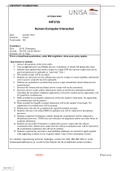
,Question 1 Not yet answered Marked out of 1.00 QUIZ Question 1 An interest rate of
17,5% per year, compounded quarterly, is equivalent to a continuous compounding rate
of [1] 17,128%. [2] 17,185%. [3] 17,500%. [4] 17,888%. [5] 19,125%.
Question 2 An amount borrowed at 29% interest per year, compounded continuously,
has accumulated to R38 279,20 after four years. The initial amount borrowed was [1] R7
160,73. [2] R12 000,00. [3] R12 005,53. [4] R13 823,05. [5] R17 721,85. 20 2.2.
COMPULSORY ASSIGNMENT 02 DSC1630/101
Question 3 The effective rate for a continuous compounding rate of 17,5% per year, is
[1] 16,13%. [2] 17,50%. [3] 19,12%. [4] 19,13%. [5] 21,08%.
Questions 4 and 5 relate to the following situation: An amount of R10 000 was invested
in a special savings account on 15 May at an interest rate of 15% per annum,
compounded quarterly for seven months. Interest is calculated on 1 January, 1 April, 1
July and 1 October of every year.
Question 4 If simple interest is used for the odd periods and compound interest for the
rest of the term, the amount of interest received after seven months is [1] R665,54. [2]
R896,95. [3] R901,35. [4] R1 644,57. [5] none of the above.
Question 5 If fractional compounding is used for the full term of seven months, the total
amount of interest received is [1] R892,79. [2] R894,04. [3] R898,43. [4] R901,73. [5] none
of the above. 21 DSC1630/101 CHAPTER 2. FIRST SEMESTER COMPULSORY
ASSIGNMENTS
Questions 6 and 7 relate to the following situation: Three years ago Jake borrowed R7
500 from Martha. The condition was that he would pay her back in seven years’ time at
an interest rate of 11,21% per year, compounded semi-annually. Six months ago he also
borrowed R25 000 from Martha at 9,45% per year, compounded monthly. Jake would
like to pay off his debt four years from now.
Question 6 The amount of money that Jake will have to pay Martha four years from now
is [1] R36 607,98. [2] R45 181,81. [3] R48 032,20. [4] R54 278,92. [5] R55 336,49.
Question 7 After seeing what he must pay Martha, Jake decides to reschedule his debt
as two equal payments: one payment now and one three years from now. Martha agrees
on condition that the new agreement, that will run from now, will be subjected to
10,67% interest, compounded quarterly. The amount that Jake will pay Martha three
years from now is [1] R21 171,35. [2] R22 286,88. [3] R25 103,93. [4] R32 500,00. [5] none
of the above.
Question 8 If R35 000 accumulates to R48 320 at a continuous compounded rate of
8,6% per year, then the term under consideration is [1] 2,77 years. [2] 3,75 years. [3] 3,91
years. [4] 4,43 years. [5] 6,23 years. 22 Nicolet wants to buy a new state of the art
computer for R35 000. She decides to save by depositing an amount of R500 once a
month into an account earning 11,32% interest per year, compounded monthly. The
approximate time it will take Nicolet to have R35 000 available is [1] 40 months. [2] 54
months. [3] 70 months. [4] 115 months. [5] none of the above.
,Question 10 If money is worth 12% per annum, compounded monthly, how long will it
take the principal P to double? [1] 6,12 years [2] 7,27 years [3] 8,33 years [4] 69,66 years
[5] None of the above
Question 11 Paul decides to invest R140 000 into an account earning 13,5% interest per
year, compounded quarterly. This new account allows him to withdraw an amount of
money every quarter for 10 years after which time the account will be exhausted. The
amount of money that Paul can withdraw every quarter is [1] R1 704,28. [2] R3 500,00.
[3] R6 429,28. [4] R8 594,82. [5] none of the above.
Question 12 If 15% per year, interest is compounded every two months, then the
equivalent weekly compounded rate is [1] 14,464%. [2] 14,484%. [3] 14,816%. [4]
14,837%. [5] none of the above. 23
Question 13 Nkosi owes Peter R3 000 due 10 months from now, and R25 000 due 32
months from now. Nkosi asks Peter if he can discharge his obligations by two equal
payments: one now and the other one 28 months from now. Peter agrees on condition
that a 14,75% interest rate, compounded every two months, is applicable. The amount
that Nkosi will pay Peter 28 months from now is approximately [1] R11 455. [2] R11 511.
[3] R11 907. [4] R14 000. [5] R20 000.
Question 14 The accumulated amount after eight years of monthly payments of R1 900
each into an account earning 9,7% interest per year, compounded monthly, is [1] R126
532,64. [2] R182 400,00. [3] R274 069,25. [4] R395 077,74. [5] none of the above.
Question 15 A saving account pays interest at the rate of 5% per year, compounded
semi-annually. The amount that should be deposited now so that R250 can be
withdrawn at the end of every six months for the next 10 years is [1] R1 930,43. [2] R3
144,47. [3] R3 897,29. [4] R6 386,16. [5] none of the above. 24
Question 1
An interest rate of 17.5% per year, compounded quarterly, is equivalent to a continuous
compounding rate of:
Answer: [2] 17.185%
Question 2
An amount borrowed at 29% interest per year, compounded continuously, has
accumulated to R38,279.20 after four years. The initial amount borrowed was:
Answer: [2] R12,000.00
, Question 3
The effective rate for a continuous compounding rate of 17.5% per year is:
Answer: [3] 19.12%
Question 4
If simple interest is used for the odd periods and compound interest for the rest of the
term, the amount of interest received after seven months is:
Answer: [3] R901.35
Question 5
If fractional compounding is used for the full term of seven months, the total amount of
interest received is:
Answer: [2] R894.04
Question 6
The amount of money that Jake will have to pay Martha four years from now is:
Answer: [3] R48,032.20
Question 7
The amount that Jake will pay Martha three years from now is:
Answer: [2] R22,286.88
Question 8
If R35,000 accumulates to R48,320 at a continuous compounded rate of 8.6% per year,
then the term under consideration is:
Answer: [2] 3.75 years
17,5% per year, compounded quarterly, is equivalent to a continuous compounding rate
of [1] 17,128%. [2] 17,185%. [3] 17,500%. [4] 17,888%. [5] 19,125%.
Question 2 An amount borrowed at 29% interest per year, compounded continuously,
has accumulated to R38 279,20 after four years. The initial amount borrowed was [1] R7
160,73. [2] R12 000,00. [3] R12 005,53. [4] R13 823,05. [5] R17 721,85. 20 2.2.
COMPULSORY ASSIGNMENT 02 DSC1630/101
Question 3 The effective rate for a continuous compounding rate of 17,5% per year, is
[1] 16,13%. [2] 17,50%. [3] 19,12%. [4] 19,13%. [5] 21,08%.
Questions 4 and 5 relate to the following situation: An amount of R10 000 was invested
in a special savings account on 15 May at an interest rate of 15% per annum,
compounded quarterly for seven months. Interest is calculated on 1 January, 1 April, 1
July and 1 October of every year.
Question 4 If simple interest is used for the odd periods and compound interest for the
rest of the term, the amount of interest received after seven months is [1] R665,54. [2]
R896,95. [3] R901,35. [4] R1 644,57. [5] none of the above.
Question 5 If fractional compounding is used for the full term of seven months, the total
amount of interest received is [1] R892,79. [2] R894,04. [3] R898,43. [4] R901,73. [5] none
of the above. 21 DSC1630/101 CHAPTER 2. FIRST SEMESTER COMPULSORY
ASSIGNMENTS
Questions 6 and 7 relate to the following situation: Three years ago Jake borrowed R7
500 from Martha. The condition was that he would pay her back in seven years’ time at
an interest rate of 11,21% per year, compounded semi-annually. Six months ago he also
borrowed R25 000 from Martha at 9,45% per year, compounded monthly. Jake would
like to pay off his debt four years from now.
Question 6 The amount of money that Jake will have to pay Martha four years from now
is [1] R36 607,98. [2] R45 181,81. [3] R48 032,20. [4] R54 278,92. [5] R55 336,49.
Question 7 After seeing what he must pay Martha, Jake decides to reschedule his debt
as two equal payments: one payment now and one three years from now. Martha agrees
on condition that the new agreement, that will run from now, will be subjected to
10,67% interest, compounded quarterly. The amount that Jake will pay Martha three
years from now is [1] R21 171,35. [2] R22 286,88. [3] R25 103,93. [4] R32 500,00. [5] none
of the above.
Question 8 If R35 000 accumulates to R48 320 at a continuous compounded rate of
8,6% per year, then the term under consideration is [1] 2,77 years. [2] 3,75 years. [3] 3,91
years. [4] 4,43 years. [5] 6,23 years. 22 Nicolet wants to buy a new state of the art
computer for R35 000. She decides to save by depositing an amount of R500 once a
month into an account earning 11,32% interest per year, compounded monthly. The
approximate time it will take Nicolet to have R35 000 available is [1] 40 months. [2] 54
months. [3] 70 months. [4] 115 months. [5] none of the above.
,Question 10 If money is worth 12% per annum, compounded monthly, how long will it
take the principal P to double? [1] 6,12 years [2] 7,27 years [3] 8,33 years [4] 69,66 years
[5] None of the above
Question 11 Paul decides to invest R140 000 into an account earning 13,5% interest per
year, compounded quarterly. This new account allows him to withdraw an amount of
money every quarter for 10 years after which time the account will be exhausted. The
amount of money that Paul can withdraw every quarter is [1] R1 704,28. [2] R3 500,00.
[3] R6 429,28. [4] R8 594,82. [5] none of the above.
Question 12 If 15% per year, interest is compounded every two months, then the
equivalent weekly compounded rate is [1] 14,464%. [2] 14,484%. [3] 14,816%. [4]
14,837%. [5] none of the above. 23
Question 13 Nkosi owes Peter R3 000 due 10 months from now, and R25 000 due 32
months from now. Nkosi asks Peter if he can discharge his obligations by two equal
payments: one now and the other one 28 months from now. Peter agrees on condition
that a 14,75% interest rate, compounded every two months, is applicable. The amount
that Nkosi will pay Peter 28 months from now is approximately [1] R11 455. [2] R11 511.
[3] R11 907. [4] R14 000. [5] R20 000.
Question 14 The accumulated amount after eight years of monthly payments of R1 900
each into an account earning 9,7% interest per year, compounded monthly, is [1] R126
532,64. [2] R182 400,00. [3] R274 069,25. [4] R395 077,74. [5] none of the above.
Question 15 A saving account pays interest at the rate of 5% per year, compounded
semi-annually. The amount that should be deposited now so that R250 can be
withdrawn at the end of every six months for the next 10 years is [1] R1 930,43. [2] R3
144,47. [3] R3 897,29. [4] R6 386,16. [5] none of the above. 24
Question 1
An interest rate of 17.5% per year, compounded quarterly, is equivalent to a continuous
compounding rate of:
Answer: [2] 17.185%
Question 2
An amount borrowed at 29% interest per year, compounded continuously, has
accumulated to R38,279.20 after four years. The initial amount borrowed was:
Answer: [2] R12,000.00
, Question 3
The effective rate for a continuous compounding rate of 17.5% per year is:
Answer: [3] 19.12%
Question 4
If simple interest is used for the odd periods and compound interest for the rest of the
term, the amount of interest received after seven months is:
Answer: [3] R901.35
Question 5
If fractional compounding is used for the full term of seven months, the total amount of
interest received is:
Answer: [2] R894.04
Question 6
The amount of money that Jake will have to pay Martha four years from now is:
Answer: [3] R48,032.20
Question 7
The amount that Jake will pay Martha three years from now is:
Answer: [2] R22,286.88
Question 8
If R35,000 accumulates to R48,320 at a continuous compounded rate of 8.6% per year,
then the term under consideration is:
Answer: [2] 3.75 years