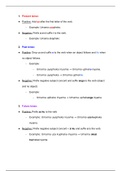
1. Present tense:
● Positive: Add ya after the first letter of the verb.
- Example: Umama uyapheka.
● Negative: Prefix a and suffix i to the verb.
- Example: Umama akapheki.
2. Past tense:
● Positive: Drop ya and suffix e to the verb when an object follows and ile when
no object follows.
- Example:
- Umama uyapheka inyama → Umama upheke inyama.
- Umama uyapheka → Umama uphekile.
● Negative: Prefix negative subject concord and suffix anga to the verb (object
and no object)
- Example:
- Umama upheke inyama → Umama uphekanga inyama.
3. Future tense:
● Positive: Prefix za ku to the verb
- Example: Umama uyapheka inyama → Umama uza kupheka
inyama.
● Negative: Prefix negative subject concord + zi ku and suffix a to the verb.
- Example: Umama uza kupheka inyama → Umama akazi
kupheka inyama.
● Positive: Add ya after the first letter of the verb.
- Example: Umama uyapheka.
● Negative: Prefix a and suffix i to the verb.
- Example: Umama akapheki.
2. Past tense:
● Positive: Drop ya and suffix e to the verb when an object follows and ile when
no object follows.
- Example:
- Umama uyapheka inyama → Umama upheke inyama.
- Umama uyapheka → Umama uphekile.
● Negative: Prefix negative subject concord and suffix anga to the verb (object
and no object)
- Example:
- Umama upheke inyama → Umama uphekanga inyama.
3. Future tense:
● Positive: Prefix za ku to the verb
- Example: Umama uyapheka inyama → Umama uza kupheka
inyama.
● Negative: Prefix negative subject concord + zi ku and suffix a to the verb.
- Example: Umama uza kupheka inyama → Umama akazi
kupheka inyama.