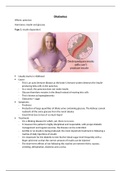
Diabetes
Where: pancreas
Hormones: insulin and glucose
Type 1: insulin dependent
Usually starts in childhood
Cause:
- This is an auto immune disease as the body’s immune system destroys the insulin-
producing beta cells in the pancreas
- As a result, the pancreas does not make insulin.
- Glucose therefore remains in the blood instead of moving into cells
- This is known as hyperglaecemia
- Glaecemia = sugar
Symptoms:
- Tiredness
- Production of large quantities of dilute urine containing glucose. The kidneys cannot
reabsorb all the extra glucose from the renal tubules
- Great thirst due to loss of so much liquid
Treatment:
- It is a lifelong disease for which, yet, there is no cure.
- If, however the patient is highly disciplined and responsible, with proper diabetic
management and regular exercise, the disease can be controlled.
- As little or no insulin is being produced, the most important treatment is following a
routine of daily injections of insulin
- It is important for the diabetic to test his/her blood sugar level frequently with a
finger prick test so that the correct amount of insulin can be injected
- The short-term effects of not following this routine are extreme thirst, nausea,
vomiting, dehydration, dizziness and a coma.
, - The long-term goals of treatment are to prolong life, reduce symptoms and prevent
diabetes related complications such as blindness, kidney failure, amputation of limbs
and increased risk of heart attack and stroke.
- Future cures on the horizon include pancreas transplants, and use of stem cells to
produce new functional beta cells
Type 2: non-insulin dependent
Type 2
diabetes
usually
starts in
adulthood and is directly influenced by lifestyle. However, it is becoming more common
in children
Cause:
- develops when the body produces less insulin or is not able to use the insulin
correctly
- This may be due to faulty insulin receptors on the cells that normally aid in the
transport of glucose into body cells – a condition known as insulin resistance
Factors that increase the chances of development:
- A diet high in carbohydrates (starches and sugars), fast foods and over processed
foods leading to overweight and obesity. This causes 87% of type 2 diabetes
- Lack of exercise
- Increasing age
- Extreme stress
- More children and teenagers are developing type 2 diabetes due to a sedentary
lifestyle and poor eating habits causing the young to be overweight
Symptoms:
- Symptoms tend to develop more gradually than in type 1. Therefore, many people
are unaware of ever having the disease.
- Increased thirst, frequent urination, blurred vision, tingling or numbness in hands or
feet, frequent infection and slow healing wounds.
- Obese women are more prone to developing type 2 diabetes than obese men
Treatment:
- There is a lot of evidence that following a diet that is high in fats and low in
carbohydrates can vastly improve or even reverse this condition.
, - Losing weight and exercise are very important
- In some cases, oral drugs or insulin are given
Hyperthyroidism
(Over production)
Where: thyroid gland
Hormone: thyroxine
Symptoms:
- High metabolic rate
- Body temperature is high and sweating increases
- The heart and respiratory rate and blood pressure increases
- Muscular tremors and nervousness
- Swollen thyroid gland
- Exophthalmia (protruding eyeballs)
Hypothyroidism
(Under production)
Where: pancreas
Hormones: insulin and glucose
Type 1: insulin dependent
Usually starts in childhood
Cause:
- This is an auto immune disease as the body’s immune system destroys the insulin-
producing beta cells in the pancreas
- As a result, the pancreas does not make insulin.
- Glucose therefore remains in the blood instead of moving into cells
- This is known as hyperglaecemia
- Glaecemia = sugar
Symptoms:
- Tiredness
- Production of large quantities of dilute urine containing glucose. The kidneys cannot
reabsorb all the extra glucose from the renal tubules
- Great thirst due to loss of so much liquid
Treatment:
- It is a lifelong disease for which, yet, there is no cure.
- If, however the patient is highly disciplined and responsible, with proper diabetic
management and regular exercise, the disease can be controlled.
- As little or no insulin is being produced, the most important treatment is following a
routine of daily injections of insulin
- It is important for the diabetic to test his/her blood sugar level frequently with a
finger prick test so that the correct amount of insulin can be injected
- The short-term effects of not following this routine are extreme thirst, nausea,
vomiting, dehydration, dizziness and a coma.
, - The long-term goals of treatment are to prolong life, reduce symptoms and prevent
diabetes related complications such as blindness, kidney failure, amputation of limbs
and increased risk of heart attack and stroke.
- Future cures on the horizon include pancreas transplants, and use of stem cells to
produce new functional beta cells
Type 2: non-insulin dependent
Type 2
diabetes
usually
starts in
adulthood and is directly influenced by lifestyle. However, it is becoming more common
in children
Cause:
- develops when the body produces less insulin or is not able to use the insulin
correctly
- This may be due to faulty insulin receptors on the cells that normally aid in the
transport of glucose into body cells – a condition known as insulin resistance
Factors that increase the chances of development:
- A diet high in carbohydrates (starches and sugars), fast foods and over processed
foods leading to overweight and obesity. This causes 87% of type 2 diabetes
- Lack of exercise
- Increasing age
- Extreme stress
- More children and teenagers are developing type 2 diabetes due to a sedentary
lifestyle and poor eating habits causing the young to be overweight
Symptoms:
- Symptoms tend to develop more gradually than in type 1. Therefore, many people
are unaware of ever having the disease.
- Increased thirst, frequent urination, blurred vision, tingling or numbness in hands or
feet, frequent infection and slow healing wounds.
- Obese women are more prone to developing type 2 diabetes than obese men
Treatment:
- There is a lot of evidence that following a diet that is high in fats and low in
carbohydrates can vastly improve or even reverse this condition.
, - Losing weight and exercise are very important
- In some cases, oral drugs or insulin are given
Hyperthyroidism
(Over production)
Where: thyroid gland
Hormone: thyroxine
Symptoms:
- High metabolic rate
- Body temperature is high and sweating increases
- The heart and respiratory rate and blood pressure increases
- Muscular tremors and nervousness
- Swollen thyroid gland
- Exophthalmia (protruding eyeballs)
Hypothyroidism
(Under production)